A life shaped by inheritance, secrecy, and memory
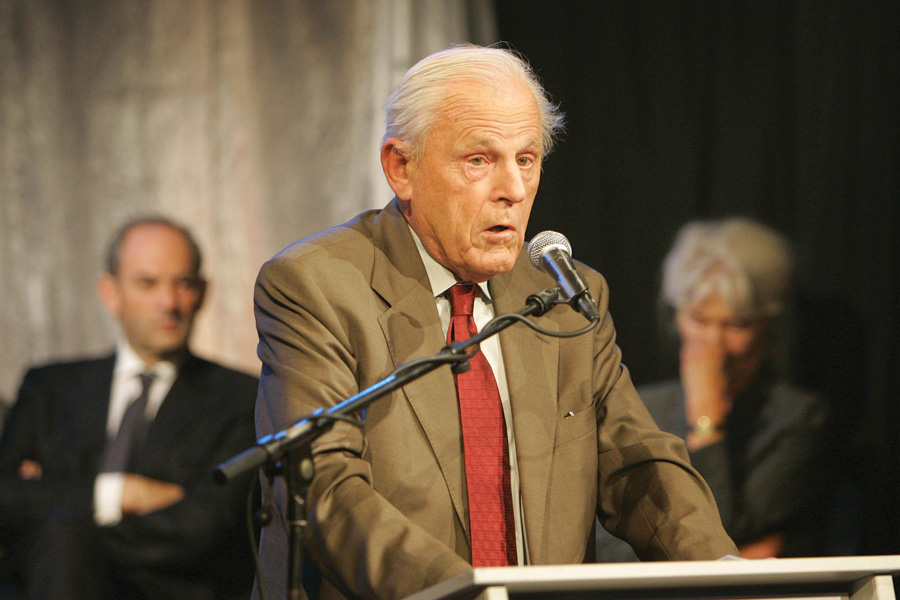
I think of Johan Van Gogh as a man who lived in the shadow of a giant, yet never became a shadow himself. He was born on 26 March 1922 in Amsterdam, into a family name that already carried the weight of history, art, sorrow, and public fascination. The Van Gogh story is often told through paint and color, through the blazing life of Vincent van Gogh. Johan’s own life moved in a different register. It was quieter, more guarded, and in many ways just as important. He was not the painter, not the showman, not the headline. He was the keeper of a legacy that could easily have slipped through the cracks like sand through an open hand.
His father was Vincent Willem van Gogh, the nephew of Vincent the artist. His mother was Josina Wibaut. That means Johan belonged to the family branch that carried the original collection, the letters, the memory, and the responsibility. He was not merely related to the famous painter. He was part of the family machinery that made sure the art survived, traveled, and finally found a permanent home. That role alone gives him a place in Dutch cultural history.
Johan’s childhood was tied to the family house in Laren, where works by Vincent van Gogh were not museum objects yet, but part of everyday life. I imagine that kind of upbringing like living beside a river that people from all over the world will one day cross. It is ordinary until it is not. A painting that later hangs behind glass once stood near a bed, a hallway, or a family room. That intimacy shaped Johan’s understanding of value in a deep way. He did not inherit fame as a trophy. He inherited it as duty.
Family roots and the people closest to him
Johan Van Gogh’s family tree is central to understanding his life. The names around him are not decorative. They are the architecture of his story.
| Family member | Relationship to Johan Van Gogh | Notes |
|---|---|---|
| Vincent Willem van Gogh | Father | The artist’s nephew, known for preserving the family collection |
| Josina Wibaut | Mother | Mother of Johan and his siblings |
| Theo van Gogh | Brother | Killed during the war in 1945 |
| Florentinus Marinus van Gogh | Brother | One of Johan’s siblings |
| Mathilde Johanna van Gogh | Sister | One of Johan’s siblings |
| Anneke Vonhoff | Wife | Married Johan in the 1950s |
| Theo van Gogh | Son | Film director, writer, and public figure |
| Josien van Gogh | Daughter | Less publicly visible, but part of the immediate family |
| Lieuwe van Gogh | Grandson | Son of Theo van Gogh |
Vincent Willem van Gogh, Johan’s father, merits special attention. He protected the Van Gogh collection practically. Though not the artist, he ensured the artist’s work wouldn’t fly away. That long duty impacted Johan’s adulthood. If Vincent van Gogh is the flame, Vincent Willem shields it. Stewardship was passed down to Johan.
His mother, Josina Wibaut, linked him to another familial line that placed the Van Goghs in society. She’s less visible in public narratives but nonetheless important. Louder names tell family history, but quieter ones unite rooms. This seems true for Johan.
His 1920-born brother Theo van Gogh had a sad family history. Wartime death in 1945. The household would have felt that loss like cold through a thin wall. Johan’s family cannot be discussed without mentioning Theo’s death’s quiet. The family did more than conserve art. Grief was maintained too.
The van Gogh siblings Florentinus Marinus and Mathilde Johanna complete the family. Though less conspicuous in public history, they are the same constellation. The family hadn’t abandoned Johan. He grew up with siblings, memories, and responsibilities.
The story was enhanced by his wife, Anneke Vonhoff. Their marriage blended Johan’s heritage with modern Netherlands living. Theo and Josien van Gogh were their children. Theo was Johan’s most famous kid, a powerful public figure whose life and death were widely covered. Josien was more private but carried the family name.
Johan’s grandchild through Theo is Lieuwe van Gogh. Like a river curving into the next valley, the line continues. Descendants matter in a family that often discusses the past. It reminds me that legacy is not stone. A living chain.
Work, intelligence, and the discipline of privacy
Johan’s professional life was not public in the way his son’s later career became public. He worked in intelligence, serving in the Dutch domestic security service, later known as the General Intelligence and Security Service. That detail says a great deal about his character. Intelligence work depends on silence, caution, and patience. It is the opposite of spectacle.
I find that combination striking. Here was a man born into one of the most publicly famous artistic families in Europe, yet he chose a career built on discretion. That tension feels almost literary. The family name was bright and widely recognized, but Johan’s own work took place behind curtains. He did not build his identity on self-display. He built it on restraint.
His most visible achievement was not tied to a single promotion or title. It was tied to the Van Gogh legacy itself. Johan helped protect the family collection and later served as president of the Van Gogh Foundation. That role made him one of the family’s central custodians. He was part of the chain that connected the private collection to the public museum world. In practical terms, this meant he helped ensure that paintings, drawings, and letters stayed together long enough to become a shared cultural treasure.
There is something elegant about that. He did not create the masterpiece, but he kept the masterpiece from vanishing.
The family collection as a second inheritance
The Van Gogh family did not only inherit art. They inherited a moral responsibility. When the collection was transferred into a foundation structure, the family accepted that the works were larger than any single household. This was not just a business decision. It was a cultural handoff.
Johan stood at the center of that stewardship. He understood that the paintings were not household trophies. They were like lanterns passed from one generation to the next, each hand trying not to extinguish the light. His father had already made the crucial decision to preserve the works rather than disperse them. Johan carried that decision forward.
This is why he matters. Not because he was loud. Not because he was controversial. But because he was dependable. History often rewards the visible artist, yet it also depends on the quiet guardian who says, in effect, we will keep this safe.
Personal memory, war, and the shape of a long life
Johan lived over a century, which important. Born in 1922, he lived through the war, the postwar decades, the Van Gogh brand’s international growth, and the family’s private history becoming museum history. He died in 2019 at 96.
He experienced war loss, familial continuity, and cultural change. Art went from dining room walls to institutional glass displays. He watched the family name become public. He also witnessed his son Theo become famous in a separate career and die violently in 2004. This is a big load for fathers. Johan stayed in the family center, a peaceful axis the tale turned around.
Johan’s childhood memory of Almond Blossom is vivid. The painting was familiar to him from family life before it became a global classic. I treasure that recollection because it tells me that great art starts in ordinary rooms. A famous canvas can start as a familiar object by a bed, light, or child’s hand. Johan carried that recollection like a sealed letter.
FAQ
Who was Johan Van Gogh?
Johan Van Gogh was a Dutch intelligence officer and a member of the Van Gogh family, born in 1922 and dying in 2019. He was the grandson of Theo van Gogh and Johanna van Gogh-Bonger, and the son of Vincent Willem van Gogh and Josina Wibaut.
Why is Johan Van Gogh important?
He mattered because he helped protect and steward the Van Gogh family collection. He also served in Dutch intelligence, which made his life unusually balanced between public heritage and private discipline.
Who were Johan Van Gogh’s immediate family members?
His immediate family included his father Vincent Willem van Gogh, his mother Josina Wibaut, his siblings Theo van Gogh, Florentinus Marinus van Gogh, and Mathilde Johanna van Gogh, his wife Anneke Vonhoff, and his children Theo van Gogh and Josien van Gogh.
What was Johan Van Gogh’s connection to Vincent van Gogh?
Johan was the great-nephew of Vincent van Gogh. The painter was the brother of Theo van Gogh, Johan’s grandfather.
Did Johan Van Gogh have children?
Yes. His children included Theo van Gogh and Josien van Gogh.
What was Johan Van Gogh’s main professional field?
He worked in intelligence, specifically in Dutch domestic security services, where discretion was essential.
What is Johan Van Gogh remembered for today?
He is remembered for preserving the family legacy, protecting the Van Gogh collection, supporting the foundation that safeguarded the works, and living as a quiet bridge between the private family story and the public museum world.