Key Takeaways
- Inspect pavement regularly and document changing defects.
- Prioritize safety hazards, drainage issues, and active damage.
- Match repairs to the pavement’s actual condition.
- Keep drains and water-management areas clear.
- Include sidewalks, curbs, ramps, and concrete areas.
- Use seasonal maintenance to prepare for St. Louis weather.
- Separate routine maintenance from major capital projects.
- Schedule repairs to minimize disruption to property operations.
For commercial properties in St. Louis, Missouri, pavement maintenance is more than an appearance issue. Parking lots, loading areas, sidewalks, curbs, and entrances support daily access for customers, employees, tenants, deliveries, and emergency vehicles. Check this page for property teams seeking a practical starting point for building a plan suited to their site’s traffic patterns and repair needs. St. Louis properties can face seasonal rain, freezing temperatures, summer heat, leaf buildup, and wear from delivery vehicles and heavy traffic. A smarter 2026 maintenance plan helps managers identify small defects early, schedule work around operations, and make better decisions before pavement damage becomes more disruptive.
Why Pavement Planning Matters
Pavement defects often begin quietly. A narrow crack can admit water, and repeated traffic can then worsen the weakened area into a pothole, depression, or larger failed section. Planning creates a clear distinction between routine care, preventive maintenance, localized repair, resurfacing, and reconstruction. The Federal Highway Administration notes that timely preservation treatments on pavement that still has useful life can postpone more extensive rehabilitation work.
Start With a Full Property Inspection
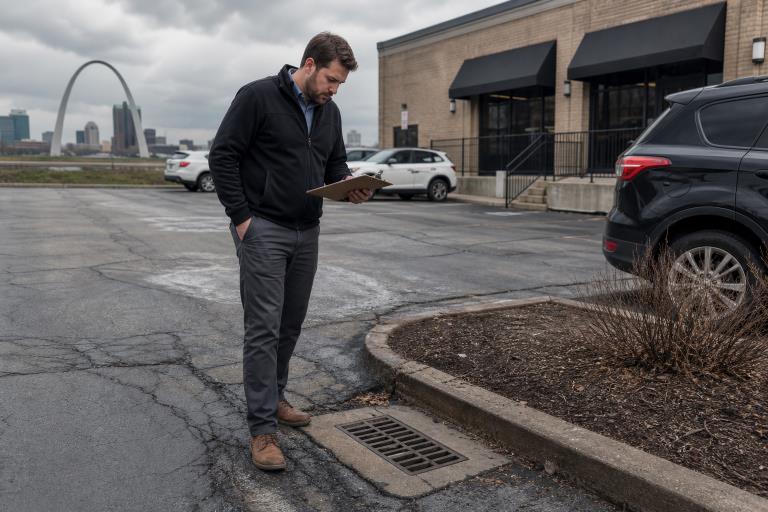
Begin with observations rather than assumptions. Walk and drive the entire property, including entrances, travel lanes, parking stalls, loading zones, sidewalks, curbs, ramps, drains, dumpster pads, and transitions between asphalt and concrete. Take dated photos, note locations on a site map, and record whether a defect has changed since the previous inspection.
Inspection Items to Record
- Cracks, potholes, depressions, rough patches, and loose material.
- Standing water after rain and clogged drainage structures.
- Uneven sidewalks, broken curbs, and damaged ramps.
- Faded parking lines, arrows, crosswalks, and fire-lane markings.
- Damage near truck routes, tight turning areas, and pavement edges.
Rank Repairs by Risk and Urgency
Not every issue requires the same response. Sort findings into four groups: immediate safety concerns such as trip hazards or deep potholes; near-term repairs such as active cracks and ponding; preventive work such as crack filling, sweeping, drain cleaning, sealcoating, and striping; and capital projects such as resurfacing, major base repair, or reconstruction. The lowest initial price is not always the best value because the correct treatment depends on the cause of the damage, traffic load, pavement condition, and expected use.
Protect Asphalt Before Damage Spreads
Asphalt maintenance works best when treatment matches the condition. Crack filling can limit water entry through smaller cracks. Localized patching addresses isolated failed areas. Sealcoating can protect an appropriate asphalt surface, while striping restores organization and visibility after surface work. Resurfacing renews the upper layer when the underlying pavement structure remains stable. Sealcoating should not be used to disguise broad alligator cracking, deep settlement, or repeated potholes, which may indicate deeper failure.
Give Drainage a Central Role
Water management should be part of every pavement decision. Inspect catch basins, grates, inlets, downspout discharge areas, pavement edges, and low spots after rain. Remove leaves, sediment, weeds, and debris that prevent drainage. For busy commercial settings, urban pavement preservation planning considers traffic, climate, site conditions, and work-zone impacts, all of which can affect the right repair sequence.
Include Concrete Walkways, Curbs, and Slabs
A complete plan should cover pedestrian areas as carefully as vehicle pavement. Check sidewalks near entrances, curb ramps, loading docks, dumpster pads, and concrete joints. Cracked, settled, spalled, or displaced concrete can affect access and safety. When sections are severely broken or repeatedly patched, replacement may be more practical than another temporary repair.
Build a Seasonal Maintenance Calendar
In St. Louis, timing should reflect the weather and property operations. A simple calendar can keep maintenance from becoming reactive.
- Spring:Inspect winter damage, repair potholes, review drainage, and identify sidewalk hazards.
- Summer:Schedule crack filling, suitable sealcoating, striping, and larger planned repairs during workable conditions.
- Fall and winter preparation:Clear drains, remove debris, repair defects likely to worsen in freezing weather, and document next year’s capital needs.
Create a Practical Pavement Budget
Separate pavement spending into routine care, planned repairs, and long-term projects. Routine care includes inspections, sweeping, drain cleaning, and marking touch-ups. Planned repairs can include patching, concrete replacement, sealcoating, and drainage corrections. Long-term funding covers resurfacing, grading corrections, major base repair, or replacement. Maintain records of surface age, completed work, recurring trouble spots, photos, and anticipated project timing to support future budget discussions.
Reduce Disruption During Repairs
Good scheduling protects operations. Divide a large parking area into work zones, maintain emergency access, provide temporary signs and safe pedestrian routes, and notify tenants, vendors, and visitors in advance. For example, a retail center could repair and seal one half of its lot at a time, directing customers to open spaces while crews complete the other section.
Know When Repair Is No Longer Enough
Consider a condition assessment when there is widespread interconnected cracking, deep wheel ruts, recurring potholes, soft pavement near drainage structures, broad settlement, or severe concrete displacement. Surface treatments cannot correct every underlying problem. Resurfacing or reconstruction may be the better long-term choice when the pavement base has failed or repeated repairs are no longer holding.
Common Questions About Pavement Maintenance
How Often Should a Commercial Property Be Inspected?
Conduct regular visual checks throughout the year and complete a more detailed review after winter, major storms, or heavy construction activity.
Can Sealcoating Fix Cracks and Potholes?
No. Sealcoating protects suitable asphalt surfaces, but it does not replace structural repairs or correct a weakened base.
Why Check Drainage Before Asphalt Repairs?
Unresolved water problems can contribute to recurring damage, making a new repair less durable and wasting maintenance funds.
A Better Plan Starts With Timely Decisions
A stronger pavement plan does not need to be complicated. For St. Louis commercial properties, the essentials are consistent inspections, early drainage attention, safety-based priorities, realistic budgets, and scheduling that respects daily operations. Small, timely decisions can help protect the property long before urgent repairs take over the calendar.
Conclusion
A practical pavement maintenance plan helps St. Louis commercial properties address defects before they become larger and more disruptive problems. Regular inspections, proper drainage, timely repairs, seasonal preparation, and realistic budgeting can support safer and more manageable properties while helping managers plan work around daily operations. Keeping records of pavement conditions, completed repairs, recurring problem areas, and future maintenance needs can also make budgeting and scheduling easier. Property teams should prioritize areas with heavy traffic, drainage concerns, trip hazards, and visible deterioration. Managers should also recognize when surface treatments are no longer enough, and a deeper pavement assessment, resurfacing, or reconstruction may be needed. By taking a planned approach instead of waiting for pavement failures to become urgent, commercial property owners can make more informed maintenance decisions and better manage the condition of their parking areas, walkways, entrances, and other paved surfaces.