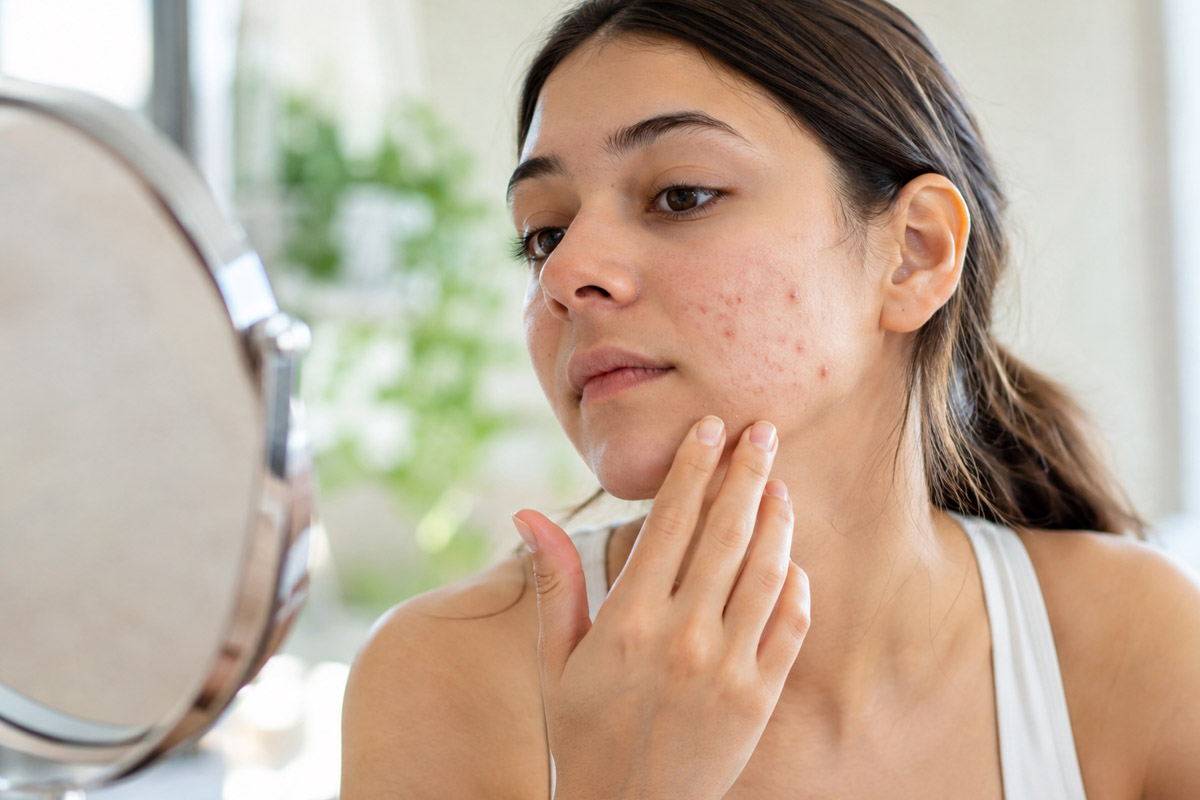
A pimple has healed, but you can still see where it used to be. Is that spot an acne mark or a scar? The simplest place to start is your skin’s texture. An acne mark is usually flat. It may look pink, red, purple, brown, or darker than the skin around it, but the surface feels smooth. An acne scar changes the skin’s texture. It may look like a small dip, a wider hollow, or a raised bump. Sometimes a scar also has a different color, so color alone cannot tell you which one you have. Knowing the difference matters because marks and scars may need different care. It can also help you set realistic expectations about what will fade with time and what may benefit from professional treatment.
What are acne marks?
An acne mark is a flat spot left behind after a breakout clears. You might see a pink or red spot, or you might notice brown, purple, or dark discoloration. These spots are often mistaken for permanent scars, especially when they stay visible for months. Flat marks can gradually fade, but the process may be slow. Some can last a year or longer. How quickly a mark fades depends on your skin and the mark itself. A dermatologist can tell you whether skin care or treatment may help it fade more quickly. Here is a useful check: look at the spot from the side in gentle lighting. If you see a change in color but no dip or bump, it may be a mark. This is only a guide, though. If you are unsure, a skin exam is more reliable than trying to diagnose it from a photo.
What do acne scars look and feel like?
A true acne scar changes the shape of the skin as it heals. Some scars sit below the surrounding skin. These are called depressed or pitted scars. Others rise above the surface and may feel firm. Depressed scars can take several forms. An ice pick scar looks narrow but extends deeper into the skin. A boxcar scar creates a wider, round or oval depression. Rolling scars are often broad and shallow, giving the skin a wavy appearance. You can have more than one type in the same area. Raised scars form when the skin produces extra tissue as it heals. They may develop on the face, chest, shoulders, or back. Because different scars respond to different treatments, identifying the type is an important first step.
Why do some breakouts leave scars?
Not every pimple leaves a scar. Deep, painful breakouts are more likely to damage the skin. Picking, popping, or scratching a blemish can increase inflammation and the chance of scarring or discoloration. Family history may also affect a person’s risk. That is one reason to address ongoing acne before concentrating only on old marks. If new breakouts keep forming, new marks or scars may follow. Treating acne early and avoiding picking can help lower that risk. You do not need to wait for a scar to appear before asking for help with persistent or painful acne.
Do marks and scars need different treatments?
Often, yes. Care for flat discoloration focuses on helping the color fade and preventing new spots. Treatment for a depressed or raised scar focuses on making its texture less noticeable. A cream that helps a dark mark may not fill a pit in the skin. Scar treatment also varies by type. A dermatologist may discuss procedures for depressed scars, while a raised scar may call for a different approach. More than one treatment may be needed when several scar types are present. An evaluation helps you avoid choosing a procedure based only on an advertisement or a photo that does not match your skin. If you are searching for acne treatment, mention both your current breakouts and the spots they have left behind. This gives your provider a fuller picture of what needs attention.
When is it time for a professional opinion?
Consider booking an appointment if you can feel pits or raised areas, have marks that are slow to fade, or continue to develop painful acne. You can ask the provider to point out which areas are flat discoloration and which are scars. Then ask what improvement is realistic, how many visits treatment may involve, and whether active acne should be addressed first. When researching acne scar removal in Salt Lake City, remember that “removal” does not guarantee that every scar will disappear. Scar treatment often aims to make scars less noticeable. A qualified provider can explain which options fit your scar type and what results you can reasonably expect. The key difference is simple: a mark changes the color of your skin, while a scar changes its texture. If you see both, you may need a plan that addresses each concern in a different way.