Key Takeaways
- Cleaning schedules should reflect how each space is actually used.
- High-touch surfaces deserve more frequent attention than low-use areas.
- Routine cleaning and response disinfection require different procedures.
- Product labels, contact times, staff training, and records all affect results.
- Healthy-building planning should include air, moisture, and water-system considerations.
High-traffic seasons can quickly expose weak points in a commercial cleaning plan. Whether a facility is managing a busy office, warehouse, school, restaurant, medical setting, or multi-tenant property, the goal is not simply to clean more often. It is to focus on cleaning labor, supplies, and response procedures where they matter most.
For facilities that need an added method for broad surface coverage, electrostatic sanitizing for commercial spaces is one option to evaluate alongside routine manual cleaning. CNS Cleaning Company is a commercial cleaning provider serving Bristol and Philadelphia, Pennsylvania, and its service page explains how electrostatic spraying and disinfectant fogging may support cleaning plans for larger facilities, shared equipment, and hard-to-reach surfaces. Because the company provides commercial cleaning and disinfection services, facility managers can use this information when deciding whether specialized application methods fit their building’s needs.
Why Commercial Cleaning Plans Need a Fresh Look
Occupancy patterns change. A building may have quiet mornings, crowded meetings, rotating shifts, public events, or seasonal visitor surges. A fixed checklist that treats every room the same can leave high-use areas under-serviced while wasting time in spaces that receive little traffic. A stronger plan matches service frequency to actual use, vulnerable occupants, and the type of work performed in each area.
Start With a Building Risk Check
Before changing products or schedules, walk the property and identify where people enter, gather, eat, work, and share equipment. Include entrances and exits, elevators, restrooms, break rooms, meeting rooms, reception areas, storage spaces, and loading areas. Note surfaces touched repeatedly, special finishes that require approved products, and spaces used by children, patients, older adults, customers, or other higher-risk groups.
Also, confirm who is responsible for reporting spills, leaks, illness concerns, odors, or contamination events. A written escalation path helps staff act promptly rather than guessing who should make the next decision.
Build a High-Touch Surface Map
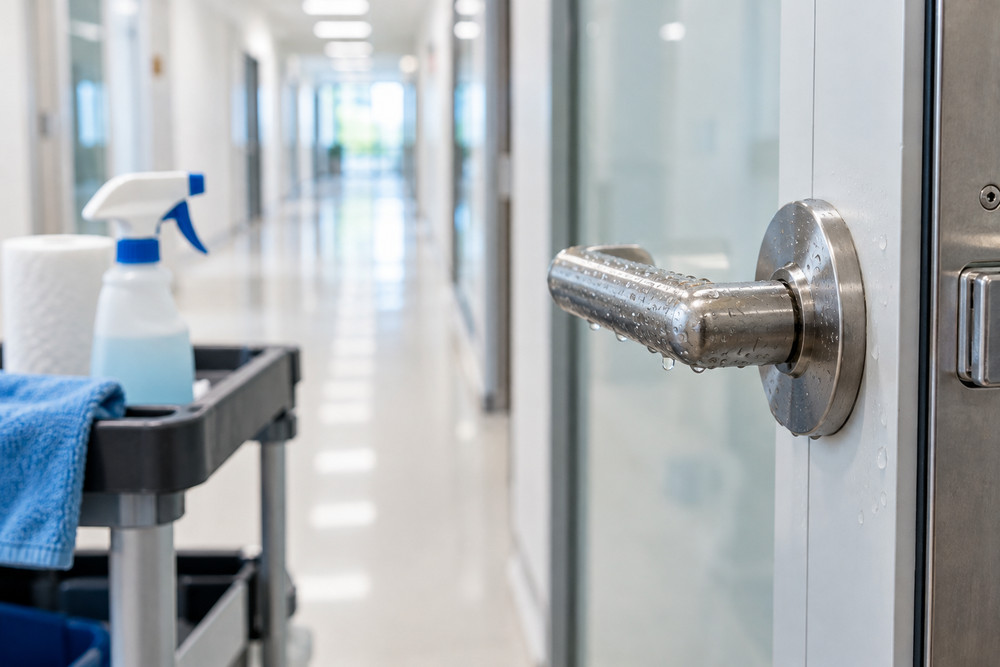
A surface map turns a general cleaning goal into a practical route for staff. List touchpoints by room, then adjust frequency when traffic rises.
- Door handles, push plates, handrails, elevator buttons, and light switches.
- Reception counters, visitor sign-in stations, phones, keyboards, and touchscreens.
- Break-room counters, refrigerator handles, coffee equipment, and shared appliances.
- Faucet handles, flush controls, stall latches, and other restroom fixtures.
- Shared tools, carts, control panels, and workplace equipment.
Separate Routine Cleaning From Response Disinfection
Routine Cleaning
Routine work removes dust, soil, spills, and residue. It supports appearance, protects surfaces, and prepares areas for disinfectant when disinfection is appropriate. Daily service should emphasize visible soil, restrooms, shared eating areas, and frequently touched points.
Response Disinfection
Response work may be appropriate after a known contamination concern, a report of illness, or direction from a responsible safety or public-health authority. Restrict unnecessary access, remove visible soil first, use a product approved for the surface and intended use, and keep it wet for the full label contact time. Record what was completed before normal access resumes.
Choose the Right Method for the Space
Manual cleaning remains essential for visible soil, detailed fixtures, and surfaces that need close attention. Targeted disinfection can suit high-touch points and shared devices. For large rooms with many irregular surfaces, trained teams may consider broad-area application methods when the product label, equipment, ventilation, room conditions, and safety procedures all support that choice.
Fogging or fine-mist application is not automatically better because it is faster. Teams should never use a method that conflicts with product directions, could affect sensitive equipment, or leaves occupants without proper access controls. The right method is the one that can be applied safely, consistently, and according to instructions.
Use Products the Right Way
- Read the label before use and confirm the product suits the intended surface.
- Use the required dilution, if dilution is permitted or required.
- Allow the stated contact time rather than wiping the product away too soon.
- Do not mix chemicals unless the label specifically permits it.
- Keep products labeled, secured, and available only to trained staff.
- Provide appropriate protective equipment and clear handling instructions.
Create a Seasonal Cleaning Schedule
Daily Tasks
- Inspect entrances, restrooms, break rooms, and shared work areas.
- Address spills and visible soil promptly.
- Service high-touch points according to traffic levels.
Weekly Tasks
- Check supply levels, dispenser function, and equipment condition.
- Review less-visible touchpoints, shared tools, and recurring problem areas.
- Verify cleaning logs and correct missed tasks.
High-Traffic Adjustments
Add service rounds around events, seasonal illness periods, or unusually busy shifts. Increase attention to entrances, elevators, restrooms, shared technology, and food-service areas. Simple reminders near handwashing stations and shared equipment can reinforce good habits without overstating what cleaning can accomplish.
Prepare for an Illness or Contamination Event
- Identify the affected space and limit unnecessary access.
- Notify the facility manager, safety contact, or designated decision-maker.
- Determine which surfaces, equipment, and rooms need attention.
- Clean visible soil, apply the appropriate product, and follow its full contact time.
- Document the date, time, areas serviced, product used, and staff member.
- Reopen the area after the planned procedure is complete, then review the event for improvements.
Review Air, Moisture, and Water Systems
Surface cleaning is only one part of a healthier-building approach. Keep HVAC maintenance records current, replace filters according to equipment instructions, and address leaks, standing water, and moisture damage promptly. Properties with cooling towers, decorative water features, or complex plumbing should use qualified professionals for water-management planning. Building owners reviewing those risks can consult commercial Legionella guidance that addresses water-system management and prevention considerations.
Train, Communicate, and Track Results
Training should show staff which surfaces have priority, how to use products safely, when to report a concern, and how to complete short checklists. Keep records simple: document the service date and time, completed areas, products or methods used, access issues, corrective actions, supervisor review, and follow-up date. Clear communication also helps tenants, employees, and visitors understand when specialized cleaning may temporarily affect access.
Common Mistakes to Avoid
- Using one schedule for every room or building type.
- Disinfecting dirty surfaces without cleaning visible soil first.
- Ignoring label directions and required contact times.
- Focusing only on floors while missing shared touchpoints.
- Using broad-area methods without checking safety procedures.
- Waiting for a major event before creating a written response plan.
Conclusion
A healthier commercial building depends on a practical plan, not one product or one piece of equipment. Map high-touch areas, adjust service for real occupancy, train staff, maintain clear records, and prepare for sudden events before they happen. These steps can help facility teams reduce confusion, protect daily operations, and maintain cleaner shared spaces throughout high-traffic seasons.