Socks are easy to overlook, but they can affect how shoes feel from the first commute to the end of a long day. A poor fit, trapped moisture, toe pressure, rough stitching, or fabric that bunches can make walking and standing unnecessarily uncomfortable. The most useful choice is not always the softest or thickest pair. It is the pair that suits your feet, footwear, activity, and personal comfort needs.
For people who are especially bothered by toe seams or interior texture, SmartKnit seamless socks are one option to consider. Thuasne offers these socks in its seamless sock collection, including adult and children’s styles designed without a traditional toe seam. The brand also provides bracing, compression, and self-care products, making its brace-related and sensory-condition product areas relevant for people who need to think carefully about what they wear inside footwear or alongside a device.
Start With The Problem, Not The Product
Before shopping, identify the specific issue you want to solve. A sock that works well for a casual office day may not work for a long shift, a school day, a daily walk, travel, or time spent in a brace. Pinpointing the problem keeps the choice practical rather than overwhelming.
- Toe irritation: Look for a smooth toe area and enough room for toes to move naturally.
- Sweaty feet: Prioritize materials and shoes that help moisture move away from the skin.
- Slipping or wrinkles: Recheck size, heel placement, and whether the sock is too long for your foot.
- Tight cuff marks: Choose a cuff that stays up gently rather than gripping the leg.
- Scratchy texture: Try a different fiber blend or a smoother interior construction.
Check The Fit Before Judging The Fabric
Even a soft fabric can become uncomfortable in the wrong size. The heel pocket should sit around your heel, not creep under the foot or ride up the ankle. The toe area should not pull tightly across the toes, and the fabric should lie flat without folds. If a sock is too long, extra material can bunch. If it is too short, it can feel tight or slide downward in the shoe.
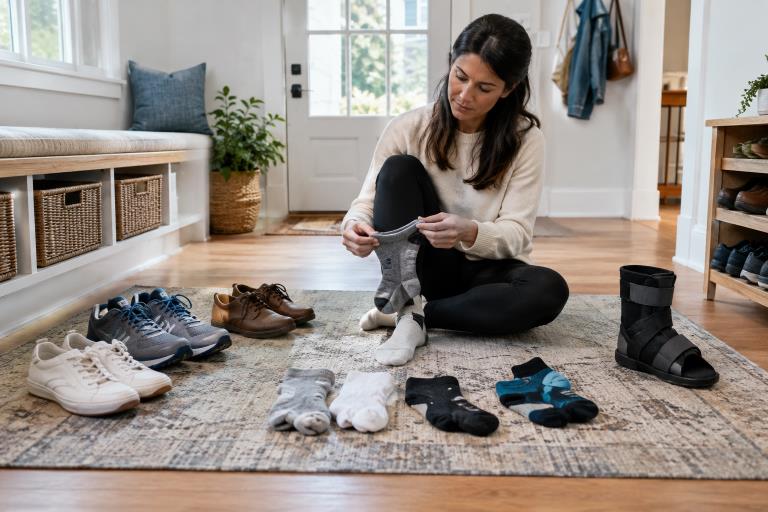
Always test a new pair with the shoes you intend to wear. Thickness changes the available room inside footwear. A heavily cushioned sock may make a previously comfortable shoe feel restrictive, while a very thin sock can leave more room for the foot to move. Practical guidance on sock fit and footwear pairing also emphasizes checking toe and heel fit, particularly when choosing padded styles.
Compare Materials For Moisture And Temperature Control
Moisture matters because damp fabric can increase rubbing and make feet feel hot or chilled. Your climate, activity level, shoe ventilation, and skin sensitivity all influence which material feels best.
- Merino wool: Often chosen for its ability to help regulate temperature and handle moisture in changing conditions.
- Synthetic blends: Dry quickly and are useful for active days or for shoes that tend to feel warm.
- Cotton: Can feel soft for low-activity wear, but it may retain moisture for longer than performance-oriented blends.
- Mixed fibers: Can combine softness, stretch, shape retention, durability, and faster drying.
For active use or consistently sweaty feet, it is sensible to avoid relying on a 100 percent cotton sock. Texas A&M’s advice on choosing socks for moisture management notes that cotton can hold moisture against skin, while wool and synthetic blends are common alternatives for performance wear.
Reduce Friction In High-Risk Areas
Friction tends to build where the foot repeatedly rubs against a sock or shoe, including the toes, heel, arch, and ball of the foot. Blisters can develop when rubbing and moisture repeatedly stress the skin. A better sock can help, but shoe fit, walking surface, distance, and time on your feet also matter.
Features Worth Checking
- A smooth or flat toe construction.
- A close fit that does not create folds under the foot.
- Light cushioning at the heel and forefoot where protection is needed.
- Breathable fibers that help limit a damp feeling.
- A cuff and arch area that hold the sock in place without uncomfortable pressure.
Match Socks To The Day Ahead
- Office or everyday wear: Choose a lightweight, breathable pair that stays flat inside the shoe.
- Long shifts on your feet: Look for secure fit, moisture management, and moderate cushioning.
- Walking: Choose socks that reduce sliding and protect common areas of friction.
- Travel: Select a pair that remains comfortable during both sitting and walking.
- Cold weather: Add warmth carefully, without making shoes feel tight.
- Braces or orthotics: Make sure the sock does not create extra folds, pressure points, or bulk around the device.
- Sensory sensitivity: Prioritize a stable fit, a soft feel, and an interior with as few distracting textures as possible.
What To Know About Seam Construction
Not all seams feel the same. A traditional toe seam joins fabric at the front of the sock and may be noticeable to some wearers. A flatter seam can reduce the raised feel, while socks described as seamless may be made without a conventional toe seam. Because product language varies, inspect the construction details rather than assuming every “seamless” sock will feel identical.
Use A Simple At-Home Comfort Test
- Put the socks on when your feet are dry.
- Check the toes, heel, arch, and cuff for pressure or raised material.
- Walk indoors for five to ten minutes.
- Put on your usual shoes and walk again.
- Notice slipping, bunching, heat buildup, or rubbing.
- Remove the socks and look for deep marks, redness, or damp areas.
- Stop using the pair if discomfort persists or skin changes appear.
Wash, Rotate, And Replace
Washing can change a sock’s softness, stretch, and shape over time. Follow the care label, avoid heat beyond the manufacturer’s recommendations, and consider washing new pairs before an extended day of wear if the fabric finish feels unfamiliar. Replace socks that have lost their shape, developed rough spots, or begun to bunch. Keeping several comfortable pairs in rotation can also reduce wear on any one favorite pair.
Know When Socks Are Not The Main Issue
Persistent burning, numbness, swelling, wounds, color changes, or unexplained foot pain should not be treated as a simple clothing problem. People with diabetes, neuropathy, circulation concerns, fragile skin, or recurring foot issues should seek individualized guidance from a qualified health professional. Compression socks are not appropriate for everyone, so medical or circulation-related needs should be discussed with a clinician before choosing them.
Quick Buying Checklist
- Does the sock stay flat inside the shoe?
- Do the toes feel free rather than compressed?
- Does the material suit the activity and likely moisture level?
- Does the cuff stay in place without leaving deep marks?
- Does the thickness match the shoe?
- Will it work with orthotics, insoles, or a brace?
- Does the texture still feel comfortable after several minutes?
- Can it be washed without quickly losing shape?
Comfort Comes From The Whole Footwear Setup
A comfortable sock works best as part of a complete setup that includes the right shoe, activity level, weather conditions, and fit. Start with the source of discomfort, then test for smoothness, stability, moisture control, and room inside your usual shoes. Small adjustments can make everyday footwear easier to wear, while ongoing pain or skin changes deserve professional attention.