A son born at the edge of empire
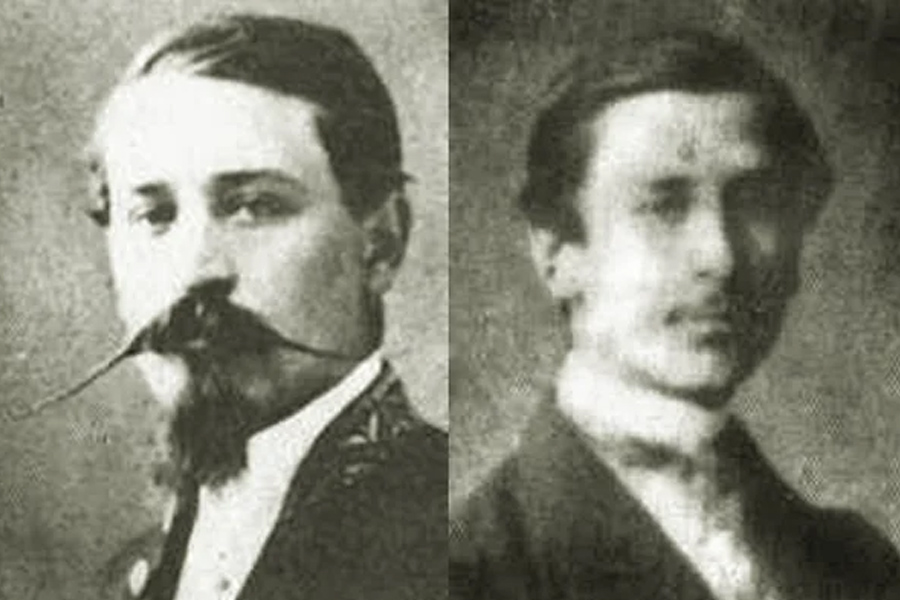
A noisy historical character who stood center stage and directed the lights is not Alexandre Bure. I envision someone born near the footlights, close enough to sense power yet far enough to be half hidden by it. Alexandre Louis Ernest Bure was born in Paris on 18 March 1845, however some documents say 19 March. He lived through the Second Empire like a tiny river through a magnificent estate. It had a famous father, a difficult mother, an adopted surname, and a family tree that favored Napoleon, Josephine, and the Bonaparte dynasty.
His father was French Emperor Napoleon III. His mother was Éléonore Vergeot, a domestic servant who became a key role in the imperial drama behind the curtain. Alexandre wasn’t officially an imperial kid, but he was always close to the emperor. The ambiguity impacted everything afterward. His life was a mix of affluence and distance.
A family built from legitimacy, adoption, and imperial silence
Alexandre’s family was not a simple one, and that complexity is part of what makes his story so compelling to me. His mother, Éléonore Vergeot, later married Pierre Bure in 1858. Pierre was more than a husband. He was a foster brother and business manager to Louis Napoleon before the empire, and he became the man who gave Alexandre and his brother Eugène the Bure name. Through that adoption and family arrangement, Alexandre crossed from the margins into a formal household.
Pierre Bure was important in his own right. He served as treasurer-general to the crown, which placed him close to the machinery of imperial finance. Éléonore and Pierre also had a biological son, Jean Bure, adding another layer to a family already stitched together by politics, affection, and strategy. It is a family portrait with a few missing corners, but the picture still holds.
Alexandre’s brother Eugène Bure was perhaps the more publicly successful of the two. Eugène later became count of Orx and pursued a diplomatic career. I think of the brothers as twin threads of the same imperial fabric, one thread working quietly in finance and status, the other moving outward into diplomacy and titles.
The Bonaparte line itself is even grander. Alexandre’s grandparents were Louis Bonaparte and Hortense de Beauharnais. That means his great-grandparents included Carlo Buonaparte and Letizia Ramolino on one side, and Alexandre de Beauharnais and Joséphine de Beauharnais on the other. Few family trees are this saturated with European history. It is less a tree than a cathedral of names, full of arches, statues, and hidden chapels.
He also stood near several famous cousins. Mathilde de Morny and Louise Le Hon were among the related figures often placed beside him in genealogical records. In a family like this, kinship was never just blood. It was inheritance, reputation, and the long shadow of Bonapartist memory.
Training, service, and the shape of a career
Alexandre Bure did not build a career in the way modern biographies often expect. He did not leave a mountain of speeches, companies, or political campaigns. His path was more administrative, more imperial, more like a man walking through the back corridors of power than standing on a balcony in full sunlight.
He studied at the Collège Sainte-Barbe, an institution with a long scholarly tradition. In 1865, on 21 April, he entered the secretariat of the treasurer-general to the Crown. That was an entry into the machinery of state, the place where money, procedure, and authority meet in quiet rooms.
He also took part in the French expedition to Mexico. That campaign was one of the great imperial adventures of the era, and for Alexandre it seems to have been both a duty and a detour. He married during that period in Puebla, Mexico, though the name of his first wife remains obscure in the material I reviewed. Later he left the army and returned to France in late 1869. There, with the emperor’s support, he was appointed receiver of finances.
In June 1870, he was made hereditary count of Labenne. This title gave him a formal place in the noble landscape of the Second Empire. It also marked him as a man elevated just before the storm broke. The empire soon collapsed, and the old order vanished like a chandelier crashing in a darkened hall. Alexandre’s title remained a historical marker of that vanished world.
I find it striking that some descriptions call him the last Frenchman ennobled before the fall of the Second Empire stopped such appointments. Whether or not one uses that exact phrasing, the meaning is clear enough. His rise came at the edge of a closing door.
Marriage, home, and the family life that followed
Alexandre’s second marriage and calm household life affected his latter life. He married 1857-born Marie-Henriette Paradis on March 12, 1879. Heiress of banker Jean-Baptiste Paradis, she was wealthy. Their fusion of imperial blood, financial capital, and regional existence was almost architectural.
They had one child, Georges Henri Louis Bure de Labenne, born in 1880 and dying young in 1884. This brief life adds fragility to Alexandre’s family story. Such families seem to dress birth and death ceremonially.
The family moved to Paimpol after marriage. Their house became Villa Labenne. The building later became a gendarmerie and maritime museum. Named homes frequently outlive their owners. Shells loaded with weather, memories, and local legend.
Alexandre and Charles Tellier collaborated on Marie-Henriette’s fortune-funded industrial drying project. The scheme failed. Local opposition stopped it, and the enterprise failed. This episode humanizes his life. Titles and lineage shine, but business grinds. The rise of his fortune was gradual. It bowed, stalled, and broke.
A life measured by legacy rather than noise
Alexandre Bure died in Paris on 11 February 1882. His son Georges later died in childhood, and Alexandre’s remains were transferred to Brittany. The funeral and the later burial details show how even after death, family identity continued to move across geography, as if it were still searching for a home.
What remains of Alexandre’s story is not a heroic legend but something subtler. He was a Bonaparte descendant, a son of Napoleon III, an adopted Bure, a financial official, a count, a husband, and a father. He lived at the seam between dynasty and ordinary life. That seam is often where history becomes most interesting.
FAQ
Who was Alexandre Bure?
Alexandre Bure was a 19th century French figure linked to the Bonaparte family. He was the son of Napoleon III and Éléonore Vergeot, later adopted into the Bure family, and known as Count of Labenne.
Who were Alexandre Bure’s parents?
His father was Napoleon III, and his mother was Éléonore Vergeot. Éléonore later married Pierre Bure, who adopted Alexandre and gave him the Bure surname.
Did Alexandre Bure have siblings?
Yes. His brother Eugène Bure was the best known sibling. He also had a half brother, the Prince Imperial, and other half siblings connected to Napoleon III’s later relationships.
Was Alexandre Bure married?
Yes. He married once in Mexico during the period of the French expedition there, though that wife is not clearly named in the material. He later married Marie-Henriette Paradis on 12 March 1879.
Did Alexandre Bure have children?
Yes. His only known child was Georges Henri Louis Bure de Labenne, born in 1880 and dying in 1884.
What was Alexandre Bure’s career?
He studied at Collège Sainte-Barbe, worked in the secretariat of the treasurer-general to the Crown, served in the Mexican expedition, returned to France, became receiver of finances, and was made hereditary Count of Labenne in June 1870.
Why is Alexandre Bure historically notable?
He is notable because he sat close to the Bonaparte line while remaining partly outside its official spotlight. His life shows how empire, legitimacy, adoption, money, and family could braid together into one complicated human story.
Where did Alexandre Bure live later in life?
He lived in Paimpol with his second wife, in a residence known as Villa Labenne. The house later became a gendarmerie and then a maritime museum.