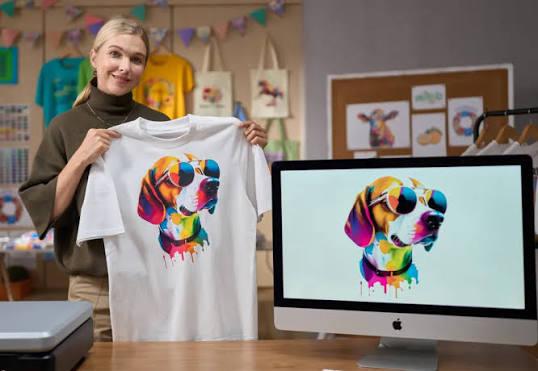
Yes, you can. Direct-to-Film (DTF) printing has become one of the most practical ways to start a clothing brand, and plenty of small-batch creators and streetwear startups already run on it. It’s cheaper to enter than screen printing, more flexible than vinyl, and avoids some of the fabric limitations of Direct-to-Garment (DTG). But launching a brand isn’t only about the printer, so here is how the model works, what to expect, and when owning a machine makes sense.
How DTF Printing Works
DTF printing prints your design onto a transparent PET film using CMYK and white ink. You coat the wet print with hot-melt powder, cure it, and then press it onto a garment with a heat press. The result is a full-color transfer that sticks to the fabric. The appeal for a new brand is simple. You can print on demand, press only what you’ve sold, and avoid sitting on boxes of pre-printed stock that might never move.
Two Ways to Start: Outsource or Print In-House
The consensus when starting a laser engraver is the same: you don’t have to buy a printer on day one. Depending on your budget and where you are starting from, you can either outsource the transfers or buy your own DTF printer.
Outsourcing transfers. Many small brands order ready-made DTF transfers from a supplier and press them onto blank garments with a commercial-grade heat press. Your upfront costs are a heat press, blanks, and the transfers themselves. It’s a low-risk way to test designs and see if people will buy.
Owning a DTF printer. If you commit to printing in-house, you control production speed, turnaround, and margins. The trade-off is upkeep. White ink settles and can clog printheads, so daily care, ink handling, and powder-curing management become part of your routine.
Here is a practical rule many operators follow: once you’re pressing around 30 to 50 or more garments a week, owning a printer starts to make financial sense. Below that, outsourcing can be the smarter choice until demand grows.
The Real Pros and Cons
What DTF does well
- Works on cotton, blends, and synthetics like polyester
- Delivers vivid, full-color gradients and fine detail
- Offers strong wash durability compared to standard vinyl and many DTG prints
- Lets you press on demand, keeping inventory low
What to watch
- Transfers can feel slightly heavier or less breathable than screen-printed or DTG ink
- Low-pressure or poorly set heat presses can cause cracking or peeling over time
- Owning a printer requires regular maintenance, particularly around white ink
None of these are dealbreakers. Most come down to good process: correct press temperature and pressure, consistent powder application, and a maintenance routine you actually follow.
What a Clothing Brand Needs Beyond the Printer
A DTF printer gets designs onto film. A brand needs more than that:
- A clear niche. Generic custom apparel is crowded. A tight audience, such as a local scene, a hobby, or a subculture, gives your designs a reason to exist.
- Quality blanks. Customers judge the shirt before the print. Fit, fabric weight, and feel matter.
- A reliable heat press. Pressure and temperature consistency are what keep transfers from cracking.
- A sales channel. An online store, local markets, or pop-up events all work. What matters is that you test early.
- A realistic cost model. Work out your per-shirt cost (blank, ink, film, powder, packaging, platform fees) before setting prices.
Where the OMTech Aurora D1 Fits
If your plan is to bring printing in-house, the OMTech Aurora D1 Series is designed around the problems new DTF owners run into most, especially white ink.
- White ink care built in. The Aurora circulates and stirs white ink automatically, and runs scheduled printhead cleaning and moisturizing every 12 hours. OMTech says that, kept powered on and maintained, it supports up to two weeks of standby between production runs. For a brand that prints in bursts rather than daily, that matters.
- Two configurations. The Aurora D1 uses a single Epson F1080 printhead and reaches up to 11 sq. ft. per hour, which suits custom orders and small batches. The Aurora D1 Pro uses dual Epson i1600 printheads and reaches up to 50 sq. ft. per hour for growing order volume.
- 15-inch roll-fed printing. The 15-inch width handles full-chest graphics and gang sheet layouts, and roll feeding supports longer runs.
- Practical extras. Low-ink alerts, electric ink refill, and optional shaker-and-dryer bundles reduce hands-on steps after printing.
You’ll still need a Windows computer, RIP software (the printer works with OMTech Print and Honsonsoft RIP), DTF ink, PET film, powder, and a heat press. Printer-only packages also need a separate powdering and curing solution, while the bundles include a shaker and dryer.
OMTech also offers a DTF Business Estimator on the product page, where you can enter your own price, order volume, and costs to estimate gross profit and payback. It uses your numbers rather than a generic earnings claim, so treat the results as planning guidance, not a guarantee.
Know Your Numbers Before You Print
The brands that survive their first year tend to be the ones that did the math early. A rough per-shirt cost might include the blank garment, ink, film, powder, packaging, and any payment or marketplace fees, plus a share of your time. Then compare that cost with the price your audience will actually pay. If the margin only works at high volume, start by outsourcing transfers until sales justify a printer. If it works at small volume, printing in-house can protect your margin from day one.
A Sensible Path to Launch
- Validate first. Order transfers, press a small run, and see what sells.
- Track volume. If you’re consistently near 30 to 50 garments a week, run the numbers on owning a printer.
- Choose capacity to match. A single-head model suits smaller batches. If orders are growing, the dual-head option gives headroom.
- Build your routine. Learn the maintenance rhythm before you rely on the machine for deadlines.
Final Thoughts
You can launch a T-shirt brand with DTF, and you can do it with modest risk if you start by testing demand. The printer is a tool for control, speed, and margin once volume justifies it, and a machine built to handle white ink reliably removes much of the daily friction. Start small, learn your niche, and let sales tell you when it’s time to bring production in-house.