A Life Built on Curiosity, Travel, and Resolve
I see Carol Morse Cotsworth as a woman who traveled with purpose, like she had a compass in her pocket. She was born in St. Paul, Minnesota, on May 25, 1917, into a century that challenged fortitude, patience, and imagination. After studying at the University of Minnesota and teaching kindergarten, she entered a world of animals, reading, public speaking, and conservation.
Carol wanted more than a background role in a famous family. She advocated conservation, wrote, spoke, photographed, and commented on TV. That blend gave her life a rhythm. She could go from a classroom to a safari, a lecture hall to a wildlife center, a family meal to a cause. Family, travel, writing, and service flow through her story like a river.
First Marriage, Children, and the Cotsworth Family Line
Carol first married John Cotsworth, a steel salesman. Their marriage produced three children and later ended in divorce in 1959. The family story begins here, in a more private chapter that still mattered deeply to the shape of her life.
Her children from that marriage were Alice, Fred, and Marguerite. Alice later became known as Alice Ren Goltra, a name that suggests a married life of her own and a path beyond the public eye. Fred Cotsworth remained tied to the family surname and appears in the record as one of Carol’s sons. Marguerite, later known as Marguerite Sorum and also as Marguerite Garrick, became the most publicly visible of the three. She grew up close to wildlife and conservation work, studied political science with anthropology, and later worked on wildlife issues in Washington, D.C. Her life seems to echo her mother’s, with a practical mind and a conscience that reached beyond personal comfort.
Carol’s first family matters because it shows the foundation beneath the later fame. Before the television appearances, before the conservation awards, there was a mother raising children while building a life of her own. That is no small feat. It takes grit to hold a family together while the world keeps asking for more.
Marlin Perkins and a Shared Public Life
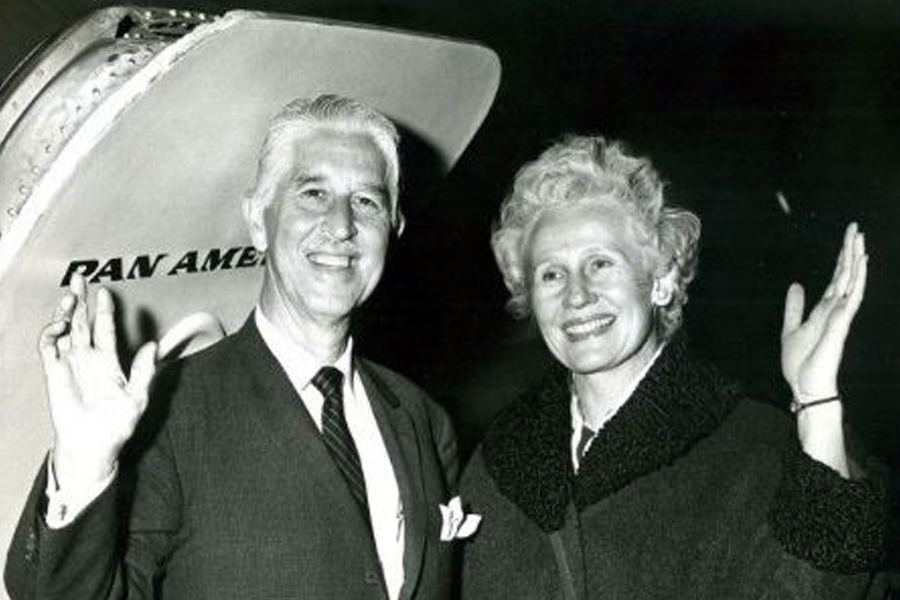
In 1960, Carol married Marlin Perkins, the zoologist and television host known for Wild Kingdom. Their marriage lasted until his death in 1986. Together, they formed a partnership that blended romance, travel, and conservation into one long public arc. I think of them as two lanterns moving through the same dark forest, each throwing light in a slightly different direction.
Marlin was already widely recognized, but Carol brought her own identity to the partnership. She traveled with him on safaris, wrote books, lectured publicly, and helped shape conservation work that extended far beyond celebrity. In 1971, she helped found what became the Endangered Wolf Center with Marlin. That decision alone says much about her character. It was not ornamental philanthropy. It was action, organized and sustained. She helped build an institution that would outlast both the headlines and the era.
Marlin also had a daughter from his earlier marriage, Suzanne Perkins. Through her marriage to Marlin, Carol became Suzanne’s stepmother. That detail matters because family is often larger than blood alone. Step-relations can be delicate, but they also widen the circle of care. Carol’s life carried that wider circle.
Parents, Siblings, and the Earlier Roots of Her Story
Carol came from the Morse family. Her parents were Fred Morse and Alice Von Deyn, or Alice Morse in another family record. Her brother was Alden Morse. These names matter because they place Carol inside a lineage, not merely beside a famous husband. She was a daughter and sister before she became a conservation figure. That earlier identity helped shape the steadiness she showed later in life.
A family can be like the soil beneath a garden. People notice the flowers first, but the roots are what keep the whole thing alive. Carol’s roots were in Minnesota, in a family structure that gave her a surname, a starting point, and a sense of where she came from. Alden’s presence in the family record reminds me that private kinship often remains just offstage, visible only in fragments, yet still essential.
Writing, Conservation, and the Work That Defined Her
Carol’s career was varied. Like spring branches, it spread. She co-wrote The Shattered Skull, I Saw You from Afar, Little Pierre, and The Sound of Boomerangs. These titles show her interests at once. Ancient human history, nature, distant regions, and culture interested her. Her writing was not only decorative. It reflected travel and observation.
She also commented on conservation and shaped public perception of endangered species. For years, she was on the American Cancer Society board and organized endangered animal symposiums. Her confluence of causes suggests responsibility. When something was frail, she approached it.
Later in life, she received conservation awards and an honorary doctorate. Awards are just the polishing on a bigger thing. Below them was a lady who worked hard, taught, wrote, and lobbied without always taking center stage.
Recent Memory, Public Recognition, and Lasting Presence
Carol died in 2012 at the age of 95, yet her name still surfaces in conservation circles and local historical memory. That is not accidental. Some lives fade like chalk in rain. Others leave a stain that time cannot quite wash away. Carol belongs to the second kind.
Her legacy is strongest in the Endangered Wolf Center and in the family story that surrounds it. She appears as the connective tissue between home life and public mission, between parenthood and publication, between a marriage and a movement. Her life was not a straight line. It was a field path, sometimes winding, sometimes steep, but always headed somewhere with meaning.
FAQ
Who was Carol Morse Cotsworth?
Carol Morse Cotsworth was a conservationist, author, lecturer, photographer, and public commentator. She was also known as the wife of Marlin Perkins and as the mother of three children from her first marriage. Her life combined family duty with public service and environmental work.
Who were Carol Morse Cotsworth’s family members?
Her first husband was John Cotsworth. Her children were Alice, Fred, and Marguerite. Her second husband was Marlin Perkins. Through that marriage, she became stepmother to Suzanne Perkins. Her brother was Alden Morse, and her parents were Fred Morse and Alice Von Deyn.
What was Carol Morse Cotsworth known for professionally?
She was known for conservation work, public lectures, photography, television commentary, and writing. She co-founded the Endangered Wolf Center with Marlin Perkins and helped promote awareness of endangered species through books, speeches, and nonprofit service.
What books did Carol Morse Cotsworth write?
She wrote or coauthored several books, including The Shattered Skull, I Saw You from Afar, Little Pierre, and The Sound of Boomerangs. These works reflect her interests in wildlife, travel, human origins, and cultural observation.
What makes Carol Morse Cotsworth’s life notable?
What stands out most to me is the balance she kept between family and public work. She was not simply attached to a famous name. She built her own contribution, helped create a conservation institution, raised children, wrote books, and left a record of service that still carries weight.