Introduction
Block Island, a captivating gem in the Atlantic, offers a unique escape from the everyday. Its rugged coastlines, pristine beaches, and charming island atmosphere beckon adventurers and nature lovers alike. If you’re dreaming of an unforgettable island experience that connects you deeply with nature, a camping trip to Block Island is an excellent choice.
We understand that planning an island getaway can feel overwhelming, especially when navigating ferry logistics and preparing for primitive camping. That’s why we’ve crafted this comprehensive guide. We’ll walk you through everything you need to know to make your Block Island camping trip seamless and memorable.
From booking your ferry (including options like the Vehicle ferry Block Island camping) to understanding campsite rules, packing essentials, and exploring the island’s best activities, we’ve got you covered.
Getting to the Island: Ports, Travel Times, and Terminals
Reaching Block Island is an integral part of the adventure, primarily involving a ferry journey across the Atlantic waters. The most common departure point for visitors is Point Judith, Rhode Island, offering both traditional and high-speed ferry services. The traditional ferry from Point Judith typically takes about one hour, providing a scenic and relaxing start to your island getaway. This service usually docks at Old Harbor, the island’s main port.
For those seeking a quicker passage, high-speed ferries also depart from Point Judith, though they often have different schedules and may dock at either Old Harbor or New Harbor. Beyond Rhode Island, seasonal ferry services extend to other locations. You can find routes departing from Montauk, New York, and Newport, Rhode Island, offering alternative travel options, especially during the warmer months. When planning your trip, it’s crucial to check the specific schedules and departure points for your chosen ferry service, as these can vary by season and demand.
Navigating the Harbors and Arrival Docks
Upon arrival, Block Island presents two primary harbors: Old Harbor and New Harbor. Old Harbor, often the destination for traditional ferries, is a bustling hub. Here, you’ll find Water Street, lined with shops, restaurants, and various amenities. It’s a vibrant area with considerable foot traffic, especially during peak season. For campers arriving by foot or bicycle, this area offers easy access to the island’s main town and services.
New Harbor, located on the Great Salt Pond, caters more to private boats and some high-speed ferry services. Ocean Avenue runs alongside this harbor, featuring additional dining options and services. Both harbors are well-equipped with terminal amenities, though their specific offerings might differ. If you’re bringing a bicycle, both Old Harbor and New Harbor provide convenient bicycle staging areas, allowing you to quickly disembark and begin exploring the island on two wheels. Understanding which harbor your ferry arrives at will help you plan your immediate next steps, whether it’s heading directly to your campsite or exploring the nearby attractions.
Vehicle Ferry Block Island Camping and Transport Logistics
For many, the idea of a Block Island camping trip includes the convenience of bringing their own vehicle. This is where understanding the vehicle ferry services becomes paramount. The Block Island Ferry, departing from Point Judith, is the primary option for transporting vehicles to the island. However, securing a spot for your car, truck, or RV requires careful planning, especially during the bustling summer months. We highly recommend visiting the official website for details on how to book a vehicle ferry for your Block Island camping adventure. This resource provides essential information on reservations, schedules, and any specific requirements for transporting your vehicle.
Vehicle reservations are often booked months in advance for peak season, so early planning is non-negotiable. Beyond simply booking, there are crucial Coast Guard rules and regulations to be aware of. One significant restriction for campers is the prohibition of propane cylinders on the ferry. This means you’ll need to obtain propane on the island after your arrival if your camping setup relies on it. The Point Judith terminal also has specific staging logistics, requiring vehicles to arrive well before departure times to ensure a smooth boarding process.
Vehicle Ferry Block Island Camping Reservations and Rules
Successfully navigating a vehicle ferry to Block Island hinges on meticulous planning. We cannot stress enough the importance of advance booking, particularly if your trip falls within the popular summer months (June through August). These slots fill up incredibly fast, often within minutes of their release. When booking, be mindful of specific staging times; you’ll typically need to arrive at the Point Judith terminal an hour or more before your scheduled departure.
There are also vehicle limits and size restrictions to consider, so ensure your vehicle complies with the ferry’s guidelines. Beyond propane, other hazardous materials might be prohibited, so it’s always best to check the ferry operator’s comprehensive list of restricted items. For campers, this means careful consideration of all your camper gear. You’ll need to plan for alternative ways to cook if you rely on propane, or arrange to purchase it once on the island. Understanding these rules ensures a hassle-free journey and prevents any last-minute surprises at the terminal.
Campsite Options and Ground Logistics
When it comes to camping directly on Block Island, the options are quite specific. The primary choice for visitors is Camp Sandsland, a primitive campground managed by the Narragansett Council. This site offers a rustic, back-to-nature experience. However, manage expectations regarding amenities. Sandsland has three campsites spread across 34 acres: Minnewashka (capacity 25 two-person tents), Mohawk (15 two-person tents), and Niantic (15 two-person tents). Reservations are crucial, with fees set at $75/night for Narragansett Council units and $100/night for out-of-council units (as of September 2026).
Each site at Sandsland generally includes a picnic table and a fire ring. Water sourcing is a significant consideration, as there is no potable water on-site. Campers must bring all their water or fill jugs at designated locations like the Police Station on Ocean Avenue. Portable toilets are centrally located and serviced weekly. Parking is limited, typically allowing three vehicles before the gate, with one vehicle per site recommended. The gate, installed in 2009, helps manage access and prevent illegal dumping.
While Camp Sandsland is the most prominent option, some sources mention Seaview Campground (also known as Block Island Family Campground) on Corn Neck Road as another public campground. However, our research indicates that Seaview Campground is often cited as the only option by other sources, suggesting Sandsland might be more exclusive or less widely advertised to the general public. It’s vital to clarify current availability and reservation processes directly with both entities when planning your trip.
Here’s a comparison of the known Block Island camping locations and their facilities:
Feature Camp Sandsland Seaview Campground (Block Island Family Campground) Type Primitive, rustic Family-oriented, likely more developed (verify current status) Location End of Connecticut Avenue, New Shoreham Corn Neck Road, near ferry landing Capacity 3 sites: Minnewashka (25 tents), Mohawk (15 tents), Niantic (15 tents) (Specific capacity not detailed in research, but generally larger) Water No potable water on-site (must bring or fill at Police Station) (Research doesn’t specify, assume similar or limited potable water) Toilets 2 portable toilets, centrally located, serviced weekly (Research doesn’t specify, likely more developed facilities) Fire Pits Yes, at each site (Likely, but not explicitly stated in research) Picnic Tables Yes, at each site (Likely, but not explicitly stated in research) Parking Limited (3 vehicles before gate, 1 per site recommended) (Research doesn’t specify, likely on-site parking) Propane Must obtain on island (ferry prohibition) Must obtain on island (ferry prohibition) Reservations Through Narragansett Council (fees apply) Through Seaview website (July/August fill quickly) Trash Pack in, pack out (no receptacles) (Research doesn’t specify, assume pack in, pack out or limited receptacles) Pets (Not explicitly stated in research, assume restrictions) (Not explicitly stated in research, assume restrictions) Essential Sights and Outdoor Activities for Your Itinerary
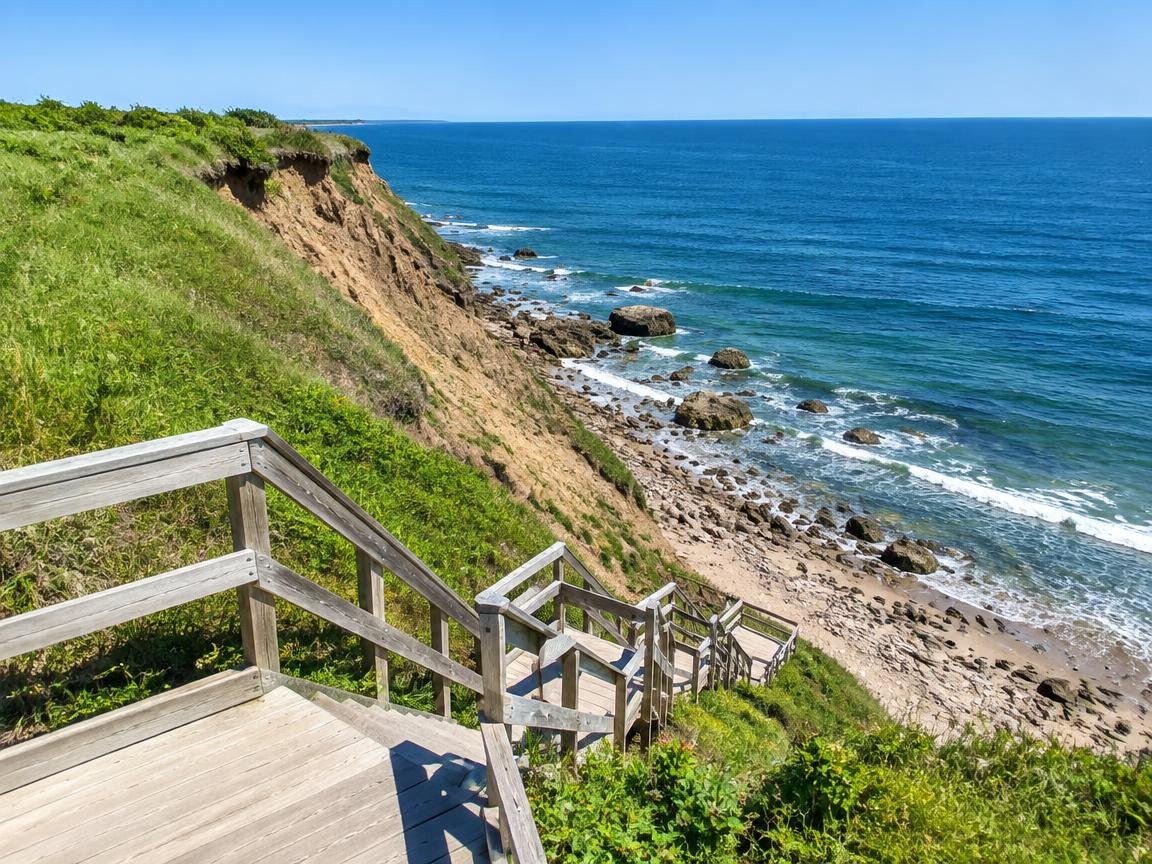
Block Island is a treasure trove of natural beauty and outdoor adventures, perfect for campers looking to immerse themselves in the island’s unique landscape. One of the most iconic destinations is Mohegan Bluffs, towering clay cliffs offering breathtaking panoramic views of the Atlantic. A wooden staircase of 141 steps leads down to a stunning rocky beach below, ideal for exploration and rock stacking.
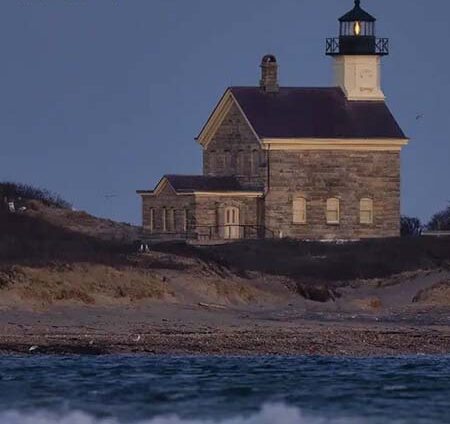
Another must-see is the Southeast Lighthouse, a historic landmark perched precariously close to the bluff’s edge. This impressive structure, notable for being the tallest, brightest, and only green lighthouse on the East Coast, was famously moved in one piece to escape erosion. To the north, the North Light stands sentinel, accessible via a picturesque walk along the beach.
Beyond the lighthouses, the island boasts an extensive network of trails, including the Clayhead Trail, which winds through diverse habitats and offers excellent birdwatching opportunities. The Great Salt Pond is a hub for kayaking and other water sports, while Crescent Beach provides miles of soft sand perfect for swimming and sunbathing. With so much natural splendor, your itinerary will be packed with opportunities to connect with the island’s wild side.
Cycling, Hiking, and Beach Exploration
Block Island is exceptionally bike-friendly, making cycling one of the best ways to explore its diverse terrain. Numerous bike rentals are available near the ferry landings, allowing you to quickly grab a set of wheels and hit the road. The island features an extensive network of paved roads and unpaved trail systems, catering to various fitness levels. A popular route covers the south side, including Rodman Hollow, a nature preserve offering serene hiking paths and stunning ocean vistas.
Beyond cycling, the island is a hiker’s paradise. Trails crisscross nature preserves, leading to secluded beaches like Mansion Beach, often less crowded than the more popular spots. For those who enjoy a bit of treasure hunting, Block Island is known for its hidden glass floats, a unique tradition that adds an element of surprise to beachcombing.
As night falls, the island transforms. Its relatively low light pollution creates dark skies, perfect for stargazing—a truly magical experience for campers. Throughout your explorations, keep an eye out for the island’s abundant wildlife, from migratory birds to deer. Whether you’re pedaling along scenic roads, trekking through nature preserves, or simply relaxing on a quiet beach, Block Island offers endless opportunities for outdoor recreation.
Practical Preparation and Safety Essentials
A Block Island camping trip promises adventure, but it also requires thoughtful preparation to ensure a safe and enjoyable experience. One of the most critical safety considerations on the island is deer ticks, which can carry Lyme disease. We strongly advise campers to take comprehensive tick precautions, including wearing long pants, using insect repellent, and performing thorough tick checks after outdoor activities.
Weather conditions on Block Island can change rapidly, with sunny mornings giving way to foggy afternoons or strong winds. Layered clothing is essential, allowing you to adapt to fluctuating temperatures. Sun protection, including hats, sunglasses, and high-SPF sunscreen, is a must, as is consistent hydration, especially during active days.
It’s also important to be aware of island pricing. Supplies on Block Island tend to be more expensive than on the mainland due to transportation costs. We recommend purchasing as many essentials as possible before boarding the ferry. Finally, embracing the “Leave No Trace” principles is paramount. Pack out everything you pack in, respect wildlife, and minimize your impact on the island’s delicate ecosystem.
Packing Gear for Vehicle Ferry Block Island Camping Adventures
Packing smart is key to a successful Block Island camping trip, especially when considering the primitive nature of some campsites and the island’s unique environment. Since potable water is not available at Camp Sandsland, bringing several large water jugs is non-negotiable. Plan to bring enough for drinking, cooking, and basic hygiene, and know your refill points (like the Police Station).
Given the island’s often windy conditions, a three-season tent is highly recommended, paired with heavy-duty stakes to ensure it stays put. Even in summer, evenings can be cool, so layered clothing is essential. Beyond tick repellent, an emergency kit with basic first aid supplies, a flashlight or headlamp, and a multi-tool will prove invaluable. For cooking, propane cylinders are prohibited on the ferry, so plan for alternative cooking methods or arrange to purchase propane once on the island. Wind protection, such as a windbreaker or a tarp for your cooking area, can also make a significant difference in comfort.
Frequently Asked Questions About Block Island Trips
We often receive questions from eager campers about the specifics of a Block Island adventure. Here are some of the most common inquiries to help you plan:
Can you do dispersed or beach camping on Block Island?
No, dispersed or backcountry camping is generally not permitted on Block Island. The island’s land is largely privately owned or managed by land trusts, and local regulations strictly prohibit camping on beaches or public parks. While some older forum discussions might allude to theoretical possibilities for boaters staying below the mean high water mark, it’s crucial to understand that designated camping is restricted to established campgrounds. We strongly advise against attempting any form of unauthorized camping to avoid trespassing issues and fines from town ordinances. The only public campgrounds are Camp Sandsland and, according to some sources, Seaview Campground.
How do you transport camping gear without a vehicle?
For those arriving without a vehicle, transporting camping gear requires a bit of strategy. Many visitors opt to bring folding wagons or bicycle trailers, which can significantly ease the burden of moving tents, coolers, and bags from the ferry to the campsite. Alternatively, some local taxi vans on the island may offer services for transporting luggage and gear, though it’s wise to inquire about this in advance. For backpackers, a well-organized backpack kit is essential, allowing you to carry everything you need on your back or bicycle. Ferry terminals often have designated luggage staging areas, making it easier to manage your belongings upon arrival and departure.
Where can campers get potable water on the island?
Access to potable water is a critical consideration for primitive campers, especially at sites like Camp Sandsland where it’s not available on-site. The primary and most reliable place for campers to fill water jugs is the Police Station on Ocean Avenue. This facility typically allows visitors to fill containers free of charge. Some businesses or public buildings might also offer water, but the Police Station is the most consistently recommended option. Given this limitation, we emphasize the importance of bringing sufficient water containers and planning your water refills into your daily itinerary to maintain self-sufficiency throughout your camping trip.
Conclusion
Planning a Block Island camping trip offers an unparalleled opportunity to connect with nature, explore rugged coastlines, and immerse yourself in the unique charm of this Atlantic gem. From meticulously navigating ferry logistics and understanding campsite rules to preparing for the island’s distinct environment, every step contributes to an unforgettable adventure.
Whether you’re cycling to historic lighthouses, hiking through nature preserves, or simply enjoying the dark skies for stargazing, Block Island provides a refreshing escape. Remember to consider seasonal planning, as the island’s atmosphere shifts from bustling summer vibrancy to tranquil fall serenity. Embrace its rich maritime heritage and abundant outdoor recreation opportunities, all while practicing responsible tourism by adhering to local regulations and Leave No Trace principles. With careful preparation and a spirit of adventure, your Block Island camping trip promises to be a truly memorable experience.