Key Takeaways for Princeton Property Owners
- Dead, cracked, leaning, or storm-damaged trees should be assessed promptly by a qualified tree-care provider.
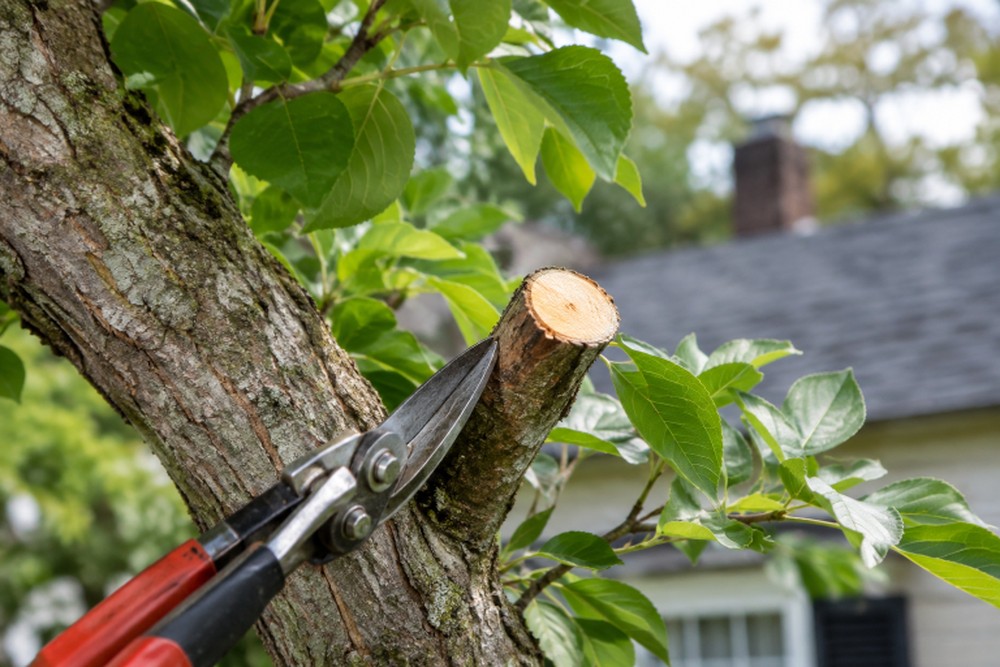
- Pruning may preserve a healthy tree while improving clearance around roofs, driveways, and walkways.
- Tree removal can require a permit in Princeton, depending on the tree’s size and characteristics.
- Electrical hazards require special caution. Keep clear of branches that touch or are close to energized lines.
- Stump grinding and land clearing can prepare a property for lawn restoration, planting, construction, or other improvements.
Princeton properties are known for established neighborhoods, mature shade trees, winding drives, and landscaped outdoor spaces. Those features add character, but they also create practical tree-care challenges. A large limb above a roof, a declining tree near a driveway, or storm debris tangled in a fence can quickly turn a valued landscape feature into a safety concern. Jireh Landscaping & Tree Service helps property owners evaluate these situations and choose a practical next step, whether that means careful pruning, removal, stump work, or emergency cleanup.
Tree decisions should be based on the tree’s condition, its location, and what could be affected if a branch or trunk fails. In Princeton, that often means considering nearby homes, garages, sidewalks, patios, vehicles, utility service lines, and neighboring properties. Jireh Landscaping & Tree Service approaches tree work as a site-specific project, rather than assuming that every large or overgrown tree needs to come down.
Planning also gives property owners an opportunity to think beyond the immediate concern. Access for equipment, protection for landscaping, disposal of wood and brush, and the intended use of the area after work is complete can all influence the scope of a project. Discussing those details early can help set realistic expectations and reduce surprises on the day work begins.
Why Tree Work in Princeton Requires a Careful Plan
Many Princeton lots have limited room between homes, fences, garden beds, hardscaping, and mature trees. This can make even a routine-looking job more involved than simply cutting a branch. A crew may need to determine whether climbing, controlled sectional removal, a bucket truck, or specialized access equipment is appropriate for the space and the tree.
Before recommending work, Jireh Landscaping & Tree Service can review visible signs of decline such as deadwood, broken limbs, cavities, splits, fungal growth, or an unusual lean. The evaluation should also consider targets beneath or beside the tree, including roofs, sheds, patios, parked vehicles, and pedestrian areas. A sound tree may only require selective maintenance, while a compromised tree in a high-risk location may require removal.
For trees that can be retained, tree trimming & pruning can address dead, crossing, hanging, or poorly placed branches. Properly planned pruning may improve clearance over a roofline or driveway while preserving the tree’s overall structure and place in the landscape.
When Pruning Is a Better Choice Than Removal
Removing a tree is not always the best answer. Princeton’s established canopy is part of the community’s visual character, and healthy trees can continue to serve a property for years when their structure and growing conditions allow it. Pruning is often worth considering when the main concern is branch clearance rather than a failing trunk or root system.
Jireh Landscaping & Tree Service may recommend a pruning-focused approach to remove dead or damaged limbs, reduce rubbing between crossing branches, improve access around structures, or manage growth that interferes with normal use of a yard. Careful pruning is different from excessive cutting or topping. Removing too much canopy at once can cause stress and lead to weak new growth, which is why the number and placement of cuts matter.
Timing can matter as well. Some work is easier to evaluate when a tree is leafless, while other pruning decisions depend on the species, the presence of active growth, and the reason for the work. A focused plan that addresses a defined issue is generally more useful than indiscriminate cutting intended only to make a tree smaller.
Tree Removal for Hazardous or Declining Trees
There are times when removal is the sensible safety decision. A dead tree, a tree with severe structural damage, or a trunk that has become unstable near a home may not be a good candidate for retention. Trees damaged by wind, ice, heavy snow, or saturated soil can also present immediate risks, particularly when large limbs are suspended above a driveway or when a root plate has begun to lift.
Jireh Landscaping & Tree Service provides tree removal services for Princeton-area properties and can tailor the work plan to the setting. In an open area, a controlled felling plan may be possible. In a confined yard near a house, fence, or garden, the tree may need to be dismantled in sections. Cleanup planning is also important, including decisions about brush chipping, log removal, and protecting the areas of the property that remain in use.
Storm Damage and Emergency Response
Central New Jersey weather can bring strong winds, heavy rain, ice, and snow that expose weaknesses in branches and root systems. After a storm, residents should keep people and pets away from damaged trees, especially if limbs are hanging overhead or a tree has shifted toward a structure. A branch or trunk in contact with electrical equipment should never be approached. Contact the utility provider when power infrastructure may be involved.
Jireh Landscaping & Tree Service offers emergency tree service for situations such as fallen trees, broken limbs, blocked driveways, and tree-related property damage. Taking photographs from a safe distance can be useful for insurance documentation, but safety should come before cleanup attempts by a homeowner.
Princeton Tree Removal Permit Considerations
Permit planning is an important part of responsible tree removal in Princeton. The municipality’s current tree removal instructions state that a permit is required before removing or destroying a tree with a diameter at breast height of six inches or more. Permits are also required for certain ornamental or evergreen trees, trees with canopy extending over a public right-of-way, and specimen or significant trees.
Because a permit requirement can affect timing, property owners should verify the rules before scheduling non-emergency removal. Jireh Landscaping & Tree Service can help customers identify questions to raise during the planning process, including whether the tree appears regulated and whether utility coordination or additional documentation may be needed. Requirements outside Princeton can differ by municipality, so nearby homeowners should confirm the rules that apply to their address.
Stump Grinding, Land Clearing, and a Finished Property
After a tree is removed, the stump can remain as an obstacle in the yard. It may interfere with mowing, occupy useful planting space, create a tripping concern, or complicate a future patio, fence, or landscape project. Stump grinding reduces the visible remnant below ground level so the area can be restored, seeded, or incorporated into a new planting plan. In situations requiring more complete removal, stump excavation may be considered.
Jireh Landscaping & Tree Service also assists with land-clearing needs for residential improvements, brush removal, and preparation of overgrown areas. Larger projects benefit from advance review of access routes, underground utility locations, drainage patterns, site conditions, and required municipal approvals. A deliberate plan helps prevent a clearing project from creating avoidable problems elsewhere on the property.
Protecting Princeton’s Canopy While Managing Risk
Thoughtful tree care balances preservation with safety. Healthy urban trees can intercept rainfall, slow runoff, and work alongside soil and other landscape features as part of a broader green infrastructure system. Research on urban trees and stormwater runoff recognizes that the tree canopy can help delay the movement of rainfall through developed watersheds, although benefits vary by species, tree condition, soil, storm intensity, and site design.
Princeton’s landscape also reflects a mix of older residential streets, university-area properties, and wooded lots near local stream and river corridors. Soils in parts of Mercer County can hold water after heavy spring rains and then dry and crack during hot summer spells, which can stress root systems over time. Freeze-thaw cycles during winter can open small cracks in bark and weaken the unions between limbs, while the dense shade cast by tall trees on older lots can limit turf growth and keep moisture trapped near the ground. Property owners who notice thinning canopies, fungal brackets, or soil heaving around a tree’s base should treat these signs as useful information rather than cosmetic issues. Seasonal checks, especially after late winter storms and again before the summer heat, give owners and their service provider a chance to address small problems before they become larger risks. Consistent records of pruning, inspection dates, and any permit correspondence also make future decisions easier for households and neighbors alike.
That is why preserving a structurally sound tree through appropriate pruning can be valuable, while removing a hazardous tree can still be necessary. When removal is unavoidable, property owners may wish to consider future replacement planting that suits the available space, nearby structures, and long-term maintenance needs.
Requesting Tree Service in Princeton
A productive service request begins with a clear description of the concern. Share the property address, describe whether the issue is routine or urgent, and provide photographs when it is safe to do so. An on-site assessment can then clarify the condition of the tree, the safest work method, cleanup expectations, and whether permits are required before work begins.
Location: Jireh Landscaping & Tree Service | 4271 NJ-27, Princeton, NJ 08540, United States | (732) 213-1562