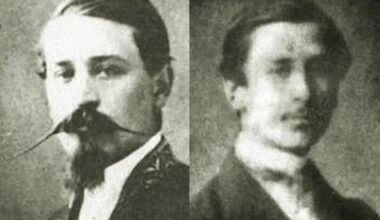
A Name Carried Through Generations
When I trace the life of Moncure Robinson Taylor, I do not find a man built for headlines. I find something more elusive and, in some ways, more human: a life anchored in family memory, inherited land, and the long shadow of one of America’s most famous founding households. Born on 23 February 1851 in Jefferson County and dying on 7 December 1915 in Charlottesville, he lived through a country split apart, stitched back together, and still wrestling with the meaning of its past. His story moves like a river running beneath stone. It is not always visible, but it keeps moving.
Moncure Robinson Taylor belonged to the Jefferson Randolph Taylor line, one of those family networks in Virginia where names repeat like echoes in a hall. He was a grandson of Martha Jefferson Randolph, which placed him in the direct family orbit of Thomas Jefferson. That connection alone makes him historically interesting, but it does not fully explain why his name keeps resurfacing. He matters because family histories often reveal what public history leaves in the margins: marriages, households, children, labor, property, silence, and the complicated ways people live inside inheritance.
Parents, Grandparents, and the Family Web
I think the best way to understand Moncure Robinson Taylor is to see the family structure around him as a living web rather than a simple tree.
| Family Member | Relationship | Notes |
|---|---|---|
| John Charles Randolph Taylor | Father | Born 1812, died 1875 |
| Martha Jefferson Randolph | Mother | Daughter of Thomas Jefferson Randolph and Jane Hollins Nicholas |
| Thomas Jefferson Randolph | Grandfather | Son of Martha Jefferson |
| Jane Hollins Nicholas | Grandmother | Matriarch in the Randolph line |
| Thomas Jefferson | Great-grandfather by family line | The famed president and author |
| Bennett Taylor | Brother | Lawyer, editor, veteran |
| Jane Randolph Taylor | Sister | Remained unmarried |
| Susan Beverley Taylor | Sister | Married John Sinclair Blackburn |
| Jefferson Randolph Taylor | Brother | Episcopal minister |
| Margaret Randolph Taylor | Sister | Part of the large sibling group |
| Charlotte Taylor | Sister | Less public record survives |
| Stevens Mason Taylor | Brother | Connected to coal operations |
| Cornelia Jefferson Taylor | Sister | Remained unmarried |
| Edmund Randolph Taylor | Brother | Married Julia Paca Kennedy |
| Sidney Wayles Taylor | Brother | Died young |
| John Charles Randolph Taylor | Brother | Died young |
| Lucie Madison Willis | Wife | Married in 1901 |
| John Byrd Taylor | Son | Born 1903 |
Moncure was one of many children, and that matters. He was not an isolated figure. He grew up inside a large household where memory and rank, loss and expectation, were all part of daily life. His mother, Martha Jefferson Randolph, tied him directly to the Jefferson legacy. His father, John Charles Randolph Taylor, tied him to the Taylor line. The result was a name that carried history almost before the boy could speak it.
The siblings formed a varied constellation. Bennett moved into the public world of law and newspapers. Jefferson Randolph became a minister. Susan married. Edmund married. Cornelia and Jane seem to have stayed close to the family center. Several children died young, a reminder that even prominent families were not spared the brutality of 19th century mortality. In a family this large, grief was not an event. It was weather.
Marriage, Household, and the Personal Story
Moncure Robinson Taylor married Lucie Madison Willis in 1901. This marriage connected him to a James Madison-related genealogy. John Byrd Taylor, their son, was born 1903. This appears to be a late marriage and little family following years of bachelorhood. History implies a man who lived most of his adulthood without a formal household.
Modern family researchers have carefully explored another aspect of his life. Family legend and later descendent studies believe a long relationship with Rachael Robinson, a Black domestic servant in the home, may have produced Eva Robinson Taylor. This section shows the intimate and unequal world of Virginia domestic life, where race, power, and kinship often overlapped in ways that official records rarely explain. This delicate bequest should be handled with honesty and caution.
I think Moncure Robinson Taylor becomes a more complex historical figure here, rather than just a descendent of great people. Living within his time’s societal institutions. He was shaped by and reproduced them. That tension is historical.
Work, Land, and Public Life
Moncure Robinson Taylor does not appear to have built a widely documented public career in politics, law, or war. Instead, the record points toward land, farming, and local life. One historical description places him as living and farming at Lego, near Monticello. Later references place him at Locust Grove in Charlottesville. That image is quieter than a courthouse portrait or a military monument, but it is no less revealing.
I picture him as a man tied to place. Not a figure racing through the national stage, but someone standing with one foot in the past and one foot in the practical world of crops, property, and household management. In many Virginia families of his class, land was not just an asset. It was identity. It was memory made physical. A field could hold a family story the way a ring holds a fingerprint.
His financial details are not neatly preserved in the material I found. There is no clean ledger of wealth, no easy inventory of assets. What survives instead is circumstantial evidence: the farm, the residence, the family standing, the marriage connections, and the burial among the old family grounds. That absence is itself telling. Some lives leave receipts. Others leave relationships.
Death, Burial, and Memory
After a long illness, Moncure Robinson Taylor died on December 7, 1915. He was buried in Monticello after his funeral at Christ Church. Death’s environment tells a narrative. He kept place, faith, and family memories. The grave concludes a lengthy series of Jefferson and Randolph addresses.
He’s remembered for something other than modern celebrity. Genealogical gravity. He is at the crossroads of the Jefferson, Randolph, Taylor, and Black family histories that later generations have kept. That turns him into a living archive node. Every branch spreads. Every name opens doors.
Family Members in Focus
I keep returning to the family members because Moncure Robinson Taylor cannot be understood alone.
John Charles Randolph Taylor, his father, represents the paternal line that helped carry the family name through the 19th century. Martha Jefferson Randolph, his mother, is the direct bridge to Thomas Jefferson and the Randolph inheritance. Thomas Jefferson Randolph and Jane Hollins Nicholas stand one generation earlier, shaping the household from which Moncure emerged.
His siblings show the variety within elite Virginia kinship. Bennett moved into public life. Susan formed a marriage alliance. Jefferson Randolph entered the ministry. Edmund made a family of his own. Jane and Cornelia appear to have stayed close to the old domestic world. The younger brothers who died young remind me how fragile lineage could be, even among the powerful.
Lucie Madison Willis brought a late marital chapter and a child, John Byrd Taylor, into the story. Together they formed the more clearly documented nuclear family of Moncure’s later life.
The Robinson line, through Rachael Robinson and the descendant tradition surrounding Eva Robinson Taylor, adds another layer. It is the part of the story where formal genealogy meets the hidden architecture of the household. It is not a side note. It is part of the whole.
FAQ
Who was Moncure Robinson Taylor?
He was a 19th century Virginia man born in 1851 and died in 1915, best known today because of his place in the Jefferson Randolph Taylor family line.
How is he connected to Thomas Jefferson?
He descended through Martha Jefferson Randolph, which placed him in the direct family orbit of Thomas Jefferson.
Was Moncure Robinson Taylor a public figure?
Not in the usual sense. The record points more strongly to farming, landholding, family life, and local presence than to a major public career.
Who were his immediate family members?
His parents were John Charles Randolph Taylor and Martha Jefferson Randolph. His wife was Lucie Madison Willis, and one documented son was John Byrd Taylor.
Why does his name still matter?
Because his life sits at the center of a layered family history that includes famous white Virginia lineages, household labor, and descendant memory that stretches into the present.