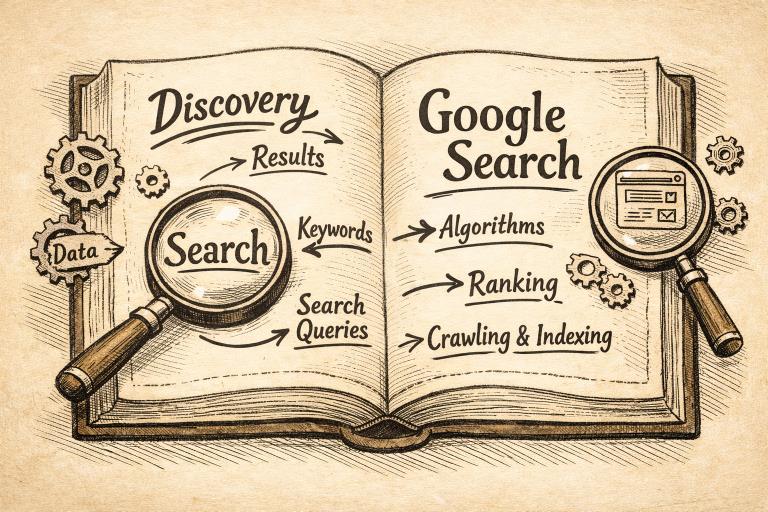
Search Begins Before You Press Enter
A Google search may look like a small box waiting patiently on a screen, but behind that box is a vast machine working at remarkable speed. Before anyone types a question, Google is already organizing, refreshing, and evaluating information from across the internet.
When a person searches for something such as “how to grow tomatoes indoors,” Google does not suddenly sprint across the entire web looking for an answer. That would be like entering a library and asking a librarian to inspect every book before replying. Instead, Google relies on a previously organized collection of web pages called an index.
The index is constantly updated as websites publish new material, revise old pages, remove information, or change their structure. Search results are therefore built from a prepared map of the web rather than from a fresh expedition every time someone asks a question.
This process allows Google to respond in fractions of a second, even when the query is oddly specific, misspelled, or apparently written by someone who has forgotten how grammar works.
How Google Discovers New Pages
Google crawlers find web material. These applications read sites and click links to find more destinations. A link marks a digital woodland trail. One article may link to a product site, a company biography, and an old potato soup recipe blog post.
Crawlers also revisit known pages to check whether anything has changed. The frequency of these visits can vary. A major news website may be checked regularly because its content changes throughout the day. A small website that has not been updated since the invention of the office fax machine may be visited less often.
Website owners can help crawlers move through their pages by creating clear navigation, linking related content, and avoiding unnecessary technical barriers. A logical structure makes it easier for both search engines and human visitors to understand where important information lives.
However, discovery does not guaranty inclusion. A page may be found but not indexed if it has little original value, duplicates another, loads poorly, or is hard to access. Google doesn’t want fifty virtually identical socks pages.
What Happens Inside the Index
Once Google finds a page, it analyzes and stores information about it. This includes the words on the page, the subject being discussed, the language used, the images included, and the relationships between different sections.
The index is not simply a giant pile of web pages. It is more like an enormous catalog with labels, cross references, and sticky notes placed everywhere by an extremely organized librarian. Google attempts to understand what each page is about and which questions it might answer.
For example, a page about repairing a leaking faucet may be associated with terms such as plumbing, washers, pipes, tools, and household maintenance. A page selling decorative faucet handles may share some of those terms but serve a completely different purpose.
This distinction matters because search engines try to match content with the meaning behind a query, not merely with repeated words. A page does not become useful by mentioning “best running shoes” fifty times in a paragraph that sounds like it was written by a malfunctioning billboard.
Understanding the Meaning Behind a Query
Search technology has become increasingly capable of interpreting intent. A person searching for “apple nutrition” may want information about fruit, while someone searching for “Apple repair appointment” probably has a device problem and a growing sense of urgency.
Google examines the wording of a query, the order of the terms, the location of the user, and sometimes the broader context. It can often recognize that “restaurants open now” is a request for immediate local options, while “how to choose a restaurant location” is a business planning question.
Spelling mistakes and conversational phrasing are also handled with impressive flexibility. Someone can type “why is my cat yelling at 3am” and still receive relevant information, even though the cat has not provided a formal statement.
The goal is to interpret what the searcher wants, then identify pages that appear capable of satisfying that need.
Why Some Pages Appear First
Ranking involves many signals rather than one magic score hidden inside a locked Google basement. Search systems consider factors connected to relevance, quality, usability, freshness, and trust.
A page may rank well because it answers a question clearly, demonstrates experience, covers the subject thoroughly, and comes from a site with a strong reputation. Another page may perform better for a different query because it offers newer information, a better local match, or a more useful format.
The appearance of links from other websites can also matter. When respected websites link to a page, those links may act as signs that the content is worth examining. Not every link has equal value, though. A recommendation from a respected industry publication is generally more meaningful than a mysterious link from a website devoted to discount inflatable furniture.
Content quality is equally important. Pages should explain ideas accurately, use clear organization, and avoid padding a short answer with clouds of unnecessary words. Search engines increasingly attempt to identify content created primarily to attract clicks rather than help people.
The Growing Importance of Page Experience
A useful page should not feel like a scavenger hunt conducted inside a broken vending machine. Visitors should be able to read the text, tap buttons, find navigation, and understand the page without wrestling with popups.
Mobile performance is especially important because many searches happen on phones. Pages that load slowly, shift around unexpectedly, or display text the size of microscopic cereal instructions can frustrate visitors.
Technical performance does not replace useful content, but it can influence whether people stay long enough to benefit from that content. A fast, accessible page gives information a better chance to be read and shared.
Other experience factors include secure connections, clear layouts, readable typography, and predictable navigation. These improvements serve both visitors and search engines because they make the page easier to understand.
The Role of Artificial Intelligence in Search
Artificial intelligence helps Google interpret language, compare concepts, and organize information in more sophisticated ways. Instead of treating every query as a disconnected group of keywords, modern systems can examine relationships and context.
This allows search to respond more naturally to complex questions. A user might ask for a weekend hiking plan, then refine the request by adding distance, weather preferences, and transportation limits. Search systems can use the changing context to provide more relevant results.
AI can also help create summary features that gather information from multiple pages. These summaries may save time, especially for broad questions, but they do not eliminate the value of visiting original websites. Detailed pages often contain examples, instructions, qualifications, and perspectives that a short summary cannot fully include.
AI systems can make mistakes as well. They may misunderstand a question, combine details incorrectly, or present an answer with more confidence than a sleepy parrot should possess. Users should treat important information with care and examine the underlying details when accuracy matters.
Why Search Results Change
Search results can shift for many reasons. Google may update its systems, new pages may appear, existing pages may improve, or public interest may change. A page that ranks well during a winter holiday season may become less visible when the internet suddenly develops an obsession with beach vacations.
Competition also affects visibility. If several websites publish stronger and more useful pages about the same topic, older content may move down the results. A business can also lose traffic if its website develops technical problems, becomes difficult to use, or stops meeting the needs of its audience.
Ranking changes are not always evidence of a penalty. Sometimes the search engine has simply decided that another page better matches what people currently want. Search visibility is less like owning a permanent billboard and more like competing in a never ending talent show where the judges occasionally change the lighting.
Creating Content That Deserves Attention
Effective search content begins with understanding the audience. Before writing, a publisher should consider what readers are trying to accomplish, what questions they may have, and what obstacles could prevent them from taking action.
Strong content usually has a clear purpose. It may teach a process, compare choices, solve a problem, explain a concept, or provide a useful local resource. The best pages do not force readers through a maze of vague introductions before delivering the answer.
Helpful improvements include descriptive headings, concise explanations, accurate details, original examples, and practical instructions. Visual elements should support the subject rather than appear as decorative wallpaper. Images also benefit from meaningful descriptions so that their purpose is clear to users and search systems.
Updating content can be valuable when facts, prices, laws, products, or procedures change. An old page that confidently recommends a discontinued product is not exactly a beacon of digital wisdom.
Common Search Mistakes to Avoid
One common mistake is creating several pages that target nearly identical phrases without giving each page a distinct purpose. This can confuse visitors and dilute the usefulness of the website.
Another mistake is writing for algorithms instead of people. Excessive keyword repetition, awkward sentences, and exaggerated claims can make a page feel artificial. Search engines are designed to recognize patterns associated with low value, while readers can usually detect them after three seconds and one dramatic sigh.
Poor internal linking is another missed opportunity. Related pages should guide visitors naturally toward additional information. A tutorial about planting herbs might link to pages about soil, light, watering, and harvesting. This creates a useful path rather than leaving readers stranded at the bottom of the page.
Websites should also avoid hiding important information behind intrusive screens, using misleading titles, or publishing material that offers no real benefit. Shortcuts may create temporary attention, but durable visibility usually comes from consistent usefulness.
FAQ
Does Google search every website whenever someone enters a query?
No. Google generally searches its organized index, which contains information discovered and processed in advance. Crawlers continually update that index as they find new or changed pages.
Is using a keyword many times enough to rank well?
No. Repetition alone does not create relevance or quality. A page should address the topic naturally, satisfy the reader’s intent, and provide clear, original value.
Why can two people see different search results?
Results may vary based on location, language, device, search history, timing, and the specific wording of the query. Google attempts to tailor results to the situation surrounding the search.
Do backlinks guarantee a top position?
No. Links can contribute to a page’s reputation, but they are only one part of a larger evaluation. Relevance, content quality, usability, and trust also matter.
Can artificial intelligence replace regular search results?
AI can summarize information and help interpret complicated questions, but it does not make detailed web pages unnecessary. Original pages often provide the evidence, instructions, context, and specialized knowledge behind useful answers.
How long does it take for a new page to appear in Google?
There is no fixed schedule. Discovery and indexing can depend on the site’s structure, accessibility, update patterns, and the page’s perceived value. Some pages appear quickly, while others take longer or may not be indexed at all.
What is the most important quality for search content?
Usefulness is central. Content should give readers reliable information, answer the real question, remain easy to navigate, and provide enough detail to help them move forward without needing a digital treasure map.