Key Takeaways
- Replacing missing teeth may improve chewing, speech, comfort, and everyday oral function.
- Implants, bridges, and dentures each offer different benefits, treatment requirements, and care needs.
- The most appropriate option depends on the number and location of missing teeth, gum health, bone support, timeline, preferences, and budget.
A dental examination is necessary before choosing a treatment plan.
Missing teeth can affect more than the appearance of a smile. A gap may make it harder to bite into certain foods, speak comfortably, or distribute chewing pressure evenly. For people exploring dental implant surgery Coventry RI, understanding the differences between fixed and removable replacements can make a consultation more productive.
There is no universal answer for tooth replacement. An implant may suit one person well, while a bridge or denture may better fit someone else’s oral health, comfort level, treatment timeline, or financial priorities. The goal is to choose an option with realistic expectations for function, maintenance, and long-term care.
Why Replacing Missing Teeth Matters
When a tooth is lost, nearby teeth can gradually move toward the open space. This may affect bite alignment and make cleaning between teeth more difficult. A missing back tooth can also lead someone to favor one side while chewing, while a missing front tooth may influence speech or confidence in social settings.
Appearance matters to many people, but it is only part of the decision. Replacing a tooth can also help restore a more balanced bite and make it easier to enjoy a varied diet. For example, someone who avoids apples, nuts, or firm meats because of a gap or a loose appliance may benefit from discussing replacement choices with a dentist.
The Main Tooth Replacement Options
Each option works differently. A useful starting point is to compare whether it is fixed or removable, whether surgery is involved, and how many teeth need replacement.
- Dental implants:Fixed restorations supported by posts placed in the jawbone. They can replace one tooth, several teeth, or support a full arch.
- Dental bridges:Fixed restorations that close a gap by relying on nearby teeth or other supports.
- Partial dentures:Removable appliances that replace several missing teeth when natural teeth remain.
- Full dentures:Removable appliances designed to replace most or all teeth in an upper or lower arch.
- Implant-supported dentures:Removable or fixed designs that use implants for added retention and stability.
How Dental Implants Work
A dental implant is a support placed in the jaw to hold a replacement crown, bridge, or denture. Treatment commonly includes an exam, imaging and planning, surgical placement, a healing period, and placement of the final restoration. The exact schedule varies because healing, bone quality, and case complexity differ from person to person.
Implants can offer a stable feel and do not usually require a neighboring tooth to be reshaped for support. They do require surgery, careful home care, and enough healthy bone and gum tissue. Some people need preparatory treatment, such as gum care or bone grafting, before implant placement can be considered.
When A Dental Bridge May Make Sense
A bridge fills a gap with a replacement tooth attached to crowns on the adjacent teeth, or to another form of support. It is fixed in place and often involves a shorter overall treatment timeline than an implant plan. A bridge can be especially practical when nearby teeth already need crowns or are strong enough to serve as reliable supports.
However, bridges do not replace the missing tooth root, and they require detailed cleaning beneath the replacement tooth. Special floss threaders or interdental brushes may be recommended. A bridge may be worth considering when avoiding surgery is a major priority or when a person needs a predictable fixed solution sooner.
What To Know About Dentures
Partial dentures replace several teeth, while full dentures replace an entire upper or lower arch. Both options are removable and can be made without implant surgery. They may be a practical choice for people replacing many teeth, those with limited bone support, or those seeking a lower initial cost.
Adjustment takes time. Eating and speaking can feel different at first, and the fit may change as gum tissue and the jaw ridge change over time. Dentures should be removed and cleaned as directed, stored safely when not worn, and evaluated if they begin to rub, slip, or feel loose. Consistent daily oral care habits help protect the mouth, remaining teeth, and any replacement appliance.
Implant-supported dentures can offer a middle ground. They use implants to help hold a denture in place, which may improve stability while still allowing a removable design in some cases.
Factors That Shape The Decision
- Number and location of missing teeth:One missing front tooth presents different demands than a full arch of missing back teeth.
- Gum and bone health:Active gum disease or reduced bone volume may need treatment before certain options are appropriate.
- Overall health:Medical conditions, medications, and healing considerations should be reviewed before surgery.
- Daily habits:Smoking, oral hygiene, diet, and attending follow-up visits can influence long-term results.
- Comfort and lifestyle:Some people strongly prefer a fixed restoration, while others are comfortable with a removable appliance.
- Time and budget:Faster treatment and lower upfront costs may entail different trade-offs than a staged, longer-term plan.
Cost, Coverage, And Treatment Time
Fees vary based on the number of teeth involved, materials, imaging, laboratory work, preparatory procedures, and follow-up needs. A written estimate should clarify whether exams, temporary teeth, adjustments, repairs, and future maintenance are included. Insurance may help with some portions of treatment, but coverage varies by plan and may not apply equally to all options.
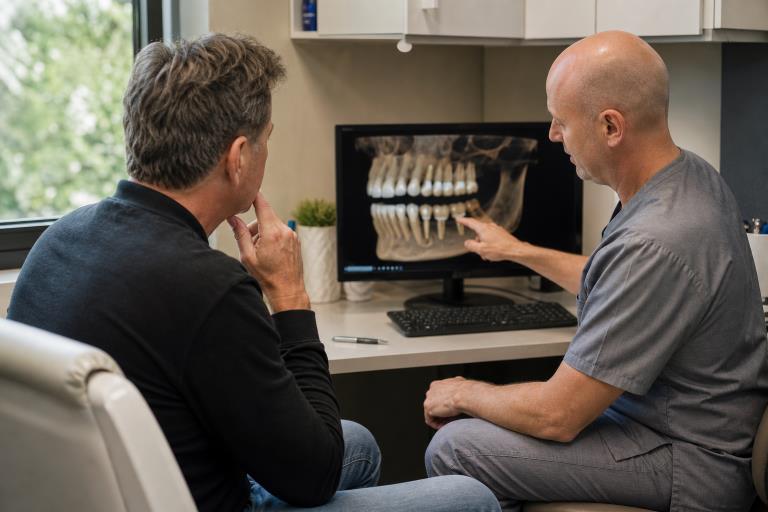
A current comparison of implants, bridges, and dentures can help frame the tradeoffs, but a personal examination remains essential. The lowest starting price is not always the lowest cost over time, particularly if an appliance is likely to need relines, repairs, or replacement.
Questions To Ask At A Consultation
- Which options fit the condition of my teeth, gums, and jawbone?
- Do I need treatment before replacement begins?
- How long will each treatment option take from start to finish?
- What home care, adjustments, or replacement parts might be needed?
- What costs are included in the estimate?
- Would a second opinion be useful before making a decision?
Daily Care After Tooth Replacement
Healthy gums and remaining natural teeth support every replacement option. Brush twice daily with a soft-bristled toothbrush, clean between teeth as instructed, and keep regular dental appointments. Bridges and implants may require special cleaning tools, while dentures need daily removal and cleaning. Pain, swelling, bleeding, looseness, a change in fit, or difficulty chewing should be evaluated promptly.
Final Thoughts
The best tooth replacement choice balances health, function, comfort, appearance, timing, and cost. Whether the final plan involves an implant, a bridge, a denture, or a combination of treatments, a careful exam and an honest discussion of goals can lead to clearer expectations and a more sustainable result.