Residential door installation can improve your home’s security, privacy, and accessibility. The process involves selecting a suitable door and preparing the opening; accurate measurements promote a proper fit and smooth operation. Professional installers prepare a level rough opening, use precise shimming, and carefully align the door to achieve a reliable swing. Here are a few things to know about installing a residential door:
Preparing for Installation
The installation process begins with choosing a door that suits your home’s design and needs. You can select from wood, steel, fiberglass, and other materials; each option offers different features and appearances. Entry doors usually require durable materials and secure locking hardware, while interior doors focus on privacy and room separation.
Contractors take accurate measurements to help determine the correct door size for the existing opening. The door installation team measures the rough opening for width, height, and depth; they may also check the frame for uneven surfaces. These measurements help prevent fitting problems during installation and guide the selection of compatible hardware. Enough clearance is included to accommodate height adjustments and flooring. Other preparations may include:
- Checking the floor for levelness to promote proper alignment.
- Removing the old door and inspecting the frame for damage, moisture, or warping.
- Repairing or adjusting the opening to create a stable surface for installation.
- Protecting exterior doors against outdoor conditions by using weather-resistant materials around the frame.
Fitting the Door
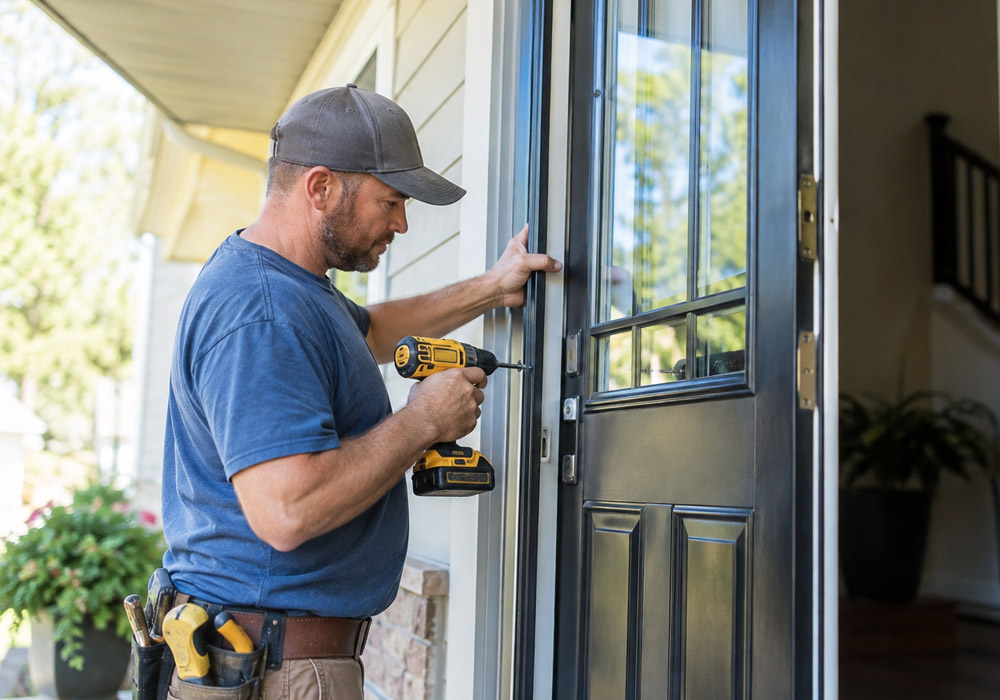
The contractor places the prehung door assembly into the opening and confirms that the frame is flush with the drywall. After positioning the door within the prepared opening, the contractor secures the assembly with suitable fasteners. The hinges and frame are adjusted until the door sits correctly; proper alignment helps prevent sticking or uneven gaps. Before completing the installation, contractors also install and adjust the necessary hardware.
Testing Door Operation
After installation, contractors may test the door’s opening and closing. This step involves checking the hinges and handles and testing the locking mechanism for proper functionality. Contractors also check the visible gap between the closed door and the frame to confirm that it’s uniform on all sides. Your door should function as intended; contractors are able to make final adjustments if they identify alignment or hardware issues.
Energy efficiency may be addressed before or after the door is installed. For exterior doors, appropriate weatherstripping is fitted around the edges to help limit drafts and reduce unwanted air movement. Contractors also check the threshold for gaps, and they adjust it when necessary. Proper sealing helps maintain indoor comfort and may reduce the strain on heating and cooling systems.
Completing Final Touch-ups
Once the door operates as expected, the contractor completes the necessary finishing work. This may include:
- Trimming excess shims flush with the wall or frame.
- Installing the door casing or trim.
- Filling nail holes with wood filler or spackle.
- Caulking appropriate gaps around the frame.
- Sanding the finished surfaces before painting or staining.
- Reviewing the completed installation with you to confirm that the work meets your expectations.
Contact a Door Installation Company
Residential doors benefit from professional installation, as it helps achieve durability, proper functionality, and the intended aesthetic. The process usually starts with an initial discussion and design selection; you can then choose quality materials and work with an experienced team that has installed similar doors. Speak to a door installation company today to start comparing options.