Turning travel memories into something you can hold onto long after the trip ends.
Every seasoned traveler has that drawer. You know the one. It’s full of magnets shaped like the Eiffel Tower, a keychain from a night market you can barely remember, and a snow globe that’s been leaking glitter since 2019. We buy these things because we want proof the trip happened, and then we shove them in a drawer because, honestly, they don’t mean much.
Lately, a different kind of souvenir has been showing up in the carry-ons of people who travel slow and travel often. Instead of grabbing something off a shelf in an airport gift shop, they’re making their keepsakes themselves, sometimes mid-flight, sometimes months after they’re home. It’s a small shift, but it says a lot about how this crowd wants to relate to their trips once the trip is over.
The Rise of “Make-It-Yourself” Souvenirs
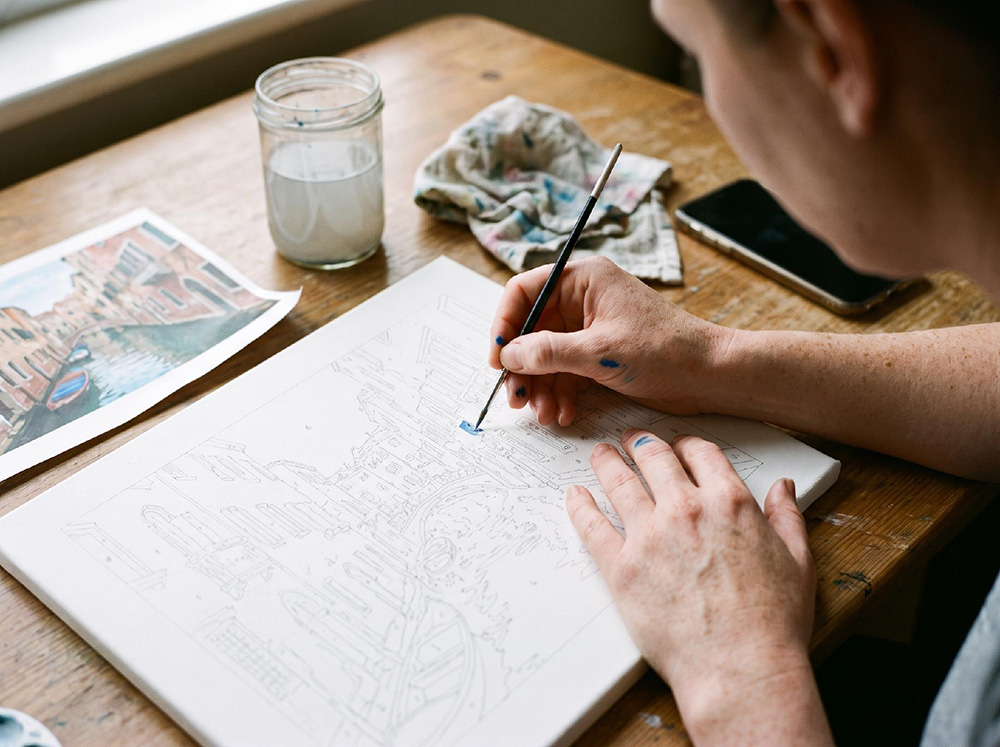
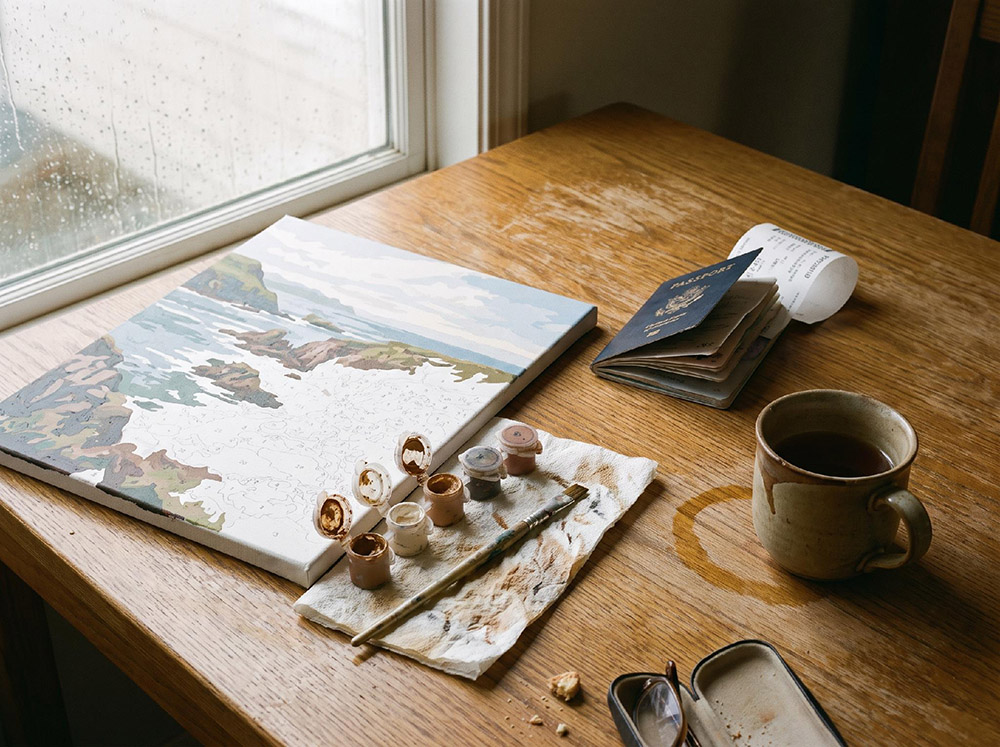
A paint-by-numbers canvas made from a travel photo, one small square of color at a time.
Mass-produced souvenirs have an expiration date on their meaning. You love them for about two weeks, then they blend into the background of your bookshelf. That’s part of why so many people are opting out of the gift shop entirely. According to Mintel’s “US Arts and Crafts Consumer 2026” report, 73% of U.S. adults took part in a crafting project in the past year, a number that’s climbed steadily as people look for something to do with their hands that isn’t scrolling a phone.
Travelers have found a clever way into that trend. Take a favorite photo from the trip, the market stalls in Oaxaca, a temple silhouette in Bali, the fjord you almost missed because the ferry was late, and turn it into a paint by numbers from photo kit. You end up with a canvas that’s specific to your actual memory instead of a generic postcard image, and the process of filling it in becomes its own small ritual once you’re back home and missing the trip already.
Abby Glassenberg, President and Co-Founder of Craft Industry Alliance, has talked about the “huge connection” between crafting and stress relief, describing the absorbed, almost meditative state people slip into while working on a project. That’s not so different from what a lot of slow travelers already chase on the road, whether it’s a spa day built into your itinerary or an early morning with nothing on the schedule.
Why Your Brain Needs This More Than You Think
Post-trip blues are real, even if nobody puts them on a packing list. You come home, the jet lag hits, and suddenly you’re back to emails and laundry with none of the wonder you had three days ago in a foreign city. That re-entry slump is exactly the kind of thing a hands-on hobby is good at softening.
The National Endowment for the Arts has compiled federal research on arts participation and health outcomes, and the findings are consistent: engaging in creative activity is tied to measurable improvements in mood and stress levels. Americans for the Arts has gathered similar evidence in its “Arts and Healing” research compilation, pointing to reduced anxiety among people who make time for creative work, even in small doses.
The clinical picture backs this up too. A systematic review published in the Australian Occupational Therapy Journal in February 2025 looked at 19 separate studies on craft-based interventions, including needlework, and every single one reported short-term improvements in anxiety, stress, depression, or overall mood. Nineteen out of nineteen isn’t a coin flip. It’s a pattern, and it’s one that lines up with why so many travelers say a craft project helps them “come down” from a big trip instead of crashing straight into normal life.
The Layover Hobby Nobody’s Talking About
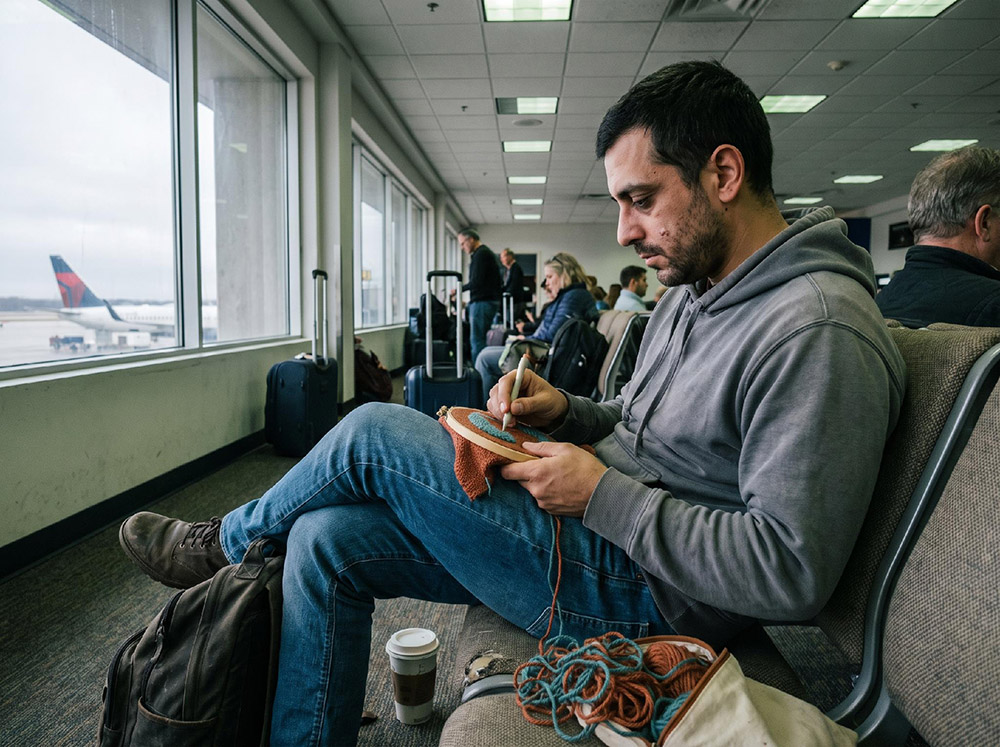
Punch needle’s repetitive, rhythmic motion makes it an easy travel companion for layovers and long train rides.
Paint-by-numbers is great for the after-the-trip phase, but it’s not exactly something you pull out on a cramped middle seat. That’s where punch needle comes in. It’s compact, it’s quiet, and it doesn’t require you to spread out across a tray table. A small hoop, a needle, and some yarn fit into a jacket pocket, which makes it a strange but effective travel companion.
The repetitive motion is the whole point. The American Psychiatric Association has written about how creative activities that involve focus and repetition can support mental well-being, partly because they give the mind something steady to hold onto when everything else, delayed flights, unfamiliar train announcements, a layover that runs three hours long, feels unpredictable. If you’ve got a nine-hour flight ahead of you or a long stretch of downtime in an airport lounge, it’s worth trying a punch embroidery kit before you go. It’s the kind of project you can pick up for ten minutes or two hours, put down without losing your place, and pick back up on the next leg of the trip.
There’s a nice parallel here to a full yoga retreat, actually. Both are about carving out a deliberate pause in the middle of near-constant movement, one through breath and stillness, the other through the rhythm of pulling thread through fabric. Neither requires much gear, and both give you something to return to when travel starts feeling like a blur of transit rather than an experience you’re actually inside of.
From Trip Memory to Wall Art
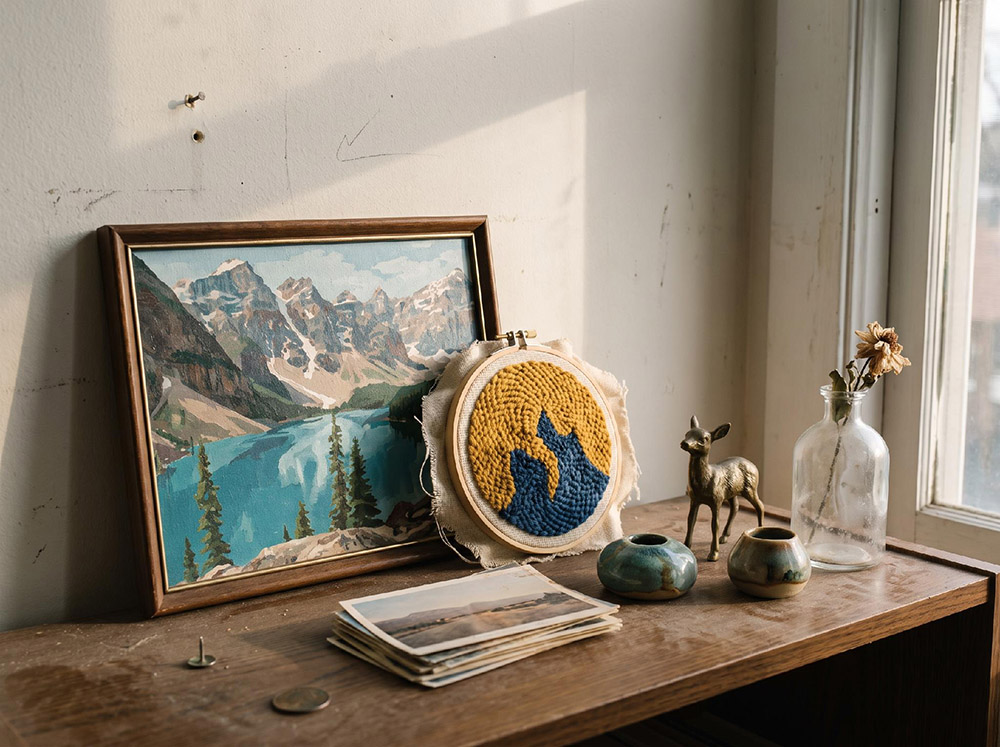
Handmade keepsakes earn a permanent spot next to the postcards and photos.
Picking the right photo matters more than people expect. A shot with strong contrast and a clear focal point, think a single boat on open water rather than a crowded street scene, translates much better once it’s broken down into numbered sections. Save the busy, chaotic photos for your camera roll and pick something simpler for the canvas.
Punch needle projects pace differently depending on the trip. A short weekend getaway might only get you through a few rows of stitching, while a three-week backpacking stint through multiple countries could see a whole hoop finished by the time you land home. It’s also the kind of hobby that suits slow travel well, giving you something quiet to work on during the stretches when you’re not rushing from one place to the next. Some travelers treat it almost like setting a quiet intention before you go, choosing colors or a pattern that reflects what they’re hoping to get out of the trip, then finishing the piece as a kind of bookend once they’re back.
Finished pieces also make better gifts than another bag of chocolate from duty free. A framed paint-by-numbers canvas of a friend’s honeymoon destination, or a small punch needle piece in colors that match their new apartment, carries a lot more weight than something bought in the last twenty minutes before a flight.
Conclusion
None of this is about ditching souvenirs altogether. It’s about being a little more selective with your shelf space and a lot more intentional with how a trip stays with you afterward. A magnet gets a glance every few months. A paint-by-numbers canvas made from your own photo, or a punch needle piece you worked on somewhere over the Atlantic, gets a story attached to it every time someone asks about it.
Next time you’re scrolling through trip photos wondering what to do with them, skip the print shop and pick one for a canvas instead. It’s a small project, but it’s the kind that outlasts the jet lag by years.