Key Takeaways
- Dust on a vent cover does not automatically mean the entire duct system is contaminated.
- Visible moisture, suspected mold, pest activity, thick debris, and particles leaving supply vents deserve closer attention.
- Weak airflow and uneven temperatures can result from filters, dampers, leaks, or equipment problems rather than dirty ducts alone.
- Moisture control, proper filtration, and keeping vents unobstructed can reduce many common HVAC concerns.
- Inspect first, document what you find, and ask for a clear explanation before approving work.
Knoxville homes deal with humid summers, changing seasons, pollen, renovation dust, and occasional moisture problems that can affect HVAC systems over time. Knowing when ducts need attention can help homeowners focus on real warning signs instead of assuming every dusty vent calls for a major service. When visible debris, odors, moisture, or airflow issues are present, air duct cleaning may be an option to consider after a careful inspection.
Air ducts are only one piece of the indoor air quality picture. Filters, return vents, coils, drain pans, household cleaning habits, pets, humidity, ventilation, and outdoor air can all influence what circulates through a home. The practical goal is to identify the actual source of a problem before paying for cleaning, repairs, or chemical treatments.
Why Air Ducts Deserve Attention
Your HVAC system moves conditioned air through supply ducts and pulls air back through return ducts. Filters capture some airborne particles before air reaches equipment, while components such as the blower, coil, and drain pan support heating, cooling, and humidity control. A light layer of ordinary household dust is common, particularly near return grilles where air is drawn into the system.
However, obvious contamination should not be ignored. The EPA identifies substantial visible mold growth, vermin infestation, and ducts clogged with excessive dust or debris as situations that may warrant cleaning or further evaluation, per its guidance on when air ducts should be cleaned.
Seven Warning Signs to Watch For
- Visible Moisture, Staining, or Suspected Mold
Musty odors, wet insulation, water stains near equipment, or recurring condensation can point to a moisture issue. Cleaning alone will not solve the problem if a drain line, roof leak, plumbing leak, or condensation source remains. When growth or hidden moisture is a concern, a focused mold inspection by a qualified professional can help distinguish a duct concern from a broader building moisture problem.
- Pest Activity or Unusual Debris
Droppings, nesting materials, insect remains, or unpleasant animal-like odors should be addressed promptly. Pest entry points need to be sealed and the infestation resolved before the affected areas are cleaned, or the problem can return.
- Particles Blowing From Supply Vents
Dust resting on a register is different from visible particles being discharged into a room when the system runs. Photograph the issue, note which rooms are affected, and check whether the material appeared after a recent renovation, a water event, or a prior problem.
- Heavy Buildup in Accessible Duct Areas
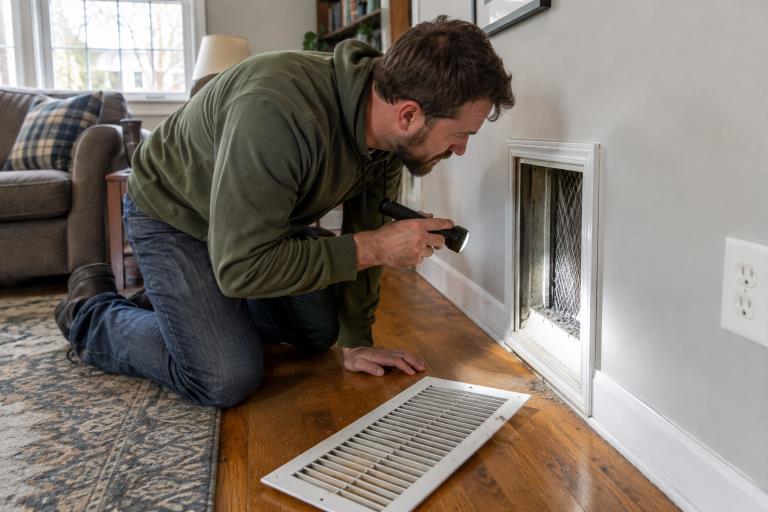
A flashlight may reveal the first few inches behind a removable register. A thin dust coating is not necessarily alarming, but thick deposits, loose insulation, or debris that appears to interfere with airflow warrants a professional assessment. Avoid reaching deep into ductwork with tools, vacuums, or harsh chemicals.
- Sudden Airflow Changes
Weak airflow, rattling, whistling, or rooms that remain warmer or cooler than the rest of the house can have several causes. Start with simple checks, including the filter, open registers, furniture blocking returns, and thermostat settings. Duct leaks, closed dampers, blower problems, and dirty coils may also be involved.
- Dust That Returns Very Quickly
Rapid dust buildup may result from poor filter fit, gaps around return grilles, construction debris, leaky ducts, pets, or normal household activity. Check whether the filter is installed correctly and whether the issue occurs throughout the home or mainly in one area.
- Lingering Odors During HVAC Operation
Odors can come from moisture, smoke residue, cooking, pests, a dirty coil, or materials near the air handler. Air fresheners may mask the smell temporarily, but locating the source is more useful than treating the symptom.
What Dust Around Vents Really Means
Dust around a return grille is often expected because air constantly moves toward that opening. Dark streaks can also form when airborne particles collect where air flows across a surface. Look more closely if buildup is unusually rapid, if debris enters the room from a supply vent, or if there is staining or dampness nearby.
- Check that the filter fits tightly and is replaced as needed.
- Clean removable grilles with a damp cloth after turning off the system.
- Look for gaps, moisture, or damaged material around accessible openings.
- Keep rugs, furniture, and storage away from return vents.
Health, Comfort, and Indoor Air
Sneezing, irritation, coughing, headaches, and allergy symptoms can have many possible causes, including pollen, pets, smoke, cleaning products, humidity, and poor ventilation. Duct cleaning should not be presented as a cure for illness. The EPA recommends improving indoor air through source control, ventilation, and filtration, as described in its overview of ways to improve indoor air quality at home. Persistent or severe symptoms should be discussed with a health professional.
How to Inspect Accessible Areas Safely
- Turn off the HVAC system before removing a register or checking the filter.
- Use a flashlight to inspect only easy-to-reach areas.
- Look for moisture, evidence of pests, thick deposits, loose connections, or damaged insulation.
- Take clear photos of anything unusual before it is disturbed.
- Reinstall grilles securely and avoid handling suspected mold or unknown materials.
When Cleaning Makes Sense, and When It Does Not
Further evaluation may make sense after confirmed pest activity, major remodeling, flooding, fire-related contamination, substantial debris, or visible material blowing from supply vents. Any underlying cause, especially moisture or pests, should be corrected first. If cleaning is appropriate, the work should address relevant HVAC components rather than only the visible vent covers.
Cleaning may not fix uneven temperatures caused by duct design, leaks, dirty coils, damaged equipment, thermostat issues, or blocked returns. Be cautious about broad health guarantees, pressure to buy chemical treatments, or claims of mold without clear evidence. Ask what was found, where it was found, and why a particular service is recommended.
A Simple Knoxville HVAC Maintenance Plan
Monthly
- Check the filter condition and fit.
- Keep supply and return vents open and clear.
- Notice new odors, noises, or changes in airflow.
Seasonally and After Projects
- Clean accessible registers and inspect around the indoor unit for moisture.
- Look at visible duct connections for gaps or damage.
- Limit HVAC operation during sanding, demolition, and drywall work when possible.
- Protect open registers from construction dust and inspect the system afterward.
Choosing Qualified Help
For a large or hidden problem, request a written scope of work and ask which components will be inspected or cleaned. Before-and-after photos can be useful when contamination is not visible to the homeowner. Compare estimates for complex work, ask how the home and its occupants will be protected, and request an explanation before approving any sealant, biocide, or other chemical application.
Air ducts deserve attention when there is evidence of a real issue, not simply because they are out of sight. In Knoxville, a practical approach is to control moisture, maintain filters, keep vents clear, document warning signs, and investigate the underlying cause before deciding on the next step.