Key Takeaways
- Read the invitation carefully and confirm whether the dress code is black tie or black-tie optional.
- A floor-length gown is a reliable choice for traditional black-tie events.
- Choose a silhouette and fabric that suit the venue, season, and your personal style.
- Prioritize a comfortable fit that allows you to sit, walk, eat, and dance easily.
- Coordinate shoes, jewelry, bags, and outer layers without over-accessorizing.
- Consider the venue when selecting fabrics, hemlines, footwear, and coverage.
- Avoid bridal colors at weddings unless the couple approves.
- Shop early to allow time for fittings, alterations, and unexpected changes.
- Focus on an elegant, formal look that still feels natural and comfortable to wear.
Black-tie invitations can make an exciting event feel unexpectedly complicated. Whether you are attending a gala, a formal wedding, a charity dinner, or an awards evening, the goal is to look polished while still feeling like yourself. Exploring formal black tie attire for women can help you see how refined fabrics, thoughtful details, and full-length silhouettes come together for an evening-ready look. Traditional expectations still offer a useful starting point, but black tie does not require everyone to wear the same color, shape, or level of embellishment. A successful outfit respects the invitation, suits the setting, and lets you move comfortably through dinner, photos, conversation, and dancing.
What Black Tie Means
Black tie is a formal evening dress code, generally associated with events held after dark. For women, a full-length gown remains the most dependable choice when the invitation says “black tie.” Guidance on traditional black-tie dress codes also emphasizes an elevated, intentional appearance rather than a casual party look. Think of formality as a spectrum. White tie is the most ceremonial; black tie is formal and elegant; formal attire allows a little more interpretation; and cocktail attire is dressy but less structured. Personal style belongs at every level, but black tie calls for clothing that clearly feels special.
Black Tie vs. Black Tie Optional
Dress-code wording matters. For a strict black tie, choose a floor-length gown or another unmistakably formal evening look. For black-tie optional events, a gown is still welcome, but a sophisticated midi dress, an elevated cocktail dress, or a tailored evening suit may also work. “Black-tie preferred” usually means the host hopes guests will dress to the higher standard. If the invitation is unclear, review the event website, ask a member of the wedding party, or contact the host. It is better to clarify than to rely on assumptions about the venue or guest list.
How to Choose the Right Gown
Start with the practical details: the date, start time, venue, weather, and transportation plan. Then consider how much coverage, structure, and drama you feel comfortable with. The best gown is not necessarily the most ornate option. It suits the occasion while still allowing you to walk, sit, eat, and socialize with ease.
- Read the invitation before shopping.
- Choose a shape that works with your preferred level of movement and support.
- Plan shoes and undergarments before scheduling alterations.
- Try on the complete outfit well before the event.
Formal Silhouettes and Fabrics
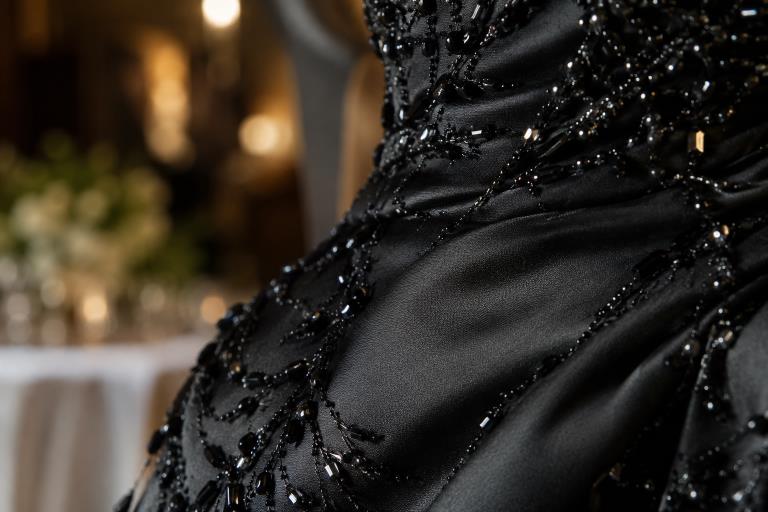
An A-line gown narrows at the waist and falls gently toward the hem, making it a versatile choice for many venues. A column gown creates a long, streamlined line. Ball gowns bring volume and ceremony, while mermaid and trumpet styles follow the body before widening near the lower leg. A formal jumpsuit can work for black-tie optional events when the tailoring and fabric feel suitably elevated. Fabric strongly affects how formal a design appears. Satin reflects light beautifully, velvet adds richness in cooler weather, chiffon creates soft movement, and crepe offers a smooth matte finish. Lace and beading can add detail, but heavily embellished fabric usually calls for simpler accessories. Black, navy, emerald, burgundy, plum, and refined metallic tones can all suit a formal evening. At weddings, avoid white, ivory, or shades that could be mistaken for bridal attire unless the couple says otherwise.
Accessories, Fit, and Comfort
Accessories should finish the outfit rather than compete with it. Choose one focal point, such as statement earrings, a necklace, or a distinctive bracelet. Carry a small clutch with essentials, and choose shoes that look polished yet remain wearable throughout the event. A wrap, tailored jacket, or evening coat can be useful for outdoor arrivals and cool ballrooms. Fit deserves as much attention as style. Check that the neckline and shoulders stay in place, the waist is comfortable while seated, and the hem does not catch under your shoes. Test the gown by climbing a few steps, sitting at a table, and walking across a room. Small alterations can make an outfit look more considered and feel far easier to wear.
Dressing for the Venue
The setting can guide your final choices without changing the dress code. A ballroom may suit a fuller skirt, velvet, or stronger jewelry. A garden event calls for stable shoes and a hem that will not drag. For a beach or warm-weather venue, breathable fabric and streamlined accessories are practical. A sleek gown with clean lines often feels at home in a museum, restaurant, or city hotel. For a formal wedding, take cues from the invitation and the couple’s stated preferences. Current examples of black-tie wedding guest dressing show that color and personality can work beautifully when the overall finish remains formal.
Mistakes to Avoid and Final Checklist
Common mistakes include waiting too long to shop, choosing shoes that are difficult to wear, bringing an oversized everyday bag, and adding several competing statement pieces. Do not overlook travel time, rain, cold temperatures, stairs, or a long walk from parking to the venue.
- Does the outfit match the stated dress code?
- Can you sit, walk, and dance comfortably?
- Have you tested the hem with your event shoes?
- Are your bag, jewelry, and outer layers coordinated?
- Have you tried on everything together?
Frequently Asked Questions
Can a short dress work for black-tie?
A full-length gown is the safest choice for a strict black tie. A highly polished, shorter dress is more likely to suit black-tie-optional wording or a less formal venue.
Are flats appropriate?
Refined flats can work when they are clearly dressy and coordinate with the outfit. Comfort does not require casual footwear.
How early should you buy a gown?
Shop early enough to allow time for shipping, fittings, alterations, and a backup plan if needed.
Conclusion
Black-tie dressing becomes simpler when you begin with the invitation and build from there. Start by confirming the dress code, venue, season, and overall tone of the event before choosing an outfit. A well-fitted floor-length gown is a classic option, but a sophisticated formal alternative can also work when it suits the occasion. Consider the fabric, color, silhouette, and level of embellishment so the outfit feels appropriate without becoming overly complicated. Shoes should complement the look while remaining comfortable enough for standing, walking, and socializing, and accessories should add polish without competing with the outfit. Consider practical details such as an evening wrap, suitable undergarments, and a small bag for essentials. The result should feel elegant, appropriate, and comfortable enough to enjoy the occasion from arrival through the final farewell.