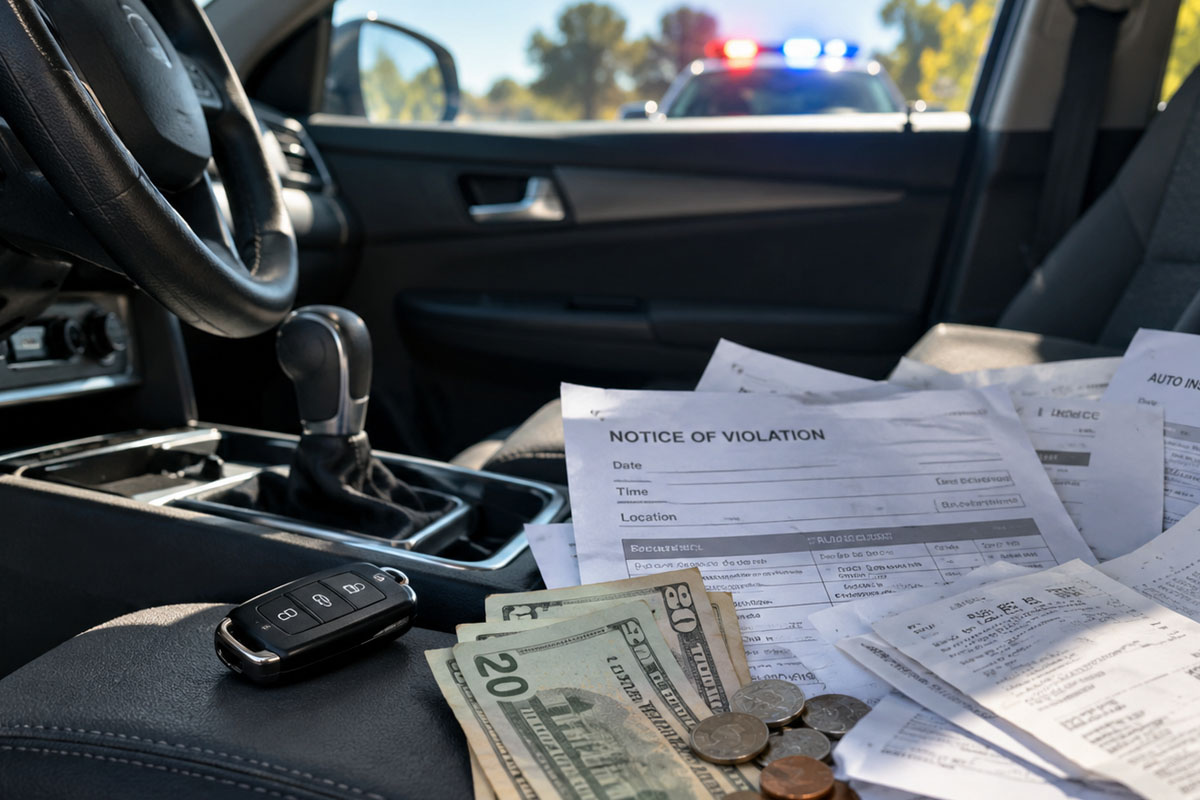
Operating a vehicle under the influence brings immediate legal vulnerability, but many drivers fail to realize the immense financial toll attached to a conviction. The full cost of an arrest extends far past initial court fines. Understanding the full spectrum of mandatory fees, auxiliary expenses, and long-term financial obligations allows individuals to grasp the true economic impact of impaired driving convictions.
Direct Legal Penalties and Mandatory Statutory Court Fees
When courts issue a conviction for impaired driving, statutory guidelines mandate baseline financial assessments. These financial figures represent the absolute minimum costs legally required by municipal or district court systems.
Statutory Criminal Fines and Judicial Surcharges
Courts levy substantial criminal fines for first-time impaired driving offenses. While base fines might range from hundreds to thousands of dollars, mandatory court surcharges inflate the total figure significantly. Public safety assessments, emergency response fees, state administrative surcharges, and local facility funds frequently double the original base fine assessed by the judge.
Mandatory Probational Supervision Fees
Sentences generally include active or inactive probational monitoring periods ranging from one to five years. Probation departments collect monthly administrative fees from individuals to cover the operational costs of record monitoring, meeting appointments, and background verification. Over a multi-year period, monthly administrative fees accumulate into substantial out-of-pocket expenses.
Auxiliary Legal Requirements and Regulatory Program Expenses
Resolving criminal charges requires completing various court-ordered programs, medical evaluations, and technological modifications. Every required step carries an individual fee paid directly by the driver.
Alcohol Assessment and Chemical Dependency Treatment
Courts mandate that convicted individuals undergo professional chemical dependency evaluations. Licensed evaluation centers charge fees for initial diagnostic interviews. If evaluations reveal underlying substance concerns, participants must complete multi-week education courses or multi-month therapy groups out of pocket, as standard medical insurance rarely covers court-ordered treatment programs completely.
Ignition Interlock Device Installation and Monthly Rentals
Restoring driving privileges after an arrest usually requires installing an ignition interlock device inside any vehicle operated by the driver. This breath-testing mechanism prevents vehicle engines from starting if alcohol is detected on the driver’s breath. Financial obligations associated with these devices include:
- Professional physical installation fees
- Recurring monthly device rental charges
- Routine recalibration and data downloading service appointments
- Eventual physical removal fees at program completion
Driver License Reinstatement and SR-22 Documentation Fees
State licensing agencies charge separate administrative fees to process driver license reinstatements following suspension periods. Driver license reinstatement requires filing proof of financial responsibility, known as SR-22 certification, through auto insurance carriers. Filing SR-22 forms involves initial processing fees charged by insurance underwriters.
Long-Term Financial Impact on Insurance and Employment
While court costs and program fees represent immediate out-of-pocket spending, the largest long-term financial burden stems from ongoing indirect financial obligations.
Skyrocketing Auto Insurance Premiums
A conviction on a driving record reclassifies an individual into high-risk driver status for insurance underwriters. Premium rates increase dramatically, frequently doubling or tripling annually for three to five consecutive years. Over time, elevated insurance rates represent the single largest expense associated with impaired driving convictions, often exceeding total court fines combined.
Legal Representation and Professional Counsel Fees
Navigating criminal statutes, procedural rules, and administrative licensing hearings effectively requires professional legal assistance. Defense attorneys conduct deep investigations, analyze chemical test validity, represent clients at court appearances, and negotiate with prosecutors. Retaining an experienced DUI lawyer Cle Elum, Washington offers structured guidance aimed at minimizing long-term penalties, avoiding unnecessary fines, or seeking charge dismissals where evidence permits.
Career Disruption and Indirect Financial Losses
Beyond direct payments, indirect financial losses compound rapidly following an arrest. Missed work days due to court appearances, required community service hours, or brief jail detentions can jeopardize stable employment. Furthermore, individuals holding professional licenses, public driving roles, or corporate positions requiring clean driving records may face temporary suspension or job termination following a conviction.
Transportation Costs During Suspension Periods
Losing driving privileges forces reliance on alternative transportation methods. Relying on ride-share services, public transport, or private commuting assistance for daily work travel over a multi-month suspension adds recurring weekly expenses that strain household budgets. Summing up these direct and indirect costs illustrates why a single impaired driving event impacts personal financial stability for years following the incident.