A leak rarely announces itself politely. It shows up as a pressure drop nobody can explain, a wet spot on the floor, or worse, a safety incident nobody wants to write a report about. Most of the time, the real story traces back to something small: a ferrule that never actually gripped the tube the way it was supposed to.
What a Ferrule Actually Does
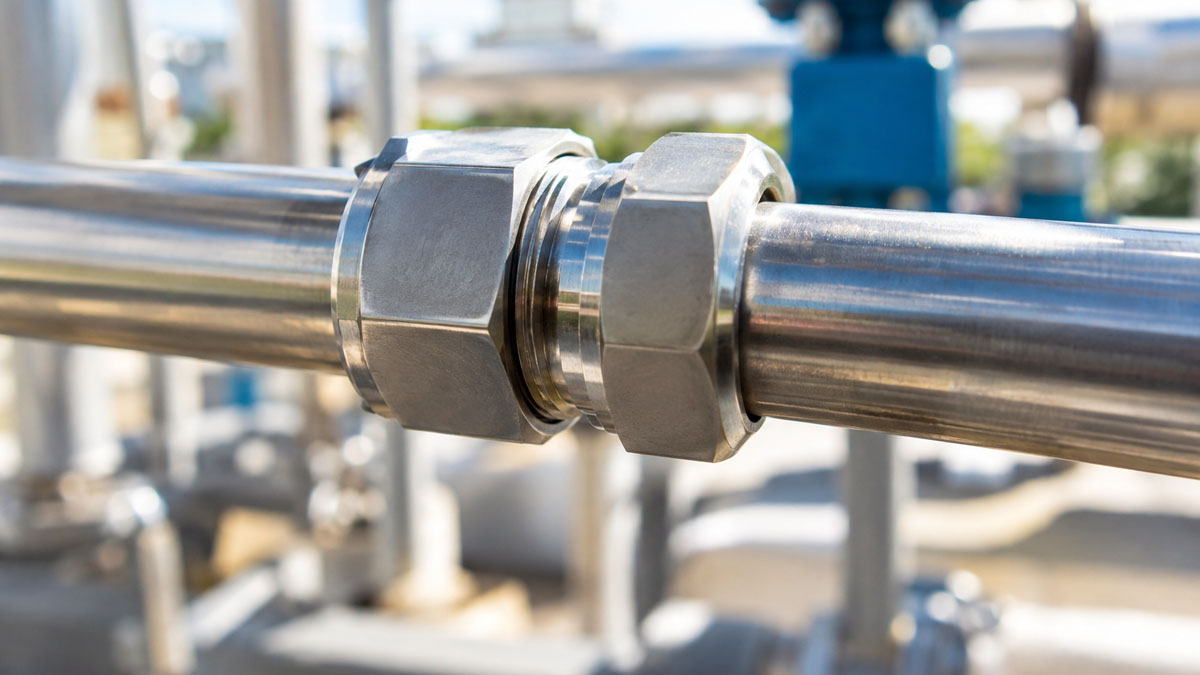
A ferrule is a small metal ring that sits between the tube and the fitting body, and its job is deceptively simple. It has to grip the outside of the tube tightly enough to create a permanent, leak-proof seal without cutting through the tube wall or crushing it out of round. That balance is harder to achieve than it sounds. Too little grip and the connection leaks under pressure. Too much and you’ve weakened or damaged the tube itself.
Two Ferrules Instead of One
A lot of fitting designs rely on just one ferrule, but a two-ferrule system splits the job between a front ferrule and a back ferrule, each handling a different part of the seal. The front ferrule creates the primary seal against the tube, while the back ferrule provides additional grip and helps prevent the tube from pulling out under vibration or pressure cycling. Splitting the work this way tends to produce a more reliable connection than asking a single ferrule to do everything at once.
Controlled Ferrule Drive Matters More Than People Think
Here’s where things get interesting. As the nut gets tightened, it drives the ferrule forward at a very specific angle and rate, one that’s been engineered into the fitting design itself. This controlled drive is what prevents the two most common failure modes people run into: under-tightening, which leaves the seal incomplete, and over-tightening, which can actually damage the tube or the ferrule and create a leak path that wasn’t there before. A fitting engineered around controlled ferrule drive takes a lot of the guesswork out of getting that tightening exactly right.
Why Sizing Angle Isn’t Just a Technical Detail
The angle at which the ferrule bites into the tube determines how the load distributes across the contact surface. Get that angle wrong, even slightly, and you end up with uneven pressure that concentrates stress in one spot instead of spreading it evenly around the tube. Over time, that kind of stress concentration is exactly what leads to fatigue failures, especially in systems that see regular pressure cycling or vibration. A well-engineered sizing angle spreads that load evenly, which is a big part of why some fitting designs hold up so much better over years of service than others.
The Value of a Butt Seal
Some fitting designs include a feature where the tube end actually contacts a seat inside the fitting body, adding a secondary seal on top of the ferrule grip itself. This butt seal provides an extra layer of leak protection that doesn’t depend entirely on the ferrule doing all the work alone. If the ferrule seal is ever slightly compromised, that secondary contact point still helps contain pressure rather than letting a small imperfection turn into a full leak path.
Why Remakes Matter in Real-World Maintenance
Systems get taken apart for maintenance more often than people expect, and every time a connection is broken and reassembled, the ferrule and fitting need to seal reliably again. A design engineered to allow multiple remakes without losing integrity saves real money and downtime over the life of a system. A fitting that only seals reliably the first time creates a maintenance headache every single time a line needs to be serviced, which adds up fast across a plant with hundreds or thousands of connection points.
Think about what that actually looks like on a real turnaround. A maintenance crew working through dozens of connections on a compressed schedule doesn’t have time to fight with fittings that need to be replaced every time they’re loosened. Reliable remake capability isn’t a nice extra feature. It’s the difference between a turnaround finishing on schedule and one that drags on because half the fittings need to be swapped out.
Material Selection Changes the Whole Equation
Ferrule and fitting material has to match the tubing material and the service conditions involved, whether that’s standard stainless steel or something more exotic like Hastelloy, Monel, or titanium for corrosive or high-temperature applications. Using mismatched materials can introduce galvanic corrosion or simply fail to provide the grip strength a given application actually requires. This is exactly the kind of detail that gets overlooked during a rushed specification process and causes real problems months or years down the line.
It’s worth asking early in a project which material actually fits the service conditions, rather than defaulting to whatever’s on hand or cheapest at the moment. A slightly higher upfront material cost is nothing compared to the cost of a leak, a shutdown, or a corrosion failure discovered months after a system is already in service.
Why Proper Installation Still Matters Most
Even the best-engineered ferrule design can’t compensate for tubing that wasn’t cut square, deburred properly, or inserted to the correct depth before tightening. Gyrolock tube fittings depend on correct installation technique just as much as they depend on good engineering, which is exactly why proper training on tubing preparation makes such a measurable difference in field reliability. A perfectly designed fitting installed carelessly will still leak eventually.
Conclusion
A reliable seal comes down to engineering details that most people never think about until something goes wrong. Understanding how ferrule design, sizing angle, and proper installation work together explains why some fitting systems hold up for decades while others become a recurring maintenance problem.