Colmet, a Garland, Texas-based steel company established in 1957, has spent nearly six decades setting the standard for steel products among both do-it-yourself enthusiasts and industrial professionals. The company is particularly known for its lawn edging offerings, custom planters, and comprehensive retail signage, alongside advances in manufacturing automation that support its broader industrial finishing solutions. Colmet holds a range of patents with the United States Patent and Trademark Office, including QuickLock Steel Landscape Edging and Bolt-Together Stainless Steel Planters, and maintains offices in Canada and Australia in addition to its Texas headquarters. That patent portfolio and manufacturing expertise inform the company’s approach to sheet metal and custom metal fabrication, where it works with customers to meet unique specifications that standard, off-the-shelf components often cannot address. Colmet’s commitment to durability and reliability has helped it build one of the most trusted track records among regional steel suppliers.
Standard metal components can be an efficient choice for many projects. Off-the-shelf brackets, panels, enclosures, and other parts are readily available and often less expensive than producing something from scratch. But standard components are not always the best fit. When a project has specific dimensional, functional, or environmental requirements, custom metal fabrication may provide a more practical solution.
One of the clearest reasons to choose custom fabrication is when a standard component cannot meet the required dimensions. A part may need an unusual length, thickness, hole pattern, or shape to fit an existing structure or integrate with other equipment. Modifying a standard component may be possible, but repeated alterations can add labor and introduce inconsistencies. A custom-fabricated part can instead be designed around the actual requirements from the beginning.
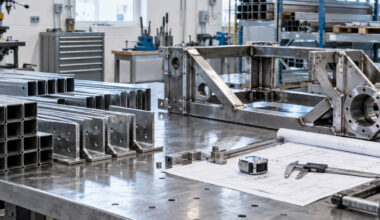
Custom fabrication can also be valuable when several components need to work together as part of a larger assembly. Engineering drawings use dimensions and tolerances to communicate how individual parts should fit and function. ASME Y14.5 provides standardized practices for dimensioning and geometric tolerancing, helping manufacturers interpret design requirements consistently.
Material requirements are another consideration. A standard component may have the right general shape but be manufactured from a material that does not suit the application. Exposure to weather, moisture, chemicals, or demanding operating conditions can influence which metal and protective finish are appropriate. Custom fabrication allows material selection to be considered alongside the part’s intended use rather than treating the material as a fixed feature of an off-the-shelf product.
The same principle applies to surface finishing. A fabricated component may require a particular coating or finish for durability, appearance, or corrosion resistance. When the standard options do not provide the necessary performance, incorporating finishing requirements into a custom manufacturing process can offer greater control.
However, custom fabrication should not automatically be viewed as the superior option. Standard components have important advantages when they meet the application’s requirements. They can often be sourced quickly and may avoid the engineering, tooling, and production costs associated with creating a new part. Customization makes the most sense when the benefits of getting the exact design outweigh those additional considerations.
Customers should consider project volume. A custom part may require more planning and setup initially, while producing larger quantities can make that investment more worthwhile. Conversely, a specialized component may be justified even for a smaller order if an existing standard product simply cannot perform the required function.
Good design also considers manufacturability before fabrication begins. Design for manufacturability encourages engineers to account for production requirements during the design process rather than discovering problems after a design has been finalized. This can help control costs while improving consistency and production feasibility.
The choice between standard and custom metal components comes down to the requirements of the application. If an existing part provides the necessary fit, performance, and durability, using it may be the simplest solution. When dimensional requirements, material specifications, or integration challenges make standard options impractical, custom fabrication can provide a more dependable answer.
The best approach is to evaluate the project before selecting the component. Discussing dimensions, tolerances, materials, finishing requirements, and production quantities with an experienced fabricator can help determine whether customization provides enough value to justify the additional work. In many cases, that early conversation can prevent expensive modifications later and produce a component designed specifically for the job.
About Colmet
Colmet is a Garland, Texas-based steel company established in 1957, serving both do-it-yourself enthusiasts and industrial professionals with a focus on durability and reliability. The company is known for its lawn edging, custom planters, and retail signage, and it holds several U.S. patents, including QuickLock Steel Landscape Edging and Bolt-Together Stainless Steel Planters. Colmet also maintains offices in Canada and Australia, supporting its industrial finishing and custom metal fabrication services.