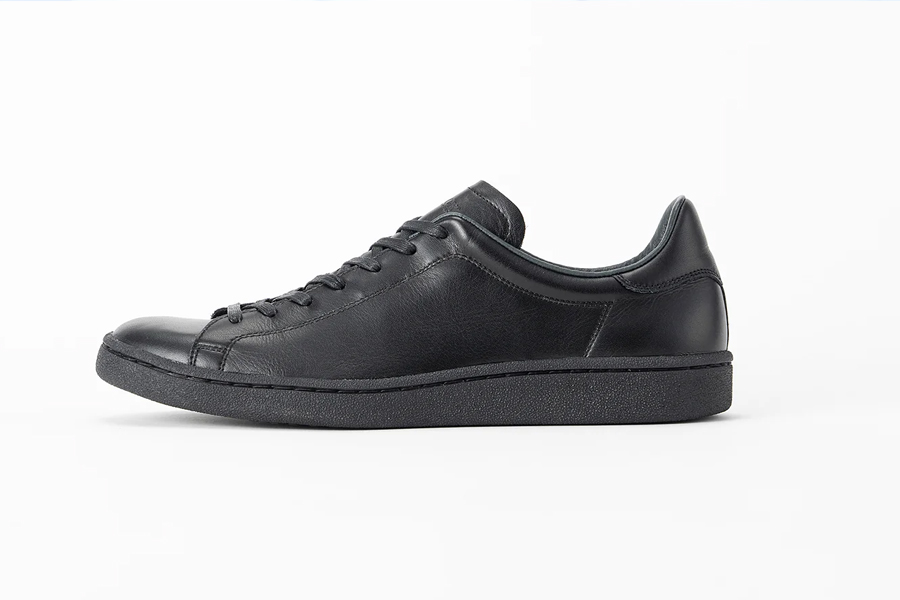
1. Patrick Had Become Harder to Impress
Patrick had reached the point where a shoe had to do more than look good in a product photo.
He worked in communications in Washington, D.C., where his week included office days, client meetings, museum events, dinners, and the occasional reception where nobody seemed to follow the same dress code. He saw plenty of polished outfits, but he also saw how quickly something could look forced when one piece demanded too much attention.
That changed how he looked at Bally men shoes.
He began noticing the quieter parts first. The space between panels. The height of the sole. How much branding appeared before the eye reached the rest of the design.
A shoe could be beautifully made and still feel visually crowded.
Patrick was more interested in the opposite problem now: how little could be happening before a design became boring?
That question stayed with him longer than any logo ever did.
2. Product Photos Started Telling Him Less
Patrick used to trust clean studio photography.
A shoe photographed against white looked precise. Every line was visible. Materials appeared even. The angle had been chosen to show the strongest side.
Real life was less cooperative.
The shoe sat under moving trousers. Light came from windows, sidewalks, restaurants, elevators, and office hallways. People rarely saw the pair from the perfect three-quarter angle used online.
Patrick began imagining the shoe at normal distance instead.
Would the design still hold together from across a room? Would the side remain interesting once small stitching details disappeared? Did the sole look balanced when the upper was partially covered?
Some pairs gained something outside the studio.
Others seemed to lose most of what had looked interesting online.
Patrick found himself trusting that difference more than the photograph.
3. Empty Space Became Part of the Design
One evening, Patrick noticed a pair of shoes at a small reception near Dupont Circle.
Nothing about them was especially loud. The upper had large uninterrupted areas, the lacing was simple, and the logo did not control the side profile.
He kept looking anyway.
That was when Bally men sneakers started making more sense to him as design rather than just branded footwear.
He became interested in empty space.
A clean area around the toe could make stitching elsewhere feel more deliberate. Fewer overlays allowed the eye to understand the silhouette faster. A restrained side panel made a small material change more noticeable.
Patrick had once assumed detail created interest.
Now he saw that removing detail could do the same thing.
Too much empty space could make a pair anonymous, but the right amount gave everything else somewhere to breathe.
4. Six Feet Away Was a Better Test
Patrick started stepping back.
Not dramatically. Just far enough that he stopped seeing individual stitches and began seeing the shoe the way another person might.
At six feet, small hardware nearly disappeared. Fine grain became texture rather than a feature. Branding became less important unless it was unusually large.
What remained was proportion.
The relationship between the toe and heel. The amount of sole visible beneath the upper. Whether the shoe seemed long, compact, heavy, or light.
Patrick found this more useful than examining every seam up close.
Some shoes were fascinating in the hand and strangely ordinary once worn. Others seemed simple until distance reduced the design to a few strong lines.
Those were often the ones he remembered later.
He liked that the distance removed the sales pitch from the details.
5. The Dress Code Had Become Hard to Read
Patrick could remember when office clothing had clearer categories.
A suit was formal. A blazer was less formal. Sneakers belonged somewhere else.
That neat structure had mostly disappeared around him.
At the office, one colleague might wear soft tailoring with a knit shirt. Someone else would show up in relaxed trousers and a clean jacket. On certain Fridays, Patrick would see a blazer, a tee, and drawstring trousers in the same meeting.
Nobody looked particularly out of place.
What interested him was how little the old labels helped.
He stopped trying to decide whether an outfit was technically formal or casual before deciding whether it worked. The better question was whether the pieces seemed to understand one another.
A very aggressive shoe could make otherwise calm clothing feel restless. Something extremely refined could make relaxed tailoring look accidental.
Most days, Patrick was not dressing for a category anyway.
He was dressing for a room.
6. Business Casual Needed Less Formality Than He Expected
Patrick used to think business casual meant dressing down formal clothes.
Now he saw it differently.
The most convincing outfits often started casual and added one or two sharper elements rather than beginning formal and removing them.
A soft jacket over a knit shirt. Relaxed trousers with a cleaner shoe. An open collar instead of a tie.
That was why Bally sneakers for modern business casual style made sense to him when the design felt controlled rather than decorative.
The shoes did not need to imitate dress footwear.
They only needed enough structure to avoid pulling the outfit toward pure sportswear.
Patrick preferred a clear silhouette and limited contrast. Those qualities worked better with softer tailoring because they did not compete with lapels, fabric texture, or trouser drape.
The clothes were already doing enough.
7. Visual Noise Became Easier to Spot
Once Patrick started noticing visual noise, he saw it everywhere.
Contrast stitching. Layered panels. Large logos. Glossy accents. Textured soles. Multiple materials fighting for the same small area.
None of those things were bad on their own.
The problem appeared when everything arrived together.
Patrick learned to ask which detail was supposed to lead.
If the sole had a strong profile, perhaps the upper did not need much more. If the paneling was complex, the color contrast could stay quiet. If branding was visible, another graphic element might be unnecessary.
He liked designs with hierarchy.
One feature could take the lead while the others supported it.
The idea even slipped into the way he dressed. A textured jacket made him reach for a quieter shirt without really thinking about why.
8. Recognition Did Not Have to Happen Immediately
Patrick used to think strong design meant instant recognition.
He changed his mind.
Some of the Bally men shoes he found most interesting did not reveal everything in the first few seconds. The silhouette looked clean, then a side panel became noticeable. A change in material appeared only when the light shifted. The heel treatment made more sense once the wearer turned away.
Patrick liked that delayed recognition.
It felt less like advertising and more like discovery.
There was also something easier about wearing a design that did not explain itself immediately. He did not feel obligated to keep the rest of the outfit equally noticeable.
A quiet jacket could stay quiet. Trousers could simply fit well. The shoe added something without demanding that the entire look be built around it.
9. He Was No Longer Trying to Look Current
Patrick had never thought of himself as someone who chased trends.
Then he caught himself doing exactly that in smaller ways.
A certain trouser shape appeared everywhere for a season. A particular kind of sole suddenly seemed unavoidable. He would see the same proportions on the Metro, in hotel lobbies, outside restaurants, then start wondering whether his own clothes looked dated.
The feeling usually passed.
What stayed was a growing suspicion that “current” was not a very useful target.
Patrick did not want conservative clothes just because he was getting older. He also did not want pieces that required him to keep proving he understood what was new.
One Saturday, he tried on a pair that looked perfectly of-the-moment and could not think of a single place he actually wanted to wear it.
He put it back.
No larger lesson followed. He simply liked that decision.
10. Compliments Were Not Always Useful Information
Patrick once owned a pair of shoes that received compliments almost every time he wore them.
They were noticeable. The contrast was strong, and the sole was unusual enough that people asked about them.
He eventually wore them less.
Another pair received almost no comments and stayed in regular use.
That confused him at first.
Then it became fairly simple.
People often commented on what was easiest to notice. That did not mean the design fit Patrick better or felt more like him.
He stopped using compliments as evidence that something had been a smart purchase.
A shoe could attract no conversation and still make the entire outfit feel right.
Sometimes he preferred that.
11. What People Saw While Sitting Was Different
Patrick began noticing footwear at restaurant tables.
The view changed completely once everyone sat down.
Trousers shifted upward. Ankles became more visible. The side and heel of the shoe appeared more often than the toe. Someone crossing a leg could expose details that barely showed while standing.
That made Bally men sneakers interesting to Patrick from another angle.
A shoe could look understated while someone walked into the room and become more distinctive once seated. Side paneling, sole edges, heel construction, and material changes suddenly had more visibility.
Patrick liked that kind of design.
It did not need to perform from every angle at once.
At dinner one night, he caught himself noticing the heel of the person across from him more than the front of the shoe. A year earlier, he probably would not have registered it.
12. The Mirror Became Less Important
Patrick still checked the mirror before leaving home.
He just trusted it less.
The mirror showed an outfit frozen at its best moment. Jacket closed or open exactly where he wanted it. Trousers falling cleanly. Feet positioned evenly.
Ten minutes later, none of that remained perfectly still.
A jacket moved when he sat down. Trouser hems shifted while walking. The collar of a shirt softened. The shoe appeared from different directions depending on where he stood.
Patrick started thinking about movement rather than snapshots.
He preferred designs that remained coherent when the outfit became less controlled.
He had become suspicious of combinations that looked excellent only when everything was carefully arranged.
Real life rarely held the pose.
13. Some Designs Took Longer to Like
Not every pair Patrick liked made sense immediately.
One sat in his closet for several weeks before he began wearing it regularly.
There was nothing obviously wrong with it. It simply seemed quieter than what he had expected when he bought it.
Then small things began to register.
The toe looked better under wider trousers than he remembered. The heel had enough structure to keep the shoe from disappearing beneath a longer hem. A panel along the side only became noticeable when afternoon light hit it from an angle.
None of these details were dramatic.
Patrick gradually stopped looking for the dramatic part.
Some designs were better once familiarity removed the need for a first impression.
That pair eventually became one of the easiest things in his closet to wear, though he could not remember the exact day his opinion changed.
14. Taste Became More Private
Over time, Patrick stopped needing every choice to be legible to other people.
He could like Bally men shoes without expecting someone else to recognize the brand, understand the design, or agree with the reason he chose them.
That felt surprisingly freeing.
He became less interested in proving that a shoe was special.
If the proportion looked right to him, the materials worked with his clothes, and the design held his interest, he did not need much more explanation.
His choices became more consistent once he stopped imagining an audience.
He still noticed what other people wore. He still appreciated compliments. He still enjoyed seeing a strong outfit across a room.
But those things sat outside the decision now.
15. Quieter Choices Did Not Mean Safer Ones
By the end of the year, Patrick’s footwear choices had become less obvious.
That did not mean they had become conservative.
He still liked strong design. He simply preferred strength that came from proportion, restraint, and one or two well-judged details rather than constant visual stimulation.
There were days when he wore something bolder. There were evenings when a more noticeable pair made perfect sense.
One morning before work, Patrick stood in front of the mirror wearing relaxed trousers, a knit shirt, and a soft jacket. He looked down briefly.
The shoes were not the first thing he noticed.
Nothing looked unfinished either.
He picked up his keys and left.
This time, there was nothing to fix.