
A buyer holds a paint swatch card up to a wall while browsing painting listings on a laptop.
Buying a painting online sounds easy until you’re one click from spending real money on something you’ve only seen as pixels. Is the color accurate? Is it actually painted, or a print with a clever finish? Who do you call if it arrives scratched?
Those worries are fair, and none of them should stop you. Most good purchases come down to a handful of checks you can run in an evening. Here’s the order I’d run them in.
Start With the Room, Not the Catalog
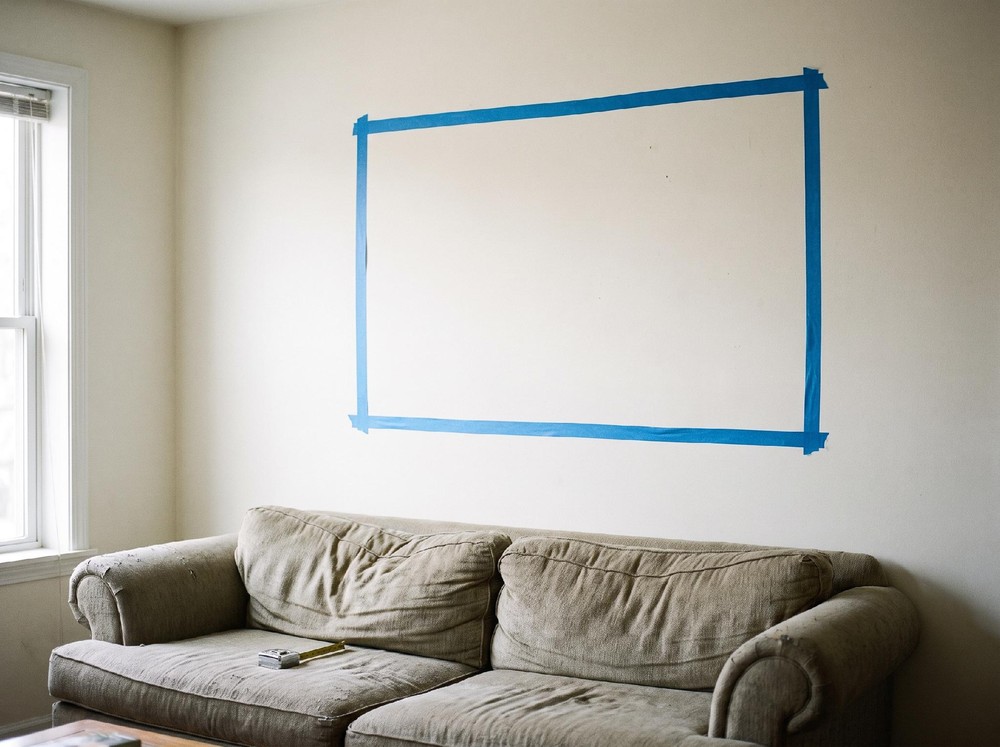
Painter’s tape on a living room wall marks the size of a canvas before any purchase.
Before choosing a painting, measure the wall where you plan to hang it. Use painter’s tape to mark the dimensions of a potential canvas so you can see how much space it will occupy. Leave the outline up for a day or two to check how the size looks from different spots in the room.
Next, consider the colors and mood you want to create. Look at your furniture, flooring, and existing decor. Decide whether the painting should blend into the room or stand out as a focal point. Vertical canvases can make a ceiling feel higher, while horizontal paintings often work well above sofas or beds. Square pieces are a good fit for smaller spaces where proportions matter.
Once you know your preferred size, colors, and style, you can start browsing original art for sale online with a clearer idea of what to look for. Use those details to narrow down your options and compare paintings that actually suit your space, rather than getting distracted by pieces that look appealing on screen but may not work in your home.
If you’re furnishing a newly purchased home, it’s worth thinking about artwork early in the process rather than leaving it until every room is finished. This is especially useful with larger properties, where wall space and decorating costs can add up quickly. Our guide to buying a Los Angeles estate covers some of the broader considerations involved in purchasing a luxury home. Setting aside part of your decorating budget for original artwork gives you more flexibility to choose pieces that suit each room.
Vet the Seller Like Any Other Online Purchase
A painting is still a product, and the usual consumer rules apply. The Federal Trade Commission advises shoppers to read customer reviews from a wide variety of review and retailer sites, and to search the company name plus words like “complaint” or “scam” before buying. It also tells buyers to check who pays return shipping and how many days they have to return an item.
For art, add two more checks. First, look at whether the seller shows the artwork from several angles and in context, not just one polished render. Second, read the return terms carefully, because a painting made to order is often treated differently from stock. The FTC also advises paying by credit card where possible, since it offers stronger protection if something goes wrong, and walking away from any seller that insists on gift cards, wire transfers or crypto.
Ask What “Original” Really Means
The term “original art” can mean different things depending on the seller, so it’s important to understand exactly what you’re buying. An original painting is created by an artist rather than mechanically reproduced. Hand-embellished prints, on the other hand, are printed reproductions with paint or texture added afterward. They may look similar in photographs, but they’re not the same as a fully hand-painted piece.
Before purchasing, check the artwork’s description for details about the artist, materials, and production process. Look for specific information about the medium, such as oil or acrylic on canvas, and whether the painting is one-of-a-kind or part of a series. If these details are missing, contact the seller and ask directly. Requesting close-up photographs of the brushstrokes, texture, and canvas edges can also help you assess how the piece was made.
It’s also worth asking whether the artwork comes with a certificate of authenticity or other documentation identifying the artist and the piece. A certificate alone doesn’t guarantee authenticity, but clear records can help establish the painting’s origin and ownership history. Keep copies of the listing, purchase receipt, and any correspondence with the seller. These documents may prove useful if you decide to insure, resell, or have the artwork appraised later.
Frame It, Then Keep the Sun Off It
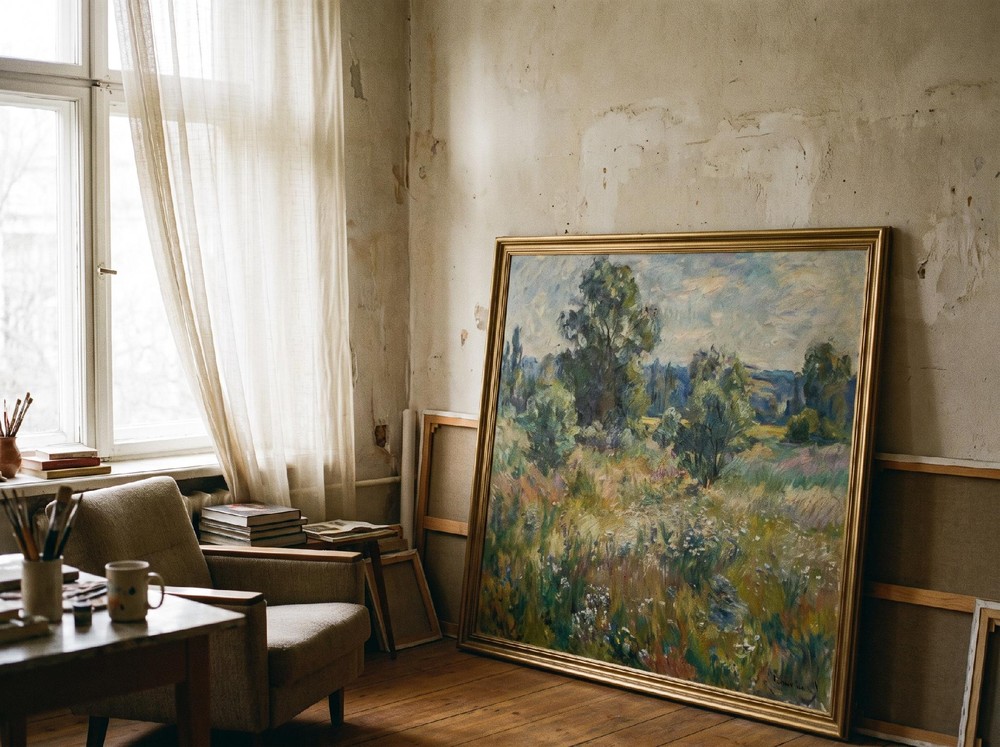
A framed oil painting leans against a wall beside a window with a sheer curtain drawn.
Framing changes how a piece looks and how long it lasts. Many online sellers will ship a painting stretched and framed so it’s ready to hang, which saves a trip to a framer. Check this in the listing before you pay.
Once it’s on the wall, think about light. The Smithsonian Associates Art Collectors Program advises that artwork be framed with UV protective glass and hung out of direct sunlight. Oil paintings on canvas are usually shown without glass, so the sunlight rule matters more: avoid the wall that gets direct afternoon sun.
Mind the Humidity
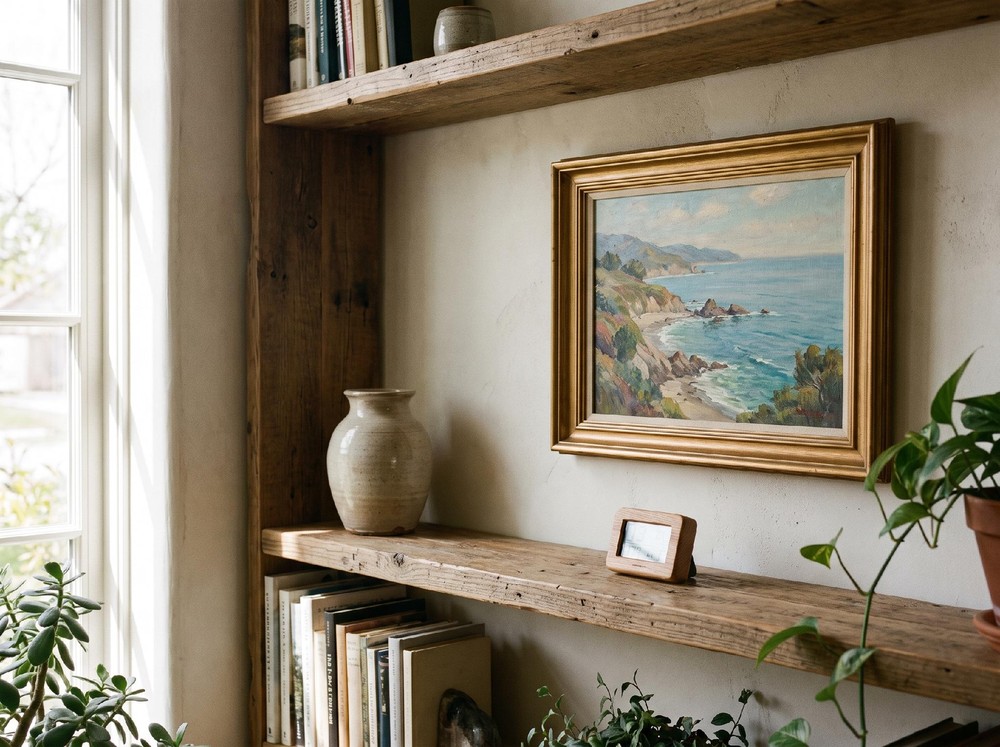
A small digital hygrometer sits on a shelf beside a hanging painting.
Stable conditions protect paintings. The Canadian Conservation Institute says the safest relative humidity for paintings on canvas is a stable level between 40 and 60%. Above roughly 70 to 75%, artworks become susceptible to fungal growth. A cheap hygrometer will tell you where your room sits. Keep paintings out of bathrooms and away from kitchen steam.
Plan for Delivery and Display
Before placing an order, find out when your painting will arrive and how it will be packaged. Some original artworks are ready to ship, while others require extra time for painting, drying, or framing. Check whether the canvas will arrive stretched, framed, or rolled in a protective tube. This helps you plan any additional framing or installation work before the artwork arrives.
Think about where the painting will go and whether the room is suitable for long-term display. Along with sunlight and temperature, pay attention to moisture, particularly in coastal homes. If you live in a beach house, proper home maintenance includes managing indoor humidity and ventilation, both of which help protect paintings and other decorative pieces from moisture-related damage.
Buying original art online becomes much easier when you know what to look for. Take accurate measurements, research the seller, verify the artwork’s materials and authenticity, and prepare a suitable place to display it. A little planning before you buy can help you find a painting that looks right in your space and stays in good condition for years.