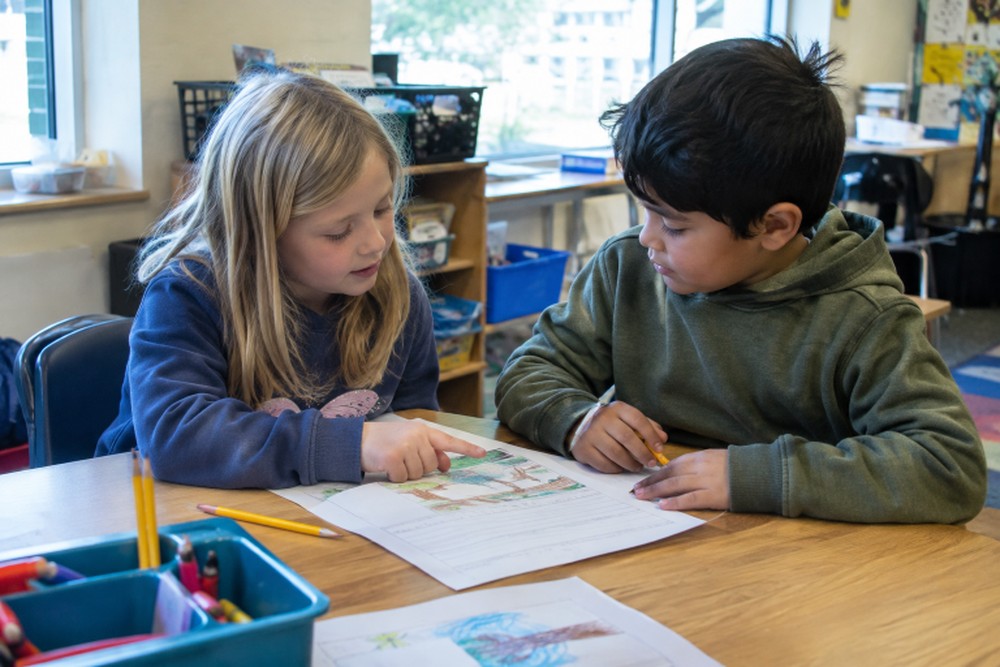
Young writers benefit from a routine that makes writing feel possible, one small decision at a time. Rather than asking students to produce a polished piece in one sitting, teachers can guide them through talking, planning, drafting, revising, and sharing. Classroom-ready materials, including 2nd grade writing worksheets, can give students a clear place to begin while leaving room for their own ideas.
The goal is not to make every child write in exactly the same way. It is to establish familiar steps that reduce uncertainty. When students know what happens before, during, and after drafting, they can spend more energy communicating what they want a reader to understand.
Why the Writing Process Matters
Writing develops through repeated opportunities to make choices, reread, and improve. A first draft is a starting point, not a final judgment of a student’s ability. A consistent classroom process also helps teachers notice where a writer needs support, whether that is generating ideas, organizing events, adding details, or checking conventions.
Recent classroom observations have found that individual writing time is common, while revision and editing receive less attention in many lessons. That makes short, direct revision routines especially valuable for elementary classrooms, as described in research on what writing instruction looks like in classrooms.
Start With Talk Before Pencil Meets Paper
Many students can explain an idea aloud before they can write it down. Build in a brief turn-and-talk before independent writing, then ask partners to answer a few focused questions:
- What happened, or what do you want to explain?
- What did you notice?
- Why does this matter?
- What should the reader know?
Picture walks, object observations, and quick whole-class discussions can also help students find language for their ideas. Oral rehearsal gives children a chance to test the order of their thoughts before they face a blank page.
Help Students Choose One Clear Focus
A broad topic can overwhelm a young writer. Help students shrink a large subject into one moment, question, place, person, or opinion. For example, “animals” is difficult to manage, while “how a turtle finds food in a backyard pond” gives the writer a clear direction.
Offer a short menu of possible topics when needed, but leave room for choice. A student who has a personal connection to a topic is often more ready to add meaningful information.
Use Simple Planning Tools
Planning should support writing, not become a second assignment. Match the planning page to the kind of writing students will do.
Quick planning options
- Personal narrative: What happens first? What changes or becomes difficult? How does the piece end?
- Informational writing: Use a fact web with a topic in the middle and related facts around it.
- Opinion writing: Create a claim-and-reason chart with one opinion and two or three supporting reasons.
Students who are still developing handwriting stamina may draw, label, or dictate parts of a plan before writing complete sentences.
Make Drafting Feel Manageable
Break drafting into short work periods with one purpose. Model how writers begin with a sentence they know, rather than waiting for the perfect opening. Encourage students to leave a blank or make a small mark when they cannot spell a word yet. They can return to it later.
- Day 1: Choose a topic and make a plan.
- Day 2: Draft the beginning or first section.
- Day 3: Finish the draft.
- Day 4: Reread, revise, and edit one or two selected skills.
This sequence helps students see that a rough draft is supposed to have room for changes.
Show Students How to Add Details
Details help readers picture an event, understand an explanation, or care about an opinion. Teach one kind of detail at a time, such as sensory words, precise verbs, facts, examples, or brief explanations.
For instance, “The dog ran” becomes “The muddy dog raced toward the open gate.” The revised sentence gives the reader a clearer image without requiring students to write more than one sentence at a time.
Teach Revision Through Short, Clear Moves
Revision means changing writing to make it clearer, stronger, or more interesting. It is different from editing, which focuses on correctness such as spelling, capitalization, and punctuation. Start by modeling a think-aloud: reread a sentence, name what is missing, and make one useful change.
- Did I stay on one main idea?
- Can a reader follow the order?
- Did I add at least one strong detail?
- Does the ending feel complete?
Reading strong examples aloud can also give students options to notice and try. In a second-grade study, students used elements from mentor texts in their own personal narratives, showing how carefully chosen examples can support writing conversations and experimentation.
Build Safe Peer Feedback Routines
Peer feedback works best when students know that they are helping, not judging. Begin with pairs, and let writers decide whether they will read their work aloud or ask a partner to read it. Teach simple response stems such as “I could picture…,” “One part that stood out was…,” and “I wanted to know more about….”
Feedback should give the writer information, not take control of the piece. A partner can point out a place that needs more detail, but the writer chooses what to change.
Support Different Learners
Keep the learning goal steady while adjusting the support. Sentence starters, word banks, picture cues, oral recording, and speech-to-text can help students get ideas onto the page. Small groups give teachers a place to model a skill again with immediate guidance.
Students who are ready for more challenge can try a second viewpoint, stronger transitions, more precise language, or an additional supporting reason.
Track Growth Without Making Writing Feel Like a Test
Save several writing samples across the year. Looking at earlier and later work can reveal growth in organization, detail, length, independence, and willingness to revise. Use a short rubric with only a few categories so the feedback remains understandable.
Invite students to reflect by asking, “What part are you proud of?” “What did you change?”, and “What will you try next time?” Celebrating planning, rereading, asking questions, and revising helps students value the habits that make stronger writing possible.
Final Thoughts
Young writers do not need a complicated system. They need clear steps, regular practice, useful feedback, and time to make changes. When planning, drafting, and revision become familiar parts of the school day, students can focus less on getting everything right at once and more on making their ideas clear.