Key Takeaways
- Modern BMWs combine mechanical components with sensors, software, cameras, and control modules.
- A warning light is a starting point for diagnosis, not proof that one specific part has failed.
- Battery voltage, wiring condition, sensor readings, and software can create similar symptoms.
- Driver-assistance features may need calibration after certain glass, body, lighting, wheel, or suspension repairs.
- A careful repair should include testing before repairs and verification after repairs.
- Saved scan reports and invoices can make future maintenance decisions easier.
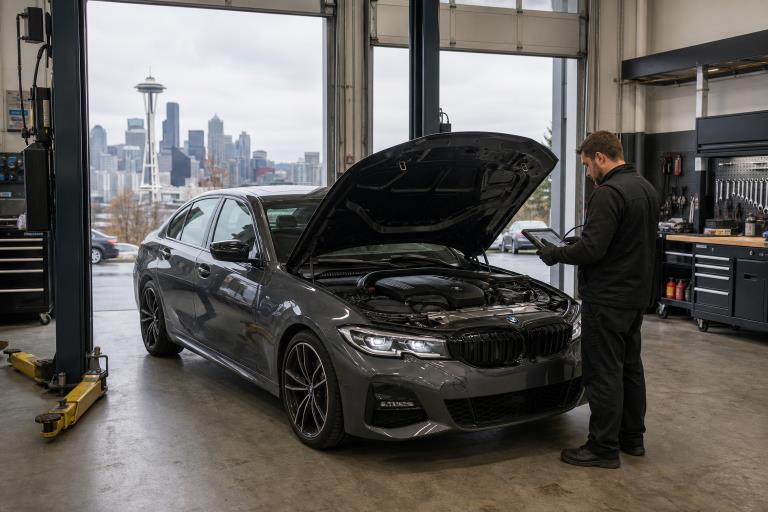
BMW ownership in Seattle often means balancing performance with everyday realities such as wet pavement, steep neighborhood streets, stop-and-go traffic, and seasonal temperature changes. When a dashboard message appears, drivers looking for BMW repair Seattle WA, can turn to EuroCar Service, a European auto repair team on Roosevelt Way NE that provides BMW maintenance, diagnostics, brake work, engine repair, transmission service, suspension repair, and climate-system service for Seattle-area owners.
That range of work matters because a modern BMW is not simply a mechanical machine with a computer attached. Its systems share information across modules, and a warning light can be connected to voltage, wiring, calibration, software, or a worn component. Accurate testing helps separate the actual cause from the symptom.
Why BMW Repairs Are More Connected Than Ever
Newer BMW models can use multiple control modules, cameras, radar units, ultrasonic sensors, and electronic actuators. These systems support engine operation, braking, climate control, parking assistance, infotainment, and safety features. One problem can therefore create warnings in more than one area.
For example, low system voltage can affect how electronic modules communicate or how reliably sensors report information. A driver may see several seemingly unrelated messages, even though the first useful test is a battery and charging system check. BMW’s ongoing development of active safety systems that use cameras, radar, sensors, and centralized computing also underscores why repair knowledge increasingly requires electronic diagnostic skills alongside mechanical experience.
Why a Warning Light Is Not a Diagnosis
A scan tool can retrieve diagnostic trouble codes, but a code generally identifies a system, condition, or measurement that needs attention. It does not automatically prove that the component named in a code description must be replaced.
- Stored fault: A condition recorded in the past that may not be present now.
- Current fault: A condition the vehicle detects at the time of testing.
- Intermittent fault: A problem that appears only under certain temperatures, loads, speeds, or road conditions.
- Related-system fault: A warning caused by voltage loss, damaged wiring, a poor connector, or another system.
Before approving parts, a technician should consider live data, connector condition, wiring integrity, voltage readings, service history, and related components. This approach can prevent replacing a part that was only reporting a problem elsewhere.
Common Causes Behind Similar Symptoms
Engine, Drivetrain, and Chassis Concerns
- Rough running: Spark plugs, ignition coils, air leaks, fuel delivery concerns, and sensor faults can all contribute.
- Reduced power: Possible factors include boost control, airflow measurement, fuel pressure, overheating protection, or software limits.
- Harsh shifting: Fluid condition, adaptation values, electronic controls, and internal mechanical wear may all deserve evaluation.
- Brake warnings: Pad wear, low brake fluid, sensor issues, or hydraulic concerns can trigger a message.
- Suspension noise: Bushings, control arms, shocks, tires, wheel damage, and alignment can affect ride quality and handling.
- Cooling concerns: Leaks, pumps, thermostats, fans, and temperature sensors should be inspected promptly if overheating is suspected.
Battery Health and Voltage
Stable voltage is important in a vehicle that depends on electronic communication. Slow starting, repeated battery-discharge messages, intermittent warning lights, comfort-feature problems, or inconsistent remote operation can justify a battery and charging-system test.
On some BMW models, battery replacement also requires registration or an adaptation procedure so the vehicle can manage charging appropriately for the installed battery. Still, a weak battery is not a one-size-fits-all solution. If warnings persist after the voltage is confirmed, the underlying system requires further diagnosis.
When ADAS Calibration May Be Needed
Advanced driver-assistance systems, often called ADAS, can include adaptive cruise control, lane-support systems, parking assistance, cameras, sensors, and emergency braking. A windshield, bumper, headlamp, mirror, wheel, or suspension repair may affect a camera or sensor’s position, visibility, or alignment.
A visual inspection confirms obvious damage, while a scan can identify stored faults. Calibration is a separate process that verifies and adjusts eligible systems according to the vehicle’s requirements. Industry reporting highlights why part selection and proper procedures can matter for driver-assistance operation after windshield and headlamp repair.
After Collision or Glass Work
- Ask which cameras, radar units, and sensors were inspected.
- Ask whether calibration was required and completed.
- Request pre-repair and post-repair scan results.
- Confirm that warning messages were resolved.
- Keep repair and calibration paperwork with service records.
What a Careful Repair Process Looks Like
- Listen to the driver: Note when the concern began and what conditions trigger it.
- Inspect visually: Check for leaks, damaged wiring, worn parts, loose connections, and signs of overheating.
- Scan relevant systems: Look beyond a basic engine-code scan when symptoms involve other modules.
- Test the suspected cause: Use measurements and live data to confirm the direction of the repair.
- Explain findings clearly: Separate immediate safety concerns from maintenance that can be planned later.
- Verify the repair: Complete needed resets, registration, coding, calibration, and a road test when appropriate.
Questions to Ask Before Approving Repairs
- What test confirmed that this part failed?
- Is the fault current stored or intermittent?
- Could voltage, wiring, or another system be contributing?
- Does the repair require coding, registration, or calibration?
- Will a post-service scan or road test be included?
Choosing a BMW Repair Shop in Seattle
Look for a shop that can discuss routine maintenance and advanced diagnostics with equal clarity. European-vehicle experience, appropriate diagnostic equipment, detailed estimates, and documented repair recommendations are practical signs of a process built around testing rather than guesswork. Seattle’s wet conditions and frequent urban driving do not create every vehicle problem, but they make responsive brakes, healthy tires, reliable cooling, clear visibility, and predictable handling especially worthwhile.
Why Records and Follow-Up Matter
Keep diagnostic reports, labor and parts details, battery registration information, calibration records, module updates, and warranty terms. These records can help identify recurring faults, provide the next technician with useful context, and support a more complete maintenance history. If the same warning returns, schedule a follow-up promptly so the original symptom can be compared with the prior test results.
Final Thoughts
BMW repair in Seattle is no longer only about replacing worn mechanical parts. Better outcomes come from careful inspection, accurate diagnostics, system testing, correct calibration, and clear communication. A warning light should prompt informed questions and confirmed findings, helping owners make calmer decisions and keep their BMW dependable on daily drives throughout Seattle.