Water is an exceptional natural solvent. As rain falls and trickles through subterranean limestone, chalk, and gypsum formations, it dissolves mineral ions along the way. By the time this water is pumped from municipal wells and routed through residential supply networks, it is frequently loaded with dissolved calcium bicarbonate, magnesium carbonate, and trace silica. The presence of these dissolved rock minerals defines what is known as hard water.
While hard water does not pose a direct threat to human health, it causes serious problems for modern residential infrastructure. Mineral ions remain dissolved in water under ambient temperature and pressure, but changing those conditions creates immediate issues. When hard water is heated, experiences pressure changes, or is exposed to open air, calcium and magnesium precipitate out of liquid solution. They revert to solid mineral crystals, bonding to nearby surfaces to form an impenetrable white crust known as limescale.
Limescale settles over every pipe, heating element, valve seat, and internal component it touches. Over several months, this crust thickens, choking off water flow and driving up energy consumption across the household. Protecting your home from this hidden mineral damage requires understanding how limescale attacks your appliances and taking proactive steps to fix the problem.
The Costly Toll on Water Heating Equipment
Water heaters suffer more catastrophic damage from hard water mineral scale than almost any other home appliance. Heating water instantly forces dissolved calcium out of solution, coating the interior surfaces of the tank with hard minerals.
In traditional storage-tank water heaters, limescale gathers on the bottom of the vessel, burying the gas burners beneath a thick blanket of rock. In electric models, it calcifies directly onto the immersion elements. Because limescale has poor thermal conductivity, the burner or electric element must run much longer to transfer heat through that mineral layer and into the water. This continuous overheating weakens the steel tank lining and can cause the immersion elements to burn out prematurely.
The threat is even worse for modern tankless units. These systems utilize compact, tightly engineered copper heat exchangers designed to warm water instantly. When hard water enters these small internal channels, limescale bakes onto the interior tube walls, choking off water flow and causing severe localized overheating. When scale buildup goes unaddressed for too long, the system may suffer complete mechanical failure, requiring costly water heater replacement in Kaysville to restore basic household hot water.
Degradation of Laundry and Dishwashing Appliances
Modern laundry machines and dishwashers rely on intricate water distribution systems, internal solenoids, and electronic heating coils that are exceptionally vulnerable to hard water damage.
Dishwasher Malfunctions and Etching
A dishwasher running on hard water struggles to perform its job effectively. Calcium and magnesium ions chemically bind with detergents, preventing soaps from lathering properly and neutralizing active cleaning agents. Homeowners find themselves pulling out drinking glasses covered in a cloudy white film, along with plates coated in gritty spots.
Behind the kickplate, limescale quietly coats the internal heating coil that dries dishes and maintains water temperature. Furthermore, abrasive mineral crystals lodge inside the rotating spray arm jets, blocking water distribution and causing internal wash motors to overheat. Over time, internal rubber pump seals become brittle and fail, allowing water to leak into the cabinetry and ruin kitchen flooring.
Premature Washing Machine Failure
Washing machines running on hard water face similar costly issues. Mineral accumulation inside cold and hot fill valves prevents the internal diaphragms from seating flush, resulting in continuous weeping into the wash tub when the machine is turned off.
Hard water also damages clothing fibers. Mineral salts become embedded in fabrics, causing colored garments to look dull, turning white fabrics a dingy gray, and leaving towels feeling stiff and scratchy. The friction from these trapped rock crystals weakens textile fibers, causing everyday clothes to wear out and tear prematurely.
Resolving Hard Water Damage with Ion Exchange
Cleaning away limescale using acidic vinegar rinses provides temporary aesthetic relief, but it does nothing to prevent mineral scale from continuously building back up inside your appliances. The only permanent way to protect your plumbing infrastructure is to eliminate hardness minerals before they ever cross your home threshold.
How Water Softeners Eliminate Hardness
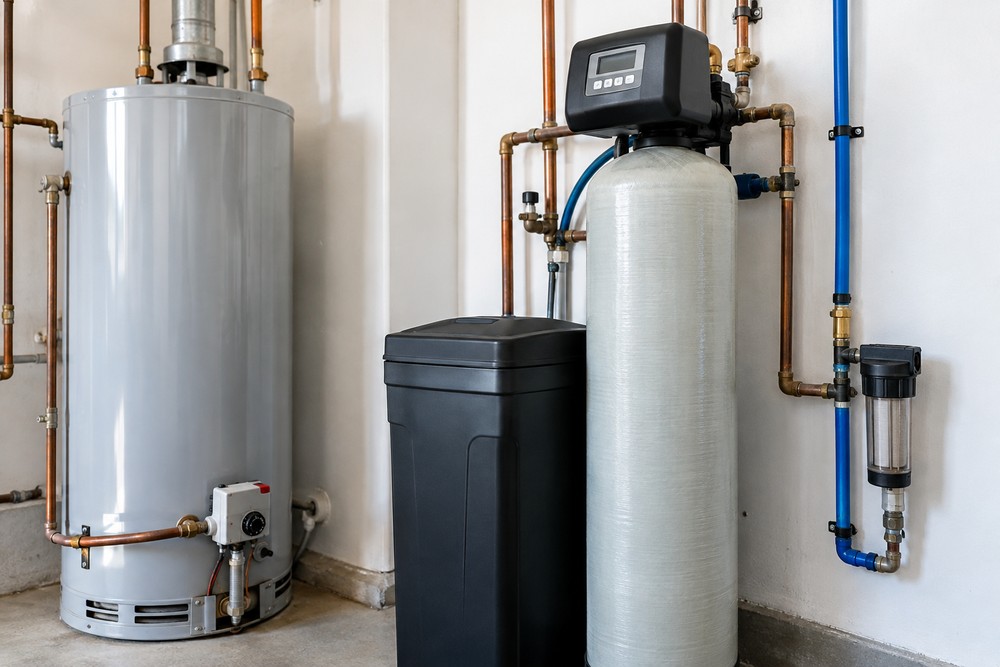
Ion exchange water softeners are the proven standard for whole-home mineral removal. These systems rely on a vertical mineral tank filled with thousands of food-grade polystyrene resin beads, which hold a negative electrical charge and are pre-saturated with positively charged sodium or potassium ions.
As hard water flows down through the resin bed, the calcium and magnesium ions carry a stronger positive electrical charge than the sodium ions. Through electrostatic attraction, the resin beads pull the calcium and magnesium out of the water, holding them tightly while releasing harmless sodium ions in their place. The water leaves the mineral tank softened, completely stripped of the scale-forming elements that ruin household appliances.
The Regeneration Process
Eventually, the resin beads become completely coated with calcium and magnesium, leaving them unable to capture any more minerals. When this happens, the automated control valve on top of the tank initiates a multi-stage regeneration cycle.
The system draws a concentrated salt brine solution from the adjacent brine storage tank and flushes it down through the resin bed. The sheer concentration of sodium in the brine forces the calcium and magnesium ions off the resin beads, washing those minerals harmlessly down the drain. Once clean, the resin bed is rinsed with fresh water and re-saturated with sodium, ready to continue softening the incoming water supply.
To protect high-end appliances, maintain optimal energy efficiency, and prevent premature equipment replacement, investing in a professional water softener installation in Layton is the definitive way to protect your property from hard water damage. Softened water preserves the life of internal appliance components, keeps clothes feeling soft, and saves you money on utility and repair bills over the life of your home.