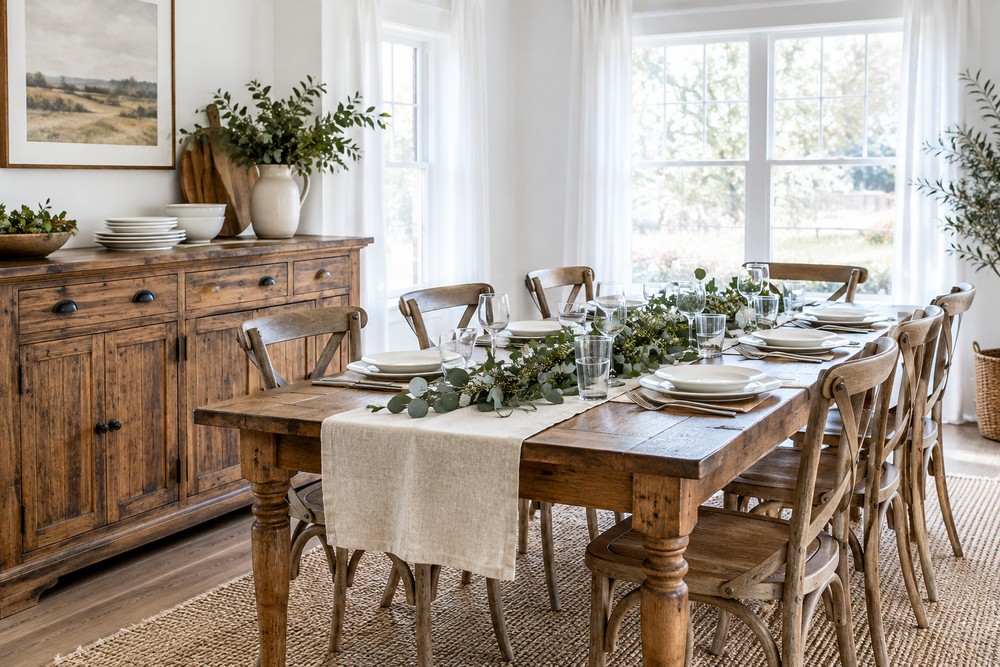
Every year the same thing happens. The calendar fills with family dinners, friends stopping by and at least one meal that needs more chairs than the house actually has. Most of the planning goes into the menu and the guest list, while the room itself gets attention the night before, when someone realizes there’s nowhere to put the pies.
A little preparation now, before the season gets busy, makes a big difference. The dining room doesn’t need a renovation to handle a crowd. It needs clear surfaces, smart storage and a layout that lets people move, eat and talk without bumping elbows.
Start With An Honest Look At The Room
Walk into the dining room as if you were a guest. Where would you set down a coat or a drink? How easy is it to get from the kitchen to the table carrying a hot dish? Is there anywhere to put serving platters once the table is full?
Most dining rooms are set up for everyday meals, not for twelve people and four side dishes. The table takes center stage, and everything else gets squeezed around it. During the holidays, that leads to cluttered tables, crowded walkways and a host who spends the whole evening shuffling plates.
Take a few notes on what gets in the way. Those problem spots will guide every decision that follows.
Clear The Table For Eating
One of the simplest ways to make a holiday meal feel calmer is to keep serving dishes off the dining table. When bowls, platters and gravy boats pile up in the middle, there’s little room for plates and glasses, and passing food becomes a balancing act.
A buffet-style setup solves much of this. Food goes on a separate surface along the wall, guests serve themselves, and the table stays free for eating and conversation. It also makes refills easier, since the host can top up dishes without reaching over anyone’s shoulder.
That separate surface can be a sideboard, a console or even a sturdy cabinet, as long as it sits at a comfortable height and has room for several dishes side by side.
Give Everything A Home
Holiday hosting brings out items that spend most of the year hidden away: the good dishes, serving bowls, cloth napkins, candle holders, extra glassware and the table runner that only appears once a year. When all of that lives in scattered closets and high cabinets, setting up becomes a scavenger hunt.
Keeping these items in the dining room itself saves time and stress. Furniture with a mix of drawers, cabinets and shelves works well here. Drawers handle flatware, linens and candles. Cabinets hold stacks of plates and serving pieces. Adjustable shelves make room for taller items like pitchers or cake stands.
A well-made farmhouse buffet can cover both jobs at once, holding dining essentials inside while its top becomes the serving station when guests arrive. Hand-finished wood surfaces help protect against daily wear, which matters on a piece that will hold hot dishes and the occasional spill.
Show Off The Pieces That Matter
Many families have dishes or decorations with history behind them: a grandmother’s serving platter, wedding china, a set of glasses brought back from a trip. These pieces often stay boxed up because there’s no safe place to display them.
The holidays are a good time to bring them out. A hutch with glass-paneled doors keeps fragile items visible while protecting them from dust, and open shelving above or beside it gives space for seasonal decor. Rotating what’s on display through the year keeps the room interesting and gives heirlooms the attention they deserve.
Solid wood furniture with natural knots and grain patterns tends to suit these personal pieces well. Its warm tones make a dining room feel lived-in rather than staged, which is exactly the mood most hosts want for family gatherings.
Plan The Flow Of The Evening
Once the furniture is in place, think about how people will move through the room.
- Place the serving station near the kitchen. Shorter trips mean hotter food and fewer collisions.
- Leave a clear path behind chairs. Aim for about three feet so people can walk behind seated guests.
- Set up a drinks area away from the food. This keeps the line from backing up at the buffet.
- Add a spot for used dishes. A cart or small table near the kitchen door keeps dirty plates off the dining table.
- Plan extra seating early. Folding chairs or benches stored nearby are easier than last-minute borrowing.
- Check the lighting. Warm, dimmable light makes a long dinner more relaxing than bright overhead bulbs.
Get Ahead On Bigger Purchases
If the dining room needs a new piece of furniture, now is the time to order it. Handcrafted furniture is often built to order, and production plus delivery can take several weeks. Waiting until December can mean hosting without it.
When choosing, focus on how the piece will be used year-round, not just during the holidays. Look for sturdy construction, durable hardware and storage that fits what you own. A piece that only works for one big meal a year rarely earns its spot.
A Short Prep Checklist
- Wash and inventory serving dishes and glassware.
- Iron or launder table linens.
- Test candles, string lights and any table decor.
- Clear clutter from sideboards and shelves.
- Confirm you have enough chairs for your largest gathering.
- Set a trial table a week ahead to spot problems.
Make Room For The Moments That Count
The best holiday meals are remembered for the people, not the logistics. A dining room that’s organized, easy to move through and ready for a crowd lets the host spend less time scrambling and more time at the table. A few changes made in October can turn a stressful season into one that feels easy, warm and worth gathering for.