Key Takeaways
- Richmond homes must handle heat, humidity, heavy rain, wind, pollen, and occasional freezes.
- Successful exterior work depends on moisture control, flashing, ventilation, and drainage, not just appearance.
- Older homes and historic neighborhoods may require added planning before visible exterior changes.
- Seasonal inspections can identify small concerns before they become major repairs.
Exterior remodeling in Richmond is not simply a curb-appeal decision. It is a chance to improve how a home handles wet weather, summer heat, changing temperatures, and day-to-day wear. Homeowners considering siding should compare materials, installation methods, roof conditions, and water management before selecting a color or style.
For homeowners researching a siding contractor Richmond VA, Regal Home Improvement is a Richmond-area exterior remodeling company with experience in siding, window replacement, roofing, decks, and gutter projects. Its service coverage includes Richmond, Henrico, Glen Allen, Midlothian, and Chesterfield, making it a relevant local reference for homeowners who want to evaluate exterior systems as connected parts of the home.
Why Richmond Weather Matters
Richmond’s weather repeatedly stresses exterior materials. Summer heat can expand trim and siding, humidity can slow drying, and heavy rain can expose weak flashing or clogged gutters. Cold snaps add another cycle of movement around caulk joints, window frames, and roof penetrations. Reviewing local climate records and weather patterns can help homeowners plan inspections and schedule work around seasonal conditions.
Exposure matters, too. A shaded Northside wall may stay damp longer after rain, while a sun-facing elevation in Midlothian may show more fading or dry cracking. Homes near wooded areas often need more frequent gutter cleaning because leaves and debris can hold moisture against the roof edges.
Start With A Full Exterior Inspection
Before requesting estimates, inspect the entire exterior rather than focusing on a single visible issue. Look for loose, cracked, warped, or missing siding; soft wood near windows and doors; dark staining on shaded walls; damaged chimney flashing; gutter granules; and water marks in attics, basements, or upper-floor rooms.
Fresh paint, replacement siding, or new gutters cannot correct hidden rot, poor grading, or an active roof leak. If a concern appears around more than one part of the home, treat it as a building-envelope issue and investigate the source before covering it.
Choosing Siding For Local Conditions
There is no single best siding material for every Richmond property. Vinyl can be a practical, low-maintenance option with many color choices. Fiber cement can provide a painted appearance but requires careful cutting, installation, and future paint maintenance. Wood may suit an older home’s character, although it needs regular protection from moisture and sun. Engineered wood offers another balance of appearance, upkeep, and durability.
Installation Details Matter
The material is only one part of the decision. A weather-resistive barrier, correctly integrated flashing, properly sealed openings, and suitable clearances help control water that reaches behind the siding. Ask how the installer will address existing wall damage, trim transitions, deck connections, and areas where siding meets roofing or masonry.
Roofing And Windows Work Together
A roof protects the upper structure, while windows affect comfort, solar heat gain, drafts, and moisture entry. Review the roof edges, attic ventilation, insulation, window flashing, and seals as a single system. When comparing replacement windows, the U-factor and solar heat gain coefficient can help homeowners understand how products are rated for heat flow and solar gain.
It is also wise to inspect roof flashing before replacing windows or siding. Water staining around an opening may begin at a roofline, chimney, or wall transition above it rather than at the window itself.
Control Water At The Roofline And Foundation
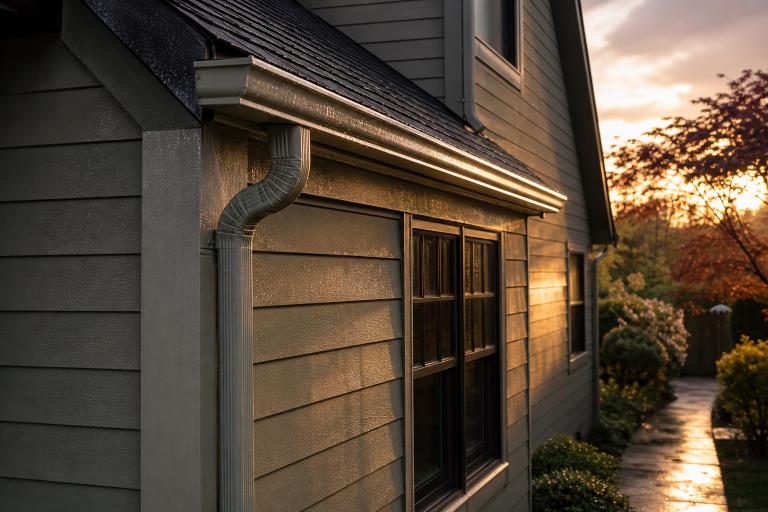
Water management should guide every exterior project. Gutters, downspouts, drip edges, flashing, splash blocks, and grading all work together to move water away from the home. Even a well-installed siding project can be compromised if overflowing gutters send water behind the wall or if downspouts discharge beside the foundation.
Clear leaves after storms, check that gutters slope toward downspouts, and extend discharge away from the house where practical. Peeling paint, swollen trim, dampness in the basement, soil erosion, and persistent puddles are signs that drainage needs attention before cosmetic upgrades begin.
Plan Around Richmond’s Older Homes
Homes in The Fan, Church Hill, Jackson Ward, Bellevue, and parts of Northside often have distinctive details that deserve careful planning. Original wood siding, decorative trim, narrow rooflines, plaster walls, and previous patchwork repairs can complicate a straightforward replacement project.
Owners of properties in designated historic districts should confirm whether visible changes to siding, windows, doors, or roofing need review before work is scheduled. Matching proportions, trim profiles, and materials can be as important as selecting a durable product.
Questions To Ask Before Hiring A Contractor
- Does the written estimate include removal, disposal, and site cleanup?
- How will concealed rot, damaged sheathing, or other unexpected repairs be documented and priced?
- What weather barrier, flashing, and drainage details are included?
- Who is responsible for permits or neighborhood approval when required?
- What labor and manufacturer warranties apply, and what maintenance is expected?
- How will landscaping, driveways, and neighboring property be protected?
- What happens if rain or material availability affects the schedule?
Compare estimates by scope, preparation, materials, warranty terms, and communication, not price alone. A lower initial number may exclude necessary repair work or important water-management details.
A Simple Seasonal Maintenance Plan
- Spring:Check winter damage, roof edges, gutters, and exterior caulk.
- Summer:Watch for fading, heat-related movement, dry cracking, and excess attic heat.
- Fall:Remove leaves, inspect flashing, and prepare gutters for wet weather.
- Winter:Monitor drafts, failing seals, ice-related damage, and indoor moisture marks.
Take dated photos during each inspection. Images make gradual changes in movement, discoloration, and drainage easier to track and explain when consulting an inspector or contractor.
Final Thoughts
Richmond exterior remodeling works best when weather, drainage, energy performance, design, and local requirements are considered together. A thoughtful project can improve curb appeal while helping the home stay drier, more comfortable, and easier to maintain through 2026 and beyond.