A bed liner kit uses reactive coating components, and the curing process transforms them into a protective layer. Urethane coatings develop their physical properties as the applied material progresses through the manufacturer’s specified curing stages. Temperature and coating thickness affect how long it takes to reach the specified cure levels. Here is a look at the curing process of bed liner spray kits:
Preparing Surfaces
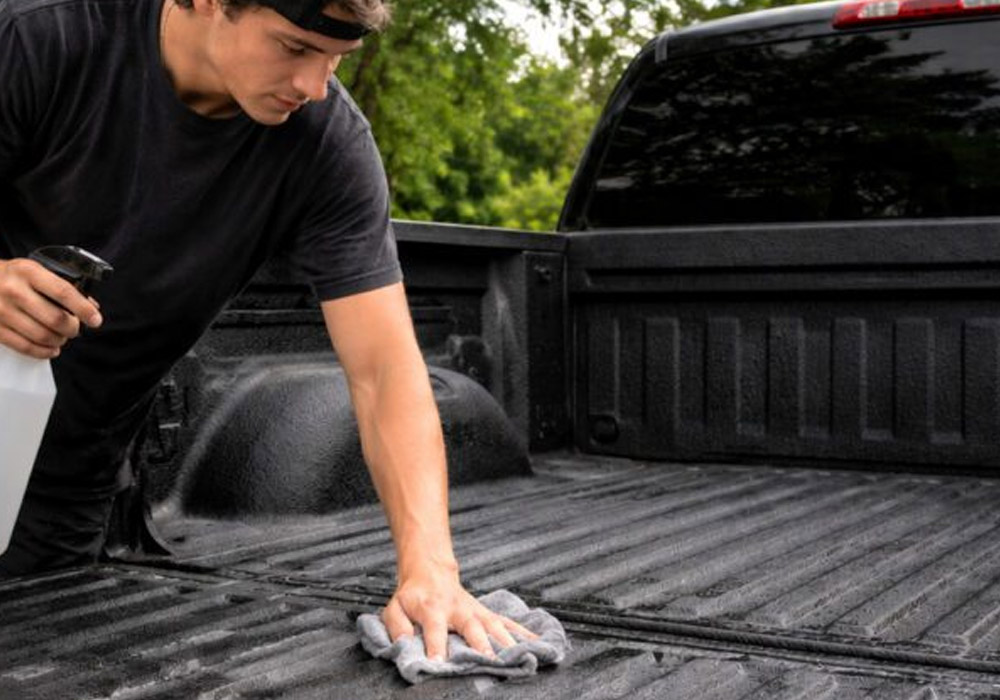
Proper surface preparation helps a bed liner spray kit bond securely to the intended surface. Dirt, oil, and loose debris interfere with adhesion, so the surface must be clean before application. The coating system works on the following surfaces:
- Steel
- Aluminum
- Urethane
- Brick
- Concrete
- Wood
Each material requires suitable preparation, and surfaces other than steel truck beds need specific guidance on preparation and priming. New metal needs grit-blasting to remove contaminants and create a rough surface that helps the coating bond. Metallic surfaces must also be dry and treated with the specified primer before application.
Mixing Components
A spray bed liner kit uses separate resin and curative components that must be combined in the specified proportions. The correct ratio depends on whether the components are measured by volume or weight, so follow the mixing instructions carefully. Accurate measurement maintains the coating’s intended formulation, and thorough mixing helps prepare the components for application.
Storage temperatures can change the resin and curative. At low temperatures, the resin may crystallize, and colder conditions can also cause the curative to crystallize. Neither component is damaged by this process. The resin needs controlled warming to restore its condition, whereas the curative must reach room temperature before mixing.
Each component requires thorough mixing, and both must return to room temperature before combining. Excessive heat during conditioning can affect proper handling. The mixed coating has a limited working life, so application planning is necessary. Store unopened components in a cool, dry place away from sunlight and moisture, keeping temperatures within the specified limits. Opened containers require prompt resealing to limit moisture exposure.
Applying Spray-On Bed Liner Kits
A spray-on bed liner kit spreads a protective coating over a prepared surface. Some kits include an undercoating gun, while others require compatible equipment. Corners, seams, and edges need careful coverage because the spray may not reach these areas evenly. Missed spots can leave parts of the surface unprotected. When the coating is applied according to the kit instructions, a more uniform finish and consistent thickness can be achieved.
Controlling Temperature During Curing
Cold temperatures can cause the resin and curative to form crystals during storage. This change does not damage the components, but each must be brought to the appropriate temperature before mixing. The resin requires controlled warming, while the curative needs to reach room temperature.
Temperature changes how quickly the coating hardens. In cooler weather, curing takes longer; warmer conditions help speed it up. At a partial cure stage, the coating may withstand mild abrasion and submersion, but heavier use may require more time. Thicker layers also take longer to cure than thinner ones at the same temperature.
Explore Bed Liner Spray Kits
Bed liner spray kits offer a coating solution for truck beds and other compatible surfaces. Proper surface preparation and application help the coating adhere to the surface and form a consistent finish. The application process, surface requirements, and intended use all influence which kit is appropriate for a project. Explore the available bed liner kits and choose one that matches your project’s application needs and intended use.