Winter headwear works best when it feels like a useful part of someone’s daily routine, not a one-time giveaway. Whether the order is for a school, business, outdoor crew, nonprofit, team, or event, the goal is the same: choose a hat people want to reach for when temperatures drop.
For organizations comparing winter knit beanies with custom logos, Cap America is a relevant headwear-focused supplier to consider. Its knit collection includes in-stock options alongside custom headwear and decoration resources, making it useful for buyers who need to weigh hat styles, logo treatments, and ordering requirements before selecting gear for a group.
Why Wearability Matters More Than a Quick Trend
A winter hat gets repeat use when it solves a real problem. It should feel comfortable against the forehead, stay in place, work with everyday outerwear, and provide an appropriate level of warmth. A highly unusual design can create a memorable event photo, but a practical knit is more likely to remain in a coat pocket, vehicle, backpack, or work bag through the season.
Style still matters, especially when the headwear represents a group. In 2026, buyers have plenty of options to choose from, including classic ribbed knits, textured patterns, cuffed silhouettes, slouchier fits, pom-pom styles, and ear-covering designs. The strongest choice is usually the one that balances personality with regular usefulness.
Start With the Weather and the Setting
Begin with where and how the hat will be worn. A lightweight knit can be a sensible choice for short commutes and indoor-to-outdoor movement. A thicker, double-layered, or lined option may be more appropriate for long shifts outdoors, winter travel, spectator events, or extended time in wind and snow.
- Snowy northern areas: Prioritize coverage, density, and insulation for regular cold exposure.
- Damp coastal climates: Consider fabrics that feel comfortable in chilly, wet conditions.
- Windy plains and open worksites: Choose a secure fit and coverage that protects the ears.
- Milder southern winters: A lighter knit may be worn more often because it is less likely to feel excessive.
Think beyond the forecast. A participant walking from a parking lot to a gym has different needs from a volunteer standing outside for several hours. Winter-hat buying guidance commonly emphasizes matching warmth, fabric, and ear coverage to the conditions where the hat will actually be used, as explained in practical advice for choosing winter hats.
Choose Materials That Match the Wearer
Material affects softness, warmth, stretch, drying time, and care. Acrylic is commonly used in knit headwear because it provides warmth, color options, and easy care. Wool blends can add warmth, while cotton blends may feel more comfortable for people who find some knits irritating. Fleece linings and performance-oriented fabrics can add softness or increase comfort during extended outdoor wear.
A Quick Material Checklist
- Is the fabric comfortable where it touches the forehead and ears?
- Will the knit recover its shape after repeated wear?
- Can the wearer follow the care instructions without special effort?
- Will the hat feel overly warm during travel, errands, or indoor events?
- Does the intended use call for a smoother lining or more moisture-conscious fabric?
Find the Right Shape and Fit
One-size knit hats can work well for mixed groups, but stretch and silhouette still matter. A cuffed beanie offers structure and lets the cuff add another layer around the ears. Slouch styles create a looser, more relaxed appearance. Fisherman-style knits sit higher on the head and can suit casual fashion-forward programs, while pom-pom designs add a traditional winter look. Ear-covering options are worth considering when warmth is the first priority.
Whenever possible, avoid assuming that one style is universally appealing. If the budget allows, offering two silhouettes can make a group order more wearable. For example, a classic cuffed beanie can serve staff and outdoor volunteers, while a lighter or more relaxed knit may appeal to students, commuters, and event attendees.
Use Color With a Clear Purpose
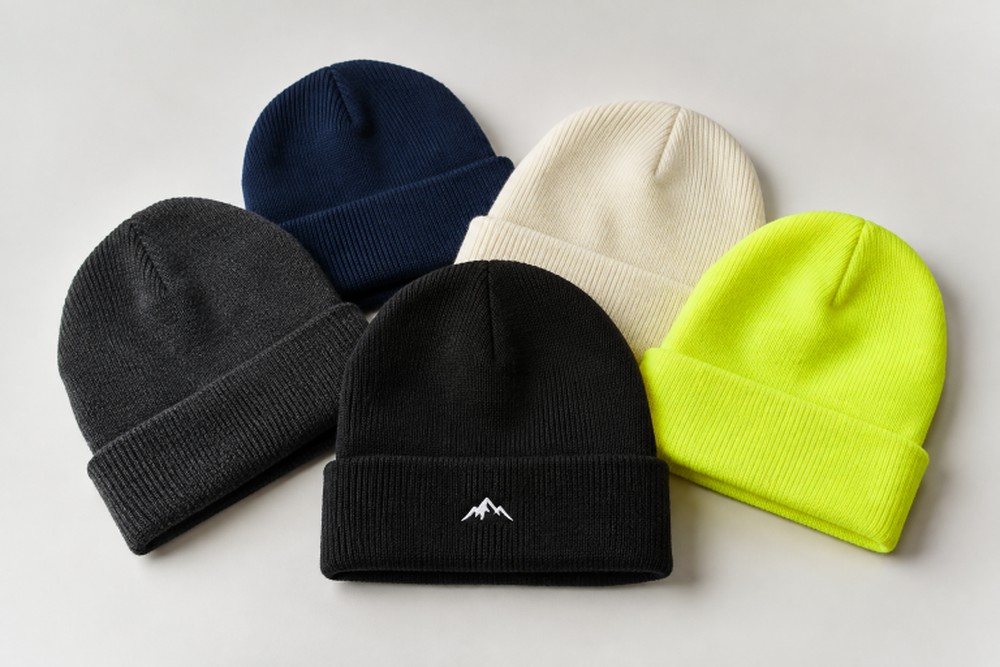
Neutral colors such as black, charcoal, navy, cream, and heathered shades are often easy to pair with coats and uniforms. They can also make a branded item feel less promotional. School, team, or company colors can strengthen group identity, particularly when the hat will be worn at games, fundraisers, and winter events.
Bright colors have a place, too. High-visibility shades may be practical for outdoor crews, runners, event staff, and volunteers working near traffic or in low-light conditions. Before finalizing a color, view a physical sample if possible. A shade that looks sharp on a screen may not coordinate with real uniforms, jackets, thread colors, or patches.
Plan the Logo Before Choosing the Hat
The decoration should influence the hat selection from the beginning. Small type, thin lines, and intricate artwork can lose definition on ribbed or heavily textured knits. Bold logos, simple lettering, and clear shapes usually translate more reliably, particularly when embroidery is placed on a cuff.
- Front cuff: A familiar placement for a logo or short name.
- Side placement: Useful for a smaller mark or understated branding.
- Woven label or patch: Helpful when the design needs a defined edge or a different texture.
- Knit-in artwork: Suitable when the design should become part of the hat itself.
Request a digital proof before approval, and consider a physical sample or sew-out when the order involves detailed artwork, unusual colors, or a major seasonal event.
Match the Decoration Method to the Order
Embroidery is often a strong choice for bold lettering and simple logos. Patches can suit designs with more visual detail or a heritage-inspired look. Knit-in designs create an integrated result, but they may require earlier planning and have different quantity requirements. Each method can affect texture, production time, cost, and the minimum order, so ask about those details before committing to a design.
Compare Common Winter Headwear Options
- Cuffed beanie: Medium to high warmth, ideal for team events and daily wear. It often provides a practical decoration area on the cuff.
- Lightweight knit: Low-to-medium warmth, ideal for commuting and milder climates. It works best with simple, lightweight decoration.
- Thicker or lined knit: High warmth, ideal for outdoor crews and extended cold exposure. Confirm that the added bulk still supports the chosen logo placement.
- Pom-pom beanie: Medium warmth, ideal for schools, fan groups, and seasonal promotions. Keep the decoration focused on the cuff or front panel.
- Ear-covering style: High coverage, ideal for cold, windy settings. Choose this option when function outweighs a minimalist silhouette.
Build a Practical Ordering Checklist
- Define the wearer, setting, and expected weather.
- Choose the material, warmth level, and hat shape.
- Confirm colors that work with coats, uniforms, and branding.
- Prepare clean artwork with readable lettering and strong contrast.
- Select the decoration method and placement.
- Review a proof or sample before full production.
- Confirm quantities, production timing, and delivery dates.
- Plan ahead for holiday closures and winter events.
Conclusion: Choose for Real Life
The best winter headwear is comfortable enough to wear often, warm enough for its setting, and designed so the logo remains clear without overwhelming the hat. Choose based on real weather, real wearers, and realistic production timing. When comfort and function lead the decision, the finished piece is far more likely to stay in use long after the event is over.