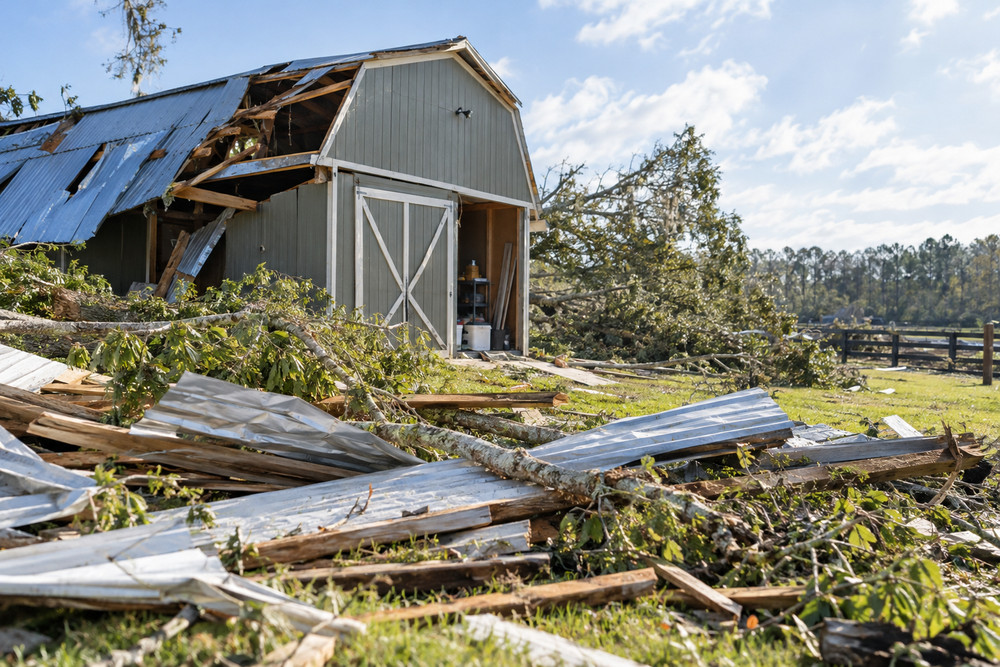
The Atlantic storm season may be winding down, but its effects remain visible across properties throughout the Carolinas. Strong winds, heavy rain, flooding, and fallen trees can leave more than immediate repairs behind. For many property owners, storm damage has prompted a closer look at how outbuildings, storage structures, workshops, and barns are designed and installed.
Rebuilding after a major storm is also an opportunity to make practical changes. Rather than simply replacing what was lost, property owners are considering stronger construction methods, better site preparation, and faster ways to restore usable space.
What Property Owners Are Rebuilding
Storm damage can affect nearly every type of exterior structure. While the extent varies from property to property, common rebuilding projects include:
- Storage sheds with damaged roofs or walls
- Barns and agricultural structures affected by high winds
- Workshops and detached garages
- Equipment storage buildings
- Garden and utility sheds
- Structures damaged by falling trees or debris
In some cases, the main structure remains usable while an outbuilding needs to be completely replaced. In other cases, extensive damage makes rebuilding more practical than repeated repairs.
Before beginning construction, owners should document the damage, check whether insurance coverage applies, and determine whether local permits are required. Also inspect the ground conditions, drainage, and surrounding trees before selecting a replacement structure.
Building for Wind Exposure
One of the biggest lessons from severe storms is that durability starts with how a structure connects to the site. Strong materials alone do not determine how well a building performs during high winds.
Property owners comparing replacement options should pay attention to several construction details.
Anchoring Matters
A structure needs an appropriate connection to its foundation or support system. Proper anchoring helps resist forces that try to shift, lift, or overturn a building during strong winds.
The correct approach depends on the structure, foundation type, soil conditions, and local requirements. An experienced builder can evaluate these factors before installation rather than treating anchoring as an afterthought.
For homeowners comparing local construction options, working with barn and shed builders in NC can also help you discuss site-specific considerations such as foundation preparation, anchoring, and exposure to prevailing winds.
Roof Pitch and Design
Roof shape influences how wind interacts with a structure. A properly designed roof can help manage wind loads while also directing rain away from vulnerable areas.
Don’t choose roof pitch based solely on appearance. Consider climate, intended use, drainage, materials, and structural requirements. In areas that regularly experience heavy rainfall, proper roof design can also reduce the chance of water-related problems.
Siding and Exterior Materials
Siding is another important consideration. Damaged or poorly secured exterior panels can become vulnerable during severe weather, particularly when wind gets underneath an exposed edge.
When rebuilding, property owners should consider materials based on durability, maintenance requirements, moisture exposure, and compatibility with the building’s structural system. Proper installation matters as much as the material itself.
Site Preparation Can Make a Difference
A strong structure can still experience problems if it is installed on an unsuitable site. Evaluate drainage and ground conditions before construction begins.
Low-lying areas may collect water after heavy storms, while poorly compacted soil can create stability concerns. Property owners should also consider whether nearby trees could threaten the building.
Useful site-planning questions include:
- Does water naturally drain away from the proposed building location?
- Is the ground stable and properly prepared?
- Are there large trees close enough to threaten the structure?
- Is the building positioned where runoff could reach the foundation?
- Can service vehicles and emergency equipment access the site?
Addressing these issues before construction can help avoid complications later.
Why Replacement Timelines Matter After a Storm
After a hurricane or tropical storm, demand for construction and repair work can increase quickly. Property owners may need to replace damaged structures while also dealing with roof repairs, landscaping, insurance claims, and other property issues.
Traditional stick-built construction can involve several stages, including ordering materials, preparing the site, framing, roofing, siding, and finishing. Weather or material availability can also affect the schedule.
Modular and prefabricated structures can offer a different approach. Much of the construction can happen before the building arrives on site. Once the site is prepared, the structure can be delivered and positioned, reducing the amount of construction that has to occur entirely on-site.
How Modular Delivery Can Speed Up the Process
Speed matters most when a storm has destroyed a building that served an everyday purpose. A homeowner may need storage for tools and equipment, while a farmer may need space for supplies or machinery.
With a modular structure, you can coordinate several elements before delivery. This can include:
- Selecting the building size and configuration
- Preparing the foundation or site
- Confirming access for delivery
- Completing necessary approvals
- Coordinating placement
- Planning electrical or other utility work
For property owners replacing storm-damaged structures, North Carolina barn delivery can be a practical part of a rebuilding plan when a prefabricated structure fits the site’s requirements.
However, faster delivery does not mean skipping preparation. The site must be ready, access must be considered, and the selected structure must meet local building requirements and suit the intended use.
Common Rebuilding Mistakes to Avoid
Storm recovery can create pressure to restore a property as quickly as possible. That urgency can sometimes lead to decisions that create additional problems.
Replacing Without Investigating the Original Failure
If wind damages a shed or barn, rebuilding an identical structure may miss a chance to address weaknesses. Owners should determine whether anchoring, placement, roof design, drainage, or surrounding conditions contributed to the damage.
Choosing Based Only on Initial Cost
Price matters, but it should not be the only consideration. Maintenance needs, material durability, installation requirements, and expected use can affect a structure’s long-term value.
Ignoring Local Requirements
Building codes, permits, setbacks, and wind-related requirements can vary by jurisdiction. Checking local rules before ordering materials or scheduling installation can prevent unnecessary delays.
Forgetting About Delivery Access
A structure may fit perfectly on paper but still be difficult to deliver to the intended location. Narrow driveways, low branches, fences, utility lines, and uneven terrain can affect access.
Rebuilding With the Next Storm in Mind
Storm recovery is not simply about replacing damaged property. It is also a chance to make better decisions for the future.
Property owners across the Carolinas are increasingly focusing on the entire structure, from site drainage and foundation preparation to anchoring, roof design, siding, and installation. Modular construction can provide another option for those who need functional space restored without relying entirely on prolonged on-site construction.
No building can eliminate every risk associated with hurricanes and severe weather. However, thoughtful planning can help property owners make informed choices about how they build sheds, barns, workshops, and other detached structures.
As another storm season nears its end, the most useful lesson may be straightforward: rebuilding is a chance to learn from what failed, address vulnerabilities, and choose construction methods that fit the property, the climate, and the structure’s intended purpose.