A water heater supports much of a home’s daily routine, from morning showers and laundry to dishwashing and kitchen cleanup. Choosing the right replacement can improve comfort, prevent frustrating hot-water shortages, and help you manage utility costs over time. Planning a water heater installation before the existing unit fails gives you more time to compare equipment, evaluate your home’s requirements, and avoid a rushed decision.
The best option is not automatically the largest tank or the newest technology. A suitable water heater must match your household’s peak demand, available fuel, installation space, budget, and maintenance expectations. Looking at the full picture helps you avoid paying for capacity or features that do not fit your needs.
Why the Choice Matters
Water heating affects convenience every day, but it also creates ongoing costs. A lower-priced unit may cost more to operate, while a highly efficient model may require electrical, venting, drainage, or space upgrades. Expected service life, repair needs, available room, and installation complexity should all be part of the decision. A planned replacement is usually easier to manage than an emergency purchase after a leak or total failure.
Check the Current System First
Start by gathering practical information about the existing water heater. Record its fuel type, tank capacity if applicable, model number, and approximate age. Measure the installation area as well as the doors, stairs, hallways, and turns needed to bring in a replacement. Look for leaks, rust, popping sounds, inconsistent temperatures, slow recovery, or unusual changes in utility use. Also note whether the location has gas service, sufficient electrical capacity, ventilation, drainage, and safe access for work.
Compare the Main Water Heater Types
Storage Tank Water Heaters
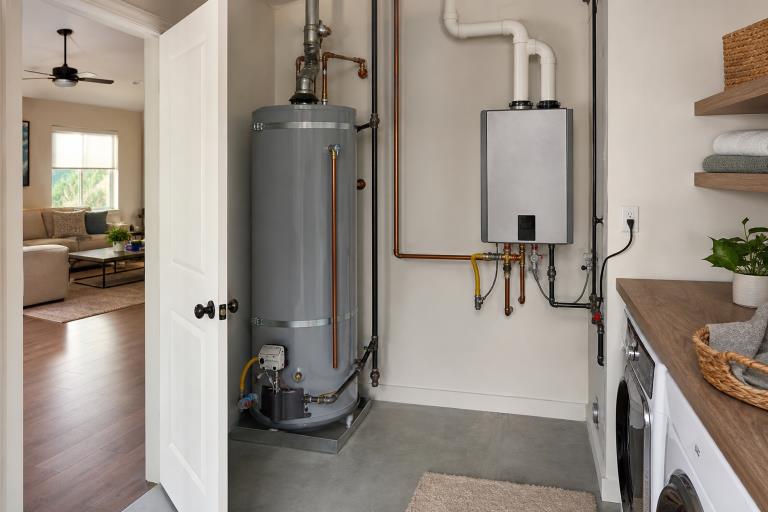
Traditional storage water heaters heat and hold a set amount of water until it is needed. They remain a familiar choice because they are widely available and can be relatively straightforward to replace when the new unit uses the same fuel and fits the existing location. Their limits include standby heat loss, a finite supply of stored hot water, and recovery time after periods of heavy use.
Tankless Water Heaters
Tankless units heat water as it passes through the appliance rather than storing it in a large tank. They can save floor space and provide continuous hot water when demand remains within the unit’s flow capacity. However, “endless hot water” does not mean unlimited hot water for several fixtures at once. Simultaneous showers, appliances, and faucets can exceed the available flow rate. Gas piping, venting, electrical service, and the incoming water temperature all deserve review before choosing this option.
Complex installations often require broader plumbing and mechanical updates to handle system requirements safely. Working with an experienced contractor like Charles Berg Enterprises, Inc. helps ensure that gas lines, supply piping, and ventilation meet proper safety standards, preventing operational disruptions and protecting long-term system performance.
Heat Pump Water Heaters
Heat pump water heaters move heat from the surrounding air into the stored water, rather than relying solely on electric resistance heating. They can use less electricity than standard electric resistance models, but placement matters. The installation area needs appropriate air volume, year-round temperatures, clearance, and condensate drainage. These units also produce some operational noise and can cool the surrounding room. Heat pump water heater buying guidance can help homeowners consider capacity, placement, maintenance, and available incentives.
Regional climate conditions also influence how well hybrid systems extract ambient heat throughout the year. Homeowners living in warm, humid regions often benefit from the cooling and dehumidifying side effects created during operation. Coordinating a heat pump installation in West Palm Beach ensures the unit has adequate airflow and drainage setup to maximize energy efficiency in coastal South Florida environments.
Solar and Specialty Systems
Solar water heating uses sunlight to heat household water, typically with a backup heat source when solar energy is limited. Point-of-use systems heat water near a specific fixture or small area of use. Both approaches can suit certain homes, but they often require more specialized planning, equipment, or space than a conventional whole-home replacement.
Estimate Household Hot Water Demand
Household size is useful, but timing is equally important. Identify the busiest hour of a typical day. This might include two showers, a dishwasher cycle, laundry, and kitchen cleanup occurring close together. For storage tanks, compare that demand with the first-hour rating (FHR), which indicates how much hot water the unit can supply during a busy first hour. For tankless models, focus on gallons per minute, or GPM, at the expected temperature rise. Recovery rate also matters for back-to-back showers. Consider upcoming changes such as frequent guests, another bathroom, a growing household, or different laundry habits.
Review Efficiency Ratings and Operating Costs
The yellow EnergyGuide label provides a standardized way to compare estimated energy use and operating costs among similar products. Uniform Energy Factor, or UEF, is another efficiency measure used for water heaters. Higher efficiency can be valuable, but compare ratings within the same equipment category rather than assuming every number is directly interchangeable. The federal water heater standards and test procedures explain why manufacturers use standardized methods for consumer water heater ratings. Consider purchase price, installation work, energy use, maintenance, repairs, and future replacement together.
Check Space, Fuel, and Installation Needs
A replacement is not always a direct swap. Confirm whether your home uses natural gas, propane, electricity, or another fuel source. Electric and heat pump units may require an electrical panel review. Gas-fired equipment may need properly sized gas piping, approved vent routes, combustion air, and required clearances. Depending on the installation, planning may also include a drain pan, condensate line, shutoff valves, expansion control, and safe discharge piping. Confirm local permit and inspection requirements before work begins.
Plan for Safety and Maintenance
Temperature settings should balance comfort, energy use, and scald prevention. Gas water heaters require proper venting and combustion-safety checks, while all water heaters should be kept clear of flammable materials. Maintenance may include checking for leaks, inspecting connections, flushing sediment where appropriate, and cleaning filters on applicable systems. Requirements vary by model and local water conditions, so follow the manufacturer’s instructions and use qualified professionals for gas, electrical, and venting work.
Comprehensive home climate and heating care often goes hand in hand with maintaining domestic hot water equipment, as shared fuel lines or electrical infrastructure require coordinated upkeep. Consulting a local furnace repair service in St Simons Island helps keep all heating components working safely and efficiently, reducing unexpected disruptions to daily comfort during cooler weather.
Broader home utility care often goes hand in hand with maintaining essential appliances, as overall comfort relies on multiple interconnected systems functioning properly. Addressing cooling and heating demands alongside plumbing updates prevents unexpected breakdowns during peak seasonal usage. For households evaluating routine system maintenance or urgent cooling issues, scheduling ac repair Baton Rouge can ensure balanced indoor temperatures and overall equipment reliability.
Avoid Common Water Heater Buying Mistakes
- Choosing solely by the old tank’s gallon capacity.
- Buying the least expensive unit without evaluating operating costs.
- Assuming a tankless model can support every fixture at once.
- Overlooking electrical, gas-line, drainage, or venting needs.
- Ignoring the delivery access and removal of the old equipment.
- Skipping permit, code, warranty, and maintenance reviews.
Use a Simple Decision Checklist
- Identify your fuel source and available utility capacity.
- List the busiest hot-water activities in a normal hour.
- Measure the installation space and access path.
- Compare storage, tankless, heat pump, solar, and specialty options.
- Match FHR or GPM to the expected peak demand.
- Request an installed-price estimate that includes necessary upgrades.
- Confirm permits, safety requirements, warranty terms, and maintenance responsibilities.
Final Thoughts
Choosing a water heater is ultimately about matching the system to the home and the people who use it. Reviewing demand, fuel, space, efficiency, installation needs, and long-term costs can help you make a more confident choice. Careful planning now can reduce the risk of cold showers, avoidable installation surprises, and unnecessary energy waste later.