Key Takeaways
- Small cracks, loose pieces, and uneven surfaces can become larger safety and repair concerns.
- Reliable drainage helps limit standing water, erosion, and moisture near the pool structure.
- Slip resistance and clear walking paths are essential where wet feet and regular traffic meet.
- Concrete, brick, stone, tile, and pavers each require different cleaning and maintenance methods.
- Regular inspections make it easier to address surface problems before swimming season.
Why The Pool Edge Deserves Regular Attention
The pool edge is where the waterline, deck, drainage, and walking paths come together. Whether it includes coping, stone, pavers, or new tile, this area affects how safely people enter, exit, and move around the pool. It also helps direct water away from nearby surfaces and enhances the overall appearance of the backyard.
Minor defects around the perimeter are easy to overlook, especially during a busy summer. A narrow crack, for example, may allow water to reach joints or the material beneath the surface. In regions with freezing weather, that trapped moisture can expand, worsening the damage over time. Routine attention is usually simpler and less disruptive than waiting for an edge section to become loose or uneven.
Warning Signs That Should Not Be Ignored
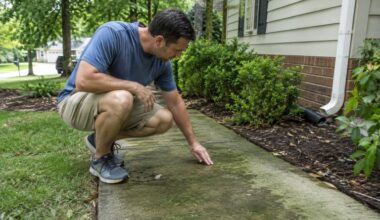
Not every visible flaw indicates a structural problem in the pool, but changes in the edge area warrant a closer look. Check the full perimeter for growing cracks, loose or rocking pieces, open joints, chipped corners, worn texture, and sealant that has pulled away from adjoining materials.
- Spreading cracks:May indicate movement, settlement, or repeated exposure to moisture.
- Loose sections:Can create a trip hazard and allow more water below the surface.
- Uneven transitions:A raised or sunken edge between the coping and deck can catch bare feet.
- Standing water:Often indicates a clogged drain, poor drainage, or a settled section of the deck.
- Rough or sharp surfaces:May cause cuts, snag pool equipment, or make the area uncomfortable to use.
- Flaking and stains:Can signal surface wear, mineral buildup, or a cleaning method that is too aggressive.
How To Check For Slip And Trip Hazards
Inspect the area before opening the pool, after major storms, and whenever you notice a change underfoot. Begin with a dry walk around the entire pool, then repeat the process after rinsing the surface or after normal splashing has made it wet. Pay attention to places where a formerly textured surface now feels smooth.
- Walk the perimeter slowly and look for changes in height between nearby materials.
- Check steps, ladders, gates, and corners where people are likely to turn or carry towels and toys.
- Move furniture, planters, hoses, and pool accessories away from the main walking route.
- Look for algae, sunscreen residue, leaf debris, and other buildup that can make a surface slick.
- Mark unsafe spots and keep people off them until they can be repaired.
For shared, commercial, and community pools, the CDC’s Model Aquatic Health Code guidance is a useful reference for maintaining aquatic facilities to reduce injuries and health risks. Local requirements may be more specific, so property managers should also confirm the rules that apply in their jurisdiction.
Drainage And Water Flow Around The Pool
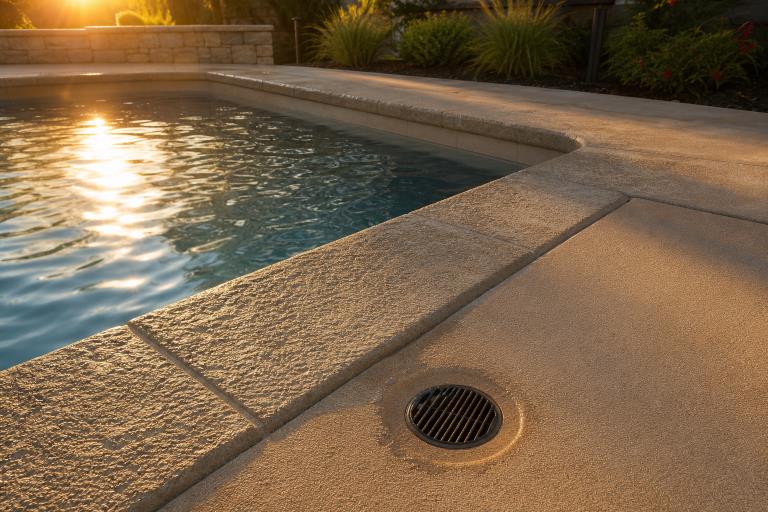
Water should not remain near the pool edge long after rain, cleaning, or normal use. Pooling water makes slips more likely, can stain porous materials, and may contribute to erosion or movement below the deck. Watch the area during rainfall to see where water collects and whether it reaches joints, the pool wall, or landscaping beds.
- Clear leaves, dirt, and mulch from deck drains and drain covers.
- Check that downspouts and irrigation do not empty toward the pool deck.
- Look for washed-out soil or gaps along the deck’s outer edge.
- Address sunken sections before winter, particularly where freezing and thawing are common.
- Have persistent water problems evaluated before repairing only the visible surface.
Comparing Common Pool Edge Materials
No material is right for every pool, climate, or maintenance routine. The best choice depends on the desired appearance, local weather, foot traffic, drainage conditions, and the availability of matching pieces for future repairs.
- Concrete:Adaptable in shape and finish, but it can crack or settle as the ground moves.
- Brick:Offers a traditional look and may allow individual units to be replaced, though joints need periodic care.
- Natural stone:Provides natural variation and texture, but some types benefit from sealing to resist stains and moisture.
- Tile:Creates many design options, but grout lines and individual tiles should be checked for looseness or damage.
- Pavers:Can make isolated repairs easier, although shifting joints and weed growth require attention.
Cleaning And Seasonal Care
Cleaning should fit the material and finish. Avoid using tools, pressure settings, or chemicals that could etch stone, damage grout, strip sealers, or wear away textured finishes. When unsure, test a small inconspicuous area first and follow the manufacturer’s instructions for the specific surface.
Spring And Summer
In spring, remove accumulated debris, inspect joints, clear drains, and check for loose or uneven sections before regular use begins. During the summer, rinse splash zones, promptly remove slippery buildup, and inspect high-traffic areas around steps and entry points.
Fall And Winter
In the fall, clear leaves frequently and make sure drainage is open before heavier rain arrives. Before winter, repair open joints and obvious weak areas where water could collect. In cold climates, preventing standing water is especially important because repeated freezing can enlarge existing cracks.
When Repair Makes Sense And When Replacement May Be Better
A limited repair may be appropriate for a single loose piece, a short run of failed sealant, or a small, isolated chip. Broader replacement may be worth considering when cracks recur, multiple sections are moving, drainage is poor over a large area, or the visible damage appears to be connected to deck or pool-shell movement.
Before authorizing work, ask whether the defect is isolated, whether the area has shifted since the last repair, whether matching material remains available, and whether the proposed solution addresses the underlying cause rather than covering the symptom.
Safety Features For Families And Shared Pools
A well-maintained edge is only one layer of protection. Keep access points secure, maintain clear paths and usable lighting, and make depth markings easy to see where required. Barriers, alarms, safety covers, secure ladders, and attentive adult supervision remain essential. The CPSC’s layers of protection for pool safety reinforce that no single device or repair replaces active supervision around water.
Questions To Ask Before Hiring A Contractor
- What is believed to have caused the damage?
- Will the surrounding deck, joints, and drainage be inspected?
- Which materials and setting products will be used?
- How will movement joints and water flow be handled?
- What preparation work is included in the scope?
- How long should the repaired area remain undisturbed?
- Are permits or local inspections required?
A Simple 2026 Inspection Schedule
- Before opening:Check cracks, loose sections, drains, joints, lights, gates, and walking paths.
- Monthly:Look for slippery buildup, worn texture, failing sealant, and slow drainage.
- After severe weather:Inspect for erosion, pooling water, fallen debris, shifting, and new cracks.
- Before winter:Address open joints, weak areas, drainage issues, and locations exposed to freeze-thaw cycles.
Conclusion
Pool edge maintenance works best as a steady routine rather than a once-a-year task. A clean, even, well-drained perimeter supports safer use, protects the surrounding surfaces, and can help prevent small defects from becoming major repairs. Regular checks, material-appropriate cleaning, timely repairs, and professional advice for persistent movement or water problems provide a practical plan for 2026 and beyond.