Key Takeaways
- Different workout zones place different demands on flooring, so one surface is rarely ideal everywhere.
- Strength areas need stability, impact protection, traction, and durable repair options.
- Cardio, studio, functional training, recovery, and wet areas each require their own priorities.
- Subfloor conditions, transitions, cleaning routines, and future layout changes affect long-term value.
Fitness flooring should be selected around the activities planned for each room, not simply by color, thickness, or initial price. A facility may need stable rubber near racks, a smooth surface under machines, turf for sled work, and moisture-resistant materials in changing areas. Good cardio room design also considers equipment access, cleaning needs, and the floor’s ability to support a safe, organized layout. Planning by zone helps gym owners, schools, apartment communities, and home gym users avoid unnecessary compromises. A dropped dumbbell, a treadmill in use, a yoga class, and a wet locker room create very different conditions. Matching the floor to the work performed there can improve comfort, equipment stability, cleaning efficiency, and the lifespan of the finished space.
Why Workout Zones Need Different Flooring
Every training area has its own mix of impact, traffic, moisture, noise, and directional movement. Heavy lifting creates concentrated loads and occasional drops. Cardio equipment needs a level base that resists compression. Group classes involve repeated foot strikes and turns, while locker rooms must handle water and frequent cleaning. A single material can simplify purchasing, but it may not deliver the right balance of support and durability in every room.
Start With a Room and Traffic Assessment
Before choosing products, measure the usable floor area, door swings, columns, walkways, storage, and equipment footprints. Map the routes used by members, trainers, cleaning crews, and service technicians. Inspect the subfloor for cracks, uneven spots, and moisture concerns, especially near entrances, plumbing, showers, or exterior walls.
- Confirm ceiling clearance and ventilation for the equipment planned.
- Leave access space for maintenance, replacement, and cleaning.
- Identify high-traffic paths and locations where people change direction.
- Plan for future equipment additions before finalizing flooring boundaries.
Flooring for Strength and Free-Weight Areas
Strength zones need a firm, stable surface around racks, benches, dumbbell racks, and lifting stations. Dense rubber flooring is commonly used because it helps protect the subfloor, reduces noise during routine use, and provides reliable traction. Rolls can create a continuous look, while tiles can make localized replacement easier. Platforms and reinforced impact zones can provide extra protection where barbell drops are expected.
- Load tolerance:Support racks, benches, and stored weights without excessive deformation.
- Impact protection:Protect the finished floor and subfloor from repeated use.
- Traction:Support controlled foot placement during lifts.
- Noise control:Reduce disturbance in shared buildings.
- Repair access:Make it practical to replace a damaged section.
Very soft surfaces can feel comfortable underfoot, but they may feel less secure during heavy lifts or balance-intensive movements. Test samples with the shoes and equipment used in the finished area.
Flooring for Cardio Rooms
Treadmills, bikes, rowers, stair machines, and ellipticals need level support. Flooring should remain stable under equipment feet and resist damage from vibration, sweat, dust, and regular cleaning. Equipment placement should also preserve clear access routes so large machines can be serviced or replaced without damaging nearby floor sections.
Flooring for Functional Training and HIIT Areas
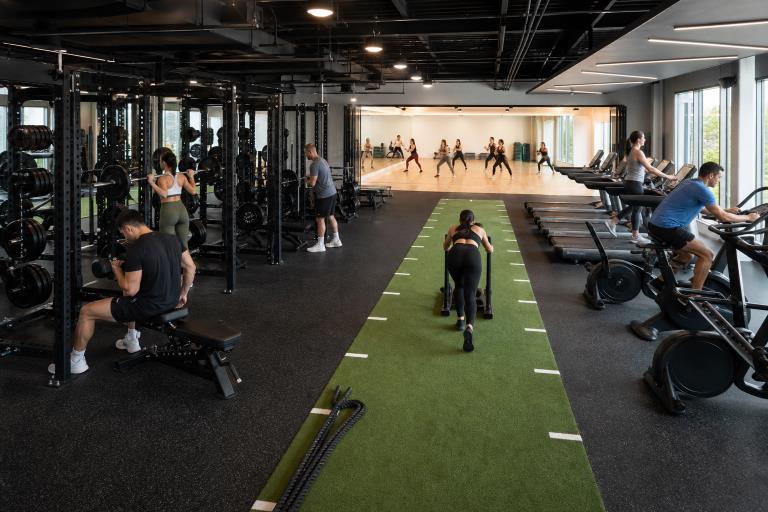
Functional spaces support fast starts, stops, jumps, crawls, lunges, carries, and pivots. Rubber flooring works well for many mixed-use areas, while turf lanes can support sled pushes, agility drills, and conditioning work. Seams, curled edges, and abrupt changes in height should be avoided in active paths. Modern functional training zones can combine strength equipment with flexible training space, making clear boundaries and durable transitions especially important.
Flooring for Group Exercise Studios
Studios may host dance, aerobics, yoga, Pilates, cycling, or circuit classes, so the right surface depends on the class schedule. High-impact formats need dependable grip and comfort during repeated movement. Yoga and mobility classes may prioritize comfort, hygiene, and compatibility with mats. Sound control also matters when studios sit beside offices, classrooms, or recovery rooms. Test flooring with the footwear, mats, and equipment that participants will actually use.
Flooring for Stretching, Recovery, and Wet Areas
Stretching and recovery spaces should be sufficiently comfortable for kneeling, seated mobility work, and cool-downs without becoming unstable when users stand. Consider barefoot use, warmth, ease of cleaning, and how well exercise mats stay in place. Locker rooms, showers, and other wet areas require a separate approach. Prioritize drainage, moisture resistance, cleaning compatibility, and slip resistance. Maintaining clear walking routes and suitable surfaces aligns with walking-working surface safety principles, particularly where water can be tracked from showers into changing or hallway areas.
Why Flooring Transitions Matter
Transitions between rubber, turf, resilient flooring, and wet-area surfaces should be planned before equipment arrives. Sudden changes in height, texture, or grip can disrupt movement and pose trip hazards. Use clean edges, appropriate transition strips, and visible boundaries. For example, a rubber lifting zone can connect to a turf lane and then to a cardio section when the changes are smooth, and equipment routes remain open.
Installation, Maintenance, and Total Ownership Cost
Performance starts with installation. Prepare and level the subfloor, check moisture conditions, confirm door clearances, and, when possible, keep seams away from high-impact locations. Allow materials to acclimate and follow product-specific installation and curing instructions before placing heavy equipment. Budget beyond material cost. Include delivery, subfloor preparation, labor, downtime, cleaning supplies, repairs, and eventual replacement. Regular sweeping, prompt spill cleanup, and inspections of seams, edges, and transitions can help identify problems early. Different materials may require different cleaners, so staff should have clear care instructions before the room opens.
Common Questions About Fitness Flooring
Can one flooring type be used throughout a gym?
It can, but separate zones often perform better because lifting, cardio, group exercise, and wet areas have different requirements.
What works best under heavy weights?
Choose a dense, stable surface designed for equipment loads and impact, then add platforms or reinforced sections where drops are likely.
Is softer flooring always safer?
No. Cushioning can improve comfort, but excessive softness may reduce stability for lifting and balance work.
How can a facility limit repair costs?
Use replaceable sections where practical, protect high-impact areas, maintain clear traffic routes, and inspect edges and seams routinely.
Conclusion
Choosing fitness flooring works best when each workout zone is evaluated according to how it will actually be used. Strength areas may need stable, impact-resistant surfaces, while cardio, functional training, group exercise, recovery, and wet areas have different requirements. Subfloor conditions, transitions, equipment movement, cleaning routines, maintenance access, and future layout changes should also be considered before installation. A thoughtful flooring plan can help improve comfort, stability, durability, and ease of maintenance while reducing unnecessary compromises between different activities. By matching materials to specific uses and planning for long-term care, facilities can create workout spaces that remain practical, organized, and ready to support changing fitness needs over time.