Outdoor play is essential for physical health, social development, and emotional well-being in childhood education. However, designing outdoor play areas for schools and daycare centers requires a careful balance between developmental fun and rigorous risk management. Creating a secure environment demands strategic planning across safety surfacing, physical perimeter security, age-appropriate equipment layout, environmental shade, and clear sightlines. By implementing proactive safety measures, educational administrators and childcare directors can construct vibrant outdoor spaces where children play freely while staying fully protected from physical hazards and unauthorized intrusion.
Establishing Secure Perimeter Barriers and Entry Control
The primary line of defense for any educational outdoor space is a robust, continuous perimeter barrier. Fencing prevents young children from wandering into busy streets or parking lots while deterring unauthorized individuals from accessing school grounds during recess hours.
Perimeter fences must feature smooth, non-climbable vertical pickets spaced closely enough to prevent head entrapment. Self-closing, self-latching access gates equipped with child-proof locking mechanisms ensure that play areas remain securely contained at all times during school hours.
Selecting heavy-duty, aesthetically pleasing fencing materials elevates school curb appeal without sacrificing perimeter security. Investing in specialized perimeter solutions—such as commercial ornamental iron fencing in Utah County or similar expanding school districts—provides durable, climb-resistant boundary protection that withstands heavy play site use while maintaining full visibility for supervising staff.
Implementing Child-Proof Gate Latches and Access Control
Installing magnetic or mechanical latches positioned out of reach of young children ensures play yard gates remain securely shut during activity periods.
Integrating keycard entry systems for staff allows authorized supervisors to access play areas quickly while keeping unauthorized visitors out. Controlled gates maintain containment security.
Maintaining Unobstructed Visual Supervision Lines
Selecting open-picket fence designs ensures teachers and childcare providers maintain clear sightlines across the entire perimeter from inside the play yard.
Eliminating solid visual barriers prevents trespassers from approaching fence lines unnoticed by supervising school staff. High-visibility fencing enhances perimeter surveillance.
Selecting Impact-Absorbing Safety Surfacing Materials
Falls from elevated play equipment represent the most common cause of injuries on school and daycare playgrounds. Installing appropriate shock-absorbing safety surfacing beneath and around equipment is essential for mitigating impact force and preventing severe injuries.
Traditional hard surfaces like concrete, asphalt, dirt, and packed grass offer zero impact protection and are strictly unacceptable for play zones. Administrators must choose tested, certified impact-absorbing materials appropriate for the specific fall heights of their equipment.
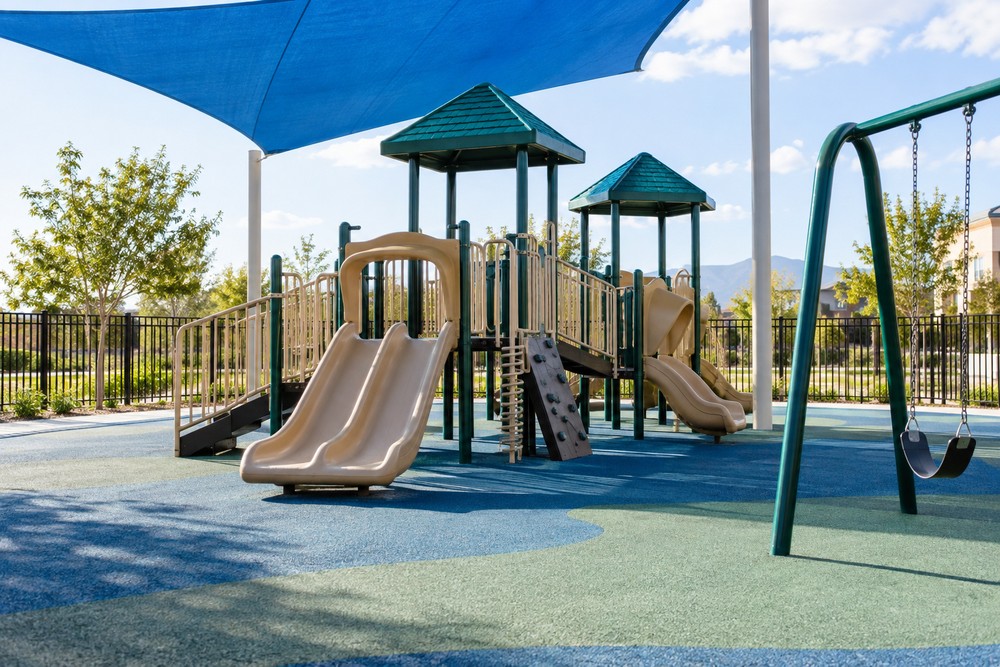
Poured-in-place rubber, bonded rubber mulch, and high-density rubber tiles provide seamless, low-maintenance surfaces that accommodate wheelchairs easily. Loose-fill materials like engineered wood fiber or shredded rubber offer excellent shock absorption when maintained at proper depths, though they require routine raking to prevent compaction.
Calculating Equipment Fall Heights and Surface Depths
Matching safety surfacing shock absorption ratings to the maximum deck height of play structures guarantees critical impact protection during falls.
Maintaining engineered wood fiber at minimum compressed depths of nine to twelve inches ensures continuous fall attenuation beneath high-use swings and slides. Proper surface depth prevents head trauma.
Ensuring Universal Accessibility in Safety Surfacing
Poured-in-place rubber surfacing creates a smooth, level ground plane that allows children utilizing mobility devices to navigate play yards effortlessly.
Seamless rubber surfaces eliminate trip hazards and loose debris, enabling inclusive play experiences for students of all physical abilities. Accessible surfacing supports universal play.
Designing Age-Appropriate Equipment Zones and Clearance Fields
Children undergo rapid physical and cognitive growth between infancy and elementary school years. Mixing toddlers with older school-age children on identical play structures increases accident risks due to differing physical strengths and motor skill levels.
Dividing outdoor play grounds into distinct, age-appropriate play zones ensures children interact with equipment scaled specifically for their physical capabilities. Dedicated zones for toddlers (ages six to twenty-four months), preschoolers (ages two to five), and elementary students (ages five to twelve) reduce fall risks significantly.
Additionally, establishing generous equipment clearance fields—often called use zones—around swings, slides, and climbing walls prevents collisions between active children. Keeping use zones clear of hard structures, trees, and other play equipment creates safe landing areas during active play.
Structuring Dedicated Toddler Play Environments
Designing low-to-the-ground climbing ramps, sensory panels, and small enclosed slides accommodates toddler balance capabilities safely.
Restricting platform heights for young children minimizes potential fall distances while building basic physical confidence. Toddler zones prevent high-fall accidents.
Establishing Adequate Clearance Fields Around Swings and Slides
Maintaining a clear safety radius equal to twice the height of the swing beam prevents swinging children from colliding with passing classmates.
Extending slide exit clearance zones ensures children sliding at high speeds have ample room to decelerate safely on soft surfacing. Clearance fields eliminate collision risks.
Prioritizing Environmental Protection, Shade, and Sun Safety
Outdoor safety extends beyond physical equipment to encompass environmental factors like extreme solar radiation and thermal heat accumulation. Unprotected exposure to harsh sunlight can cause painful sunburns, heat exhaustion, and thermal skin burns from hot metal or dark plastic equipment surfaces.
Integrating broad shade structures over active play zones protects children from harmful ultraviolet radiation during peak midday hours. Heavy-duty fabric shade sails, metal pavilions, or strategic natural tree canopies reduce ambient ground temperatures significantly.
Furthermore, specifying heat-resistant materials for play equipment prevents surface scorching. Choosing light-colored plastics, coated metals, and shaded slides ensures slide beds and climbing rungs remain safe to touch even during hot summer months.
Installing Heavy-Duty Fabric Shade Sail Structures
Positioning UV-blocking shade sails above primary play towers keeps equipment cool while protecting children from prolonged solar exposure.
Shade structures lower surface temperatures on slide beds and decks, preventing skin burns during warm weather. Fabric shades enhance play comfort.
Hydration Station Placement and Heat Safety Protocols
Positioning outdoor drinking fountains or shaded hydration carts near play zones encourages children to drink water frequently during active play.
Establishing shaded rest areas equipped with benches gives tired students a cool place to rest and recover between active games. Hydration access prevents heat exhaustion.
Eliminating Entrapment, Pinch-Point, and Sharp-Edge Hazards
Playground equipment must undergo rigorous safety checks to identify subtle mechanical hazards that can catch clothing, pinch small fingers, or cause strangulation. Careful inspection during the planning phase eliminates potential hazard points before equipment is opened for student use.
Ensure all equipment openings—such as spaces between ladder rungs, guardrails, and fence pickets—measure either under three inches or over nine inches. This critical dimension rule prevents head or neck entrapment, ensuring a child’s body cannot pass through an opening while their head becomes trapped.
Additionally, inspect equipment for exposed bolt threads, open S-hooks on swings, sharp metal edges, and narrow pinch points near moving seesaws or merry-go-rounds. Eliminating protruding hardware prevents drawstring tangles and clothing snags that lead to accidental strangulation.
Inspecting Hardware and S-Hook Closure Tolerances
Crimp all swing S-hooks tightly so the gap measures smaller than the thickness of a dime, preventing clothing loops from catching.
Recessing bolt heads or installing smooth plastic protective caps stops exposed metal threads from scratching young skin. Hardware caps eliminate snag hazards.
Verifying Guardrail Heights and Infill Panel Security
Installing high protective guardrails along elevated platforms prevents accidental falls from high decks and bridge walkways.
Utilizing solid or mesh infill panels beneath platform handrails stops children from stepping off platform edges unexpectedly. Guardrails maximize elevated safety.
Establishing Routine Inspection and Maintenance Protocols
Even the most thoughtfully designed play area will degrade over time due to weather exposure, heavy daily use, and material wear. A comprehensive, ongoing maintenance program is essential for maintaining playground safety standards across every school year.
Implement a structured inspection schedule featuring daily walkthroughs by staff, monthly safety audits by facility managers, and annual certified playground safety inspections. Daily checks focus on removing litter, broken glass, animal waste, and fallen tree branches from play surfaces.
Monthly and quarterly maintenance should inspect structural bolts for tightness, check swing chains for link wear, verify safety surfacing depths, and look for signs of rust or wood splintering. Promptly repairing broken equipment or closing damaged zones keeps the play environment safe and operational.
Executing Daily Staff Walkthrough Inspections
Conducting quick morning visual checks before students enter the play yard identifies immediate hazards like loose debris or wet equipment.
Raking loose-fill wood surfacing back into high-impact zones beneath slide exits maintains proper shock absorption daily. Daily checks secure morning readiness.
Documenting Monthly Safety Audits and Repairs
Logging detailed inspection checklists creates an official record of maintenance actions, proving compliance with educational safety standards.
Quarantining damaged equipment immediately with safety tape prevents student use until certified repair technicians restore the structure. Audits enforce long-term accountability.
Conclusion
Planning safer outdoor play areas for schools and daycare centers requires an intentional, multi-layered approach that prioritizes child safety without compromising developmental fun. By installing secure perimeter fencing, applying certified impact-absorbing safety surfacing, organizing age-appropriate play zones, providing environmental shade, eliminating mechanical entrapment hazards, and maintaining disciplined routine inspection protocols, educational administrators create high-performing outdoor spaces. Investing in proactive playground security and safety infrastructure protects young children from harm, provides peace of mind for parents, and cultivates a vibrant, joyful environment where children can learn, grow, and play with confidence.