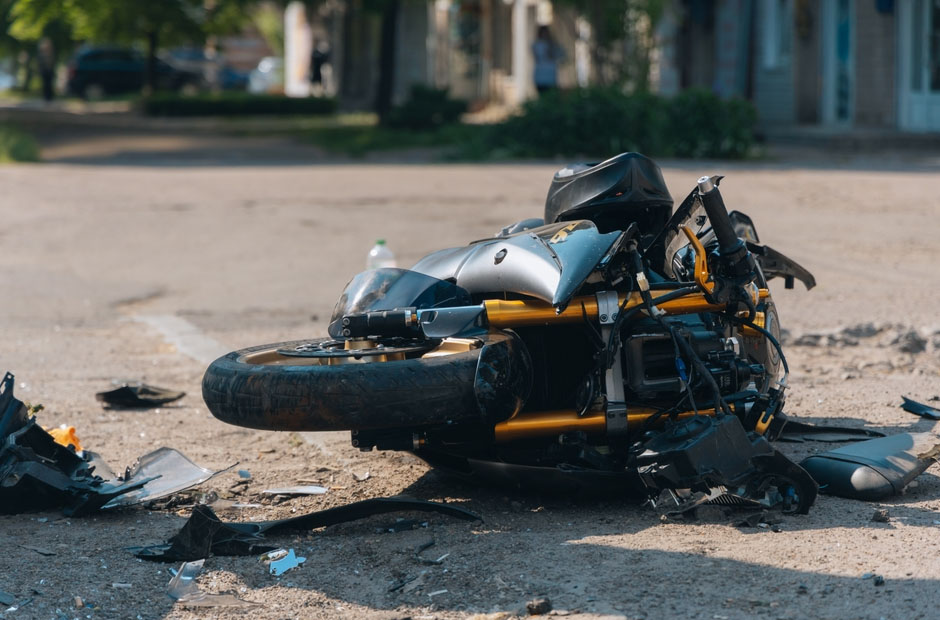
The Small Size Problem
Motorcycles are nimble, quick, and remarkably good at slipping through spaces that would make a car driver sweat. Unfortunately, that same compact design can make them difficult for other road users to notice. A motorcycle may be directly in front of a driver and still register in the driver’s brain as little more than a fast moving speck.
This is especially common near intersections. A motorist preparing to turn left may look toward an approaching motorcycle, glance away for half a second, and then begin turning as though the road were empty. That half second can transform a peaceful ride into a scene that looks like a stunt show nobody agreed to perform.
Visibility improves when riders use headlights, reflective materials, and bright clothing. Positioning also matters. Riding in a place where a vehicle’s mirrors are most likely to catch the motorcycle can help, while hiding beside a car in a blind spot is an invitation to become an unwanted surprise.
Drivers have responsibilities too. Checking mirrors, scanning twice before turning, and avoiding assumptions about an apparently empty lane can prevent many devastating collisions.
Intersections Are Collision Hotspots
Intersections bring together turning vehicles, changing signals, pedestrians, bicycles, delivery trucks, and drivers who appear to believe traffic lights are merely colorful decorations. Motorcyclists face particular danger because a vehicle crossing their path can leave almost no time for evasive action.
A rider approaching an intersection should treat every side street as a possible launch point for danger. A vehicle might roll through a stop sign, turn across traffic, or emerge from behind a larger car. Even when the rider has the right of way, relying on that legal protection alone is not a physical safety plan.
Reducing speed before entering an intersection creates more time to react. Covering the brakes, keeping both hands ready, and watching the front wheels of nearby vehicles can also reveal movement before the vehicle fully enters the rider’s path. Wheels often confess what drivers have not yet decided to do.
Green lights deserve caution as well. A fresh green signal does not guarantee that every cross traffic vehicle has stopped. Looking left and right before proceeding may feel overly careful, but motorcycles are poorly suited to arguments with impatient sedans.
Following Too Closely
Tailgating is dangerous in any vehicle, but it becomes especially unforgiving on a motorcycle. A car can often stop rapidly while offering its occupants a metal shell, airbags, and crumple zones. A rider has far less between their body and the laws of physics.
Following distance allows motorcyclists to react to traffic slowdowns. It also improves road visibility. A pothole, fallen object, halted car, or slick fluid may be hidden by the vehicle ahead. The rider with enough space can move. A close follower may spot the hazard when the front tire hits it.
Drivers should also avoid crowding motorcycles from behind. A rider may need to shift position within the lane to avoid debris or improve visibility. A vehicle pressing close behind can make that ordinary adjustment feel like a high speed negotiation with a bumper.
Alcohol and Impaired Judgment
Alcohol, recreational drugs, fatigue, and certain medications can interfere with balance, timing, focus, and decision making. On a motorcycle, those abilities are not optional extras. They are the entire operating system.
An impaired rider may misjudge a turn, brake too late, or believe that a gap is wide enough when it is actually the size of a sandwich. Alcohol can also create overconfidence, which is particularly dangerous when combined with a powerful engine and an open road.
Impairment among car drivers is equally threatening. A driver drifting between lanes may fail to notice a motorcycle, respond slowly to a signal, or make an unpredictable turn. Riders cannot control the condition of every person on the road, but they can recognize suspicious movement and increase distance from vehicles that wander, accelerate erratically, or brake without reason.
Fatigue deserves special attention. A tired rider may experience slower reflexes and reduced awareness without realizing how impaired they have become. Long rides should include breaks, hydration, and honest attention to physical and mental condition.
Motorcycle Maintenance Matters
Not every crash begins with a careless driver. Sometimes the trouble starts in the machine itself. Worn tires, weak brakes, loose controls, damaged lights, and poorly maintained chains can turn a manageable situation into a dramatic lesson in regret.
Since the motorcycle’s primary road contact is its tires, they need periodic inspection. Cracks, uneven wear, low tread, and inappropriate pressure can impact steering and braking. Check and adjust tire pressure when cold according to motorcycle manufacturer recommendations.
Brakes must respond smoothly and consistently. A lever that feels unusually soft, a pedal that requires excessive pressure, or a motorcycle that pulls to one side during braking deserves attention before the next ride. Lights and turn signals are equally important, especially at night or in heavy traffic.
More issues can arise with loose cargo. Poor bag security might throw the motorcycle off balance or into traffic. A reliable bungee cord can become a little rubber catapult. Every load should be securely connected and away from wheels, chains, exhaust, and controls.
Curves and Unfamiliar Roads
Curves require more planning than straight roads because riders cannot see the entire path ahead. A bend may conceal stopped traffic, gravel, a sharp drop in pavement, or a vehicle drifting across the center line.
Entering a curve too quickly can create a chain reaction. The rider may lean farther than expected, brake abruptly, cross the center line, or run wide toward the shoulder. The safest approach is to reduce speed before the turn, maintain a controlled line, and avoid sudden inputs while leaned over.
Unfamiliar roads add another layer of uncertainty. A route may contain steep grades, changing surfaces, hidden driveways, or unexpected construction. Riders should treat warning signs as useful information rather than roadside decoration. The sign announcing a sharp turn is not challenging the rider to prove anything. It is simply trying to prevent a meeting with a guardrail.
Group Riding Pressure
Riding with friends can be enjoyable, but group dynamics sometimes encourage decisions that would seem foolish when made alone. A rider may accelerate beyond their comfort level to stay with the pack, follow a more experienced rider too closely, or attempt a maneuver without enough preparation.
Groups should set expectations before leaving. Riders must comprehend the route, halting spots, communication signals, and separation procedures. Staggered formations improve sight and spacing, but they should never prohibit riders from responding to hazards.
The most skilled rider in a group is not necessarily the fastest one. Good judgment, patience, and the willingness to slow down are far more valuable than producing the loudest engine noise at the stoplight.
Night Riding and Reduced Visibility
Darkness makes every hazard harder to identify. Road debris blends into the pavement, pedestrians become difficult to see, and the headlights of oncoming vehicles can briefly wash out a rider’s vision. Animals may also appear without warning, particularly on rural roads.
Night riding requires more conservative speed because the motorcycle may travel beyond the distance the rider can see clearly. A clean visor helps prevent glare and distortion. Reflective clothing and functioning lights make the motorcycle easier for others to detect.
Riders should remain alert for vehicles with dirty or misaligned headlights. A car approaching with one headlight may be mistaken for a motorcycle, while a motorcycle with a weak lamp may disappear into the darkness. Visibility is a shared responsibility, but the smaller road user usually pays the larger price when someone fails to notice them.
What Happens After a Crash
A collision can cause perplexity before it’s fully comprehended. Getting away from traffic is vital for safe riders. A suspected spinal injury can be mitigated by calling 911, checking for major bleeding, and avoiding needless movement.
A helmet should not be removed casually unless a serious airway emergency requires it or trained responders direct that action. Riders should also avoid making statements that assign blame while still shaken. Adrenaline is a poor legal adviser and an even worse storyteller.
Documenting the scene, collecting witness information, and photographing vehicle positions and road conditions can preserve details that may disappear quickly. However, safety comes before photography. A picture of a skid mark is not worth becoming part of a second collision.
FAQ
Why are motorcycles harder for drivers to see?
Motorcycles have a smaller visual profile than cars and can disappear in blind spots, glare, heavy traffic, or cluttered surroundings. Their speed may also be difficult for drivers to judge accurately. Headlights, reflective clothing, and careful lane positioning can improve visibility.
Is lane splitting always dangerous?
Lane splitting carries risks because traffic may change speed unexpectedly and drivers may move between lanes without noticing the motorcycle. Where it is legal, riders should use caution, reduce speed, avoid blind spots, and remain prepared for doors, mirrors, and sudden lane changes.
What protective equipment should a motorcyclist wear?
A properly fitted full face helmet, sturdy gloves, abrasion resistant clothing, armored riding gear, and boots that cover the ankles provide important protection. Ordinary sneakers and thin clothing offer very little defense against pavement during a slide.
How can a new rider build safer skills?
A new rider should practice braking, cornering, swerving, low speed control, and hazard recognition in a controlled setting. Professional instruction can help correct poor habits before they become automatic. Experience should grow gradually rather than through racing traffic or copying an aggressive rider.