Key Takeaways
- The right exterior door should suit your home’s layout, architectural style, daily traffic, and exposure to Pennsylvania weather.
- Fiberglass, steel, and wood doors each offer different advantages in maintenance, appearance, insulation, and cost.
- Frame condition, weatherstripping, threshold adjustment, and installation quality are as important as the door itself.
- Glass, locks, hinges, and strike plates should be selected as part of one complete door system.
- Detailed estimates and careful measurements can prevent expensive ordering or installation mistakes.
Replacing an exterior door is a meaningful upgrade for Mechanicsburg homeowners because the entry affects daily comfort, curb appeal, privacy, and security. A door that sticks during damp weather, lets in cold air, or no longer complements the home can make an otherwise well-kept property feel unfinished. Exploring custom doors can help homeowners consider options that fit both the house and the way the entry is used.
Local homes experience chilly winters, warm summers, rain, and changing humidity, so an exterior door should do more than look attractive from the curb. It needs to close securely, resist ordinary weather exposure, and maintain a reliable seal around the opening. The best replacement project begins by identifying whether the concern is the door slab, the frame, or the entire opening.
Why Exterior Door Choice Deserves Careful Planning
A front, side, patio, or garage-entry door is part of the home’s exterior barrier. When it fits poorly or has worn weatherstripping, occupants may notice drafts, outside noise, moisture near the threshold, or uneven temperatures in the adjacent room. For example, a homeowner may assume an older front door is simply hard to close, then discover that the hinges are loose and the frame has shifted over time.
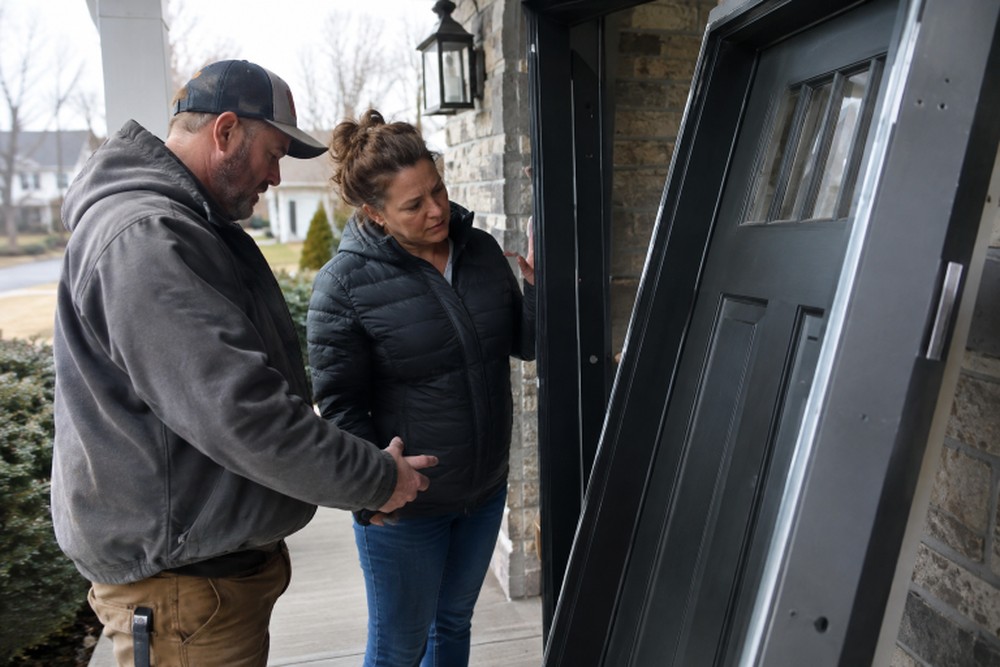
Minor issues such as a worn sweep, a loose hinge screw, or peeling finish may be repairable. Full replacement is often the better path when there is rot, significant warping, rust, failed glass, recurring water entry, or damage around the frame. A replacement door should be evaluated as a complete assembly rather than as a decorative panel alone.
Signs It May Be Time for a New Exterior Door
- Air can be felt around the edges of the closed door or beneath the threshold.
- The door is warped, cracked, rusted, rotted, swollen, or visibly damaged.
- Opening, closing, latching, or locking requires excessive force.
- Glass is cracked, foggy between panes, or no longer provides the desired privacy.
- Hinges are loose, the frame moves with the door, or the latch no longer aligns properly.
- The entry feels unusually noisy, cold, hot, or damp compared with nearby areas.
- The design no longer fits an updated exterior, porch, siding color, or lighting plan.
Compare Fiberglass, Steel, and Wood
Fiberglass
Fiberglass doors are a practical choice for many homes because they are available in smooth painted finishes and wood-grain appearances. They generally require less routine upkeep than natural wood and can be a strong fit for homeowners who want a balance of appearance, durability, and insulation.
Steel
Steel doors are commonly chosen for strength and a lower starting price than some premium alternatives. They can work well for utility entrances, side doors, and security-focused projects. However, dents and scratches should be addressed promptly because damaged finishes can allow rust to develop.
Wood
Wood offers natural warmth, detailed craftsmanship, and considerable design flexibility. It can suit traditional, historic, and high-character homes in the Mechanicsburg area. In return, wood usually requires consistent painting, staining, or sealing to help protect it from moisture and sun exposure.
Look Beyond the Door Slab
The frame, sill, threshold, hinges, lock area, weatherstripping, and exterior trim all affect performance. Even a well-made door can underperform if the opening is out of square or the surrounding materials have water damage. The gap between a door unit and wall framing can be an important air-leakage location, which is why proper rough-opening flashing and air sealing deserve attention during installation.
Choose Glass for Light, Privacy, and Efficiency
Solid-panel doors maximize privacy. Half-lite and full-lite doors bring more daylight into a foyer, while sidelites can make a narrow entry feel brighter and more open. Clear glass offers the most visibility, while frosted, textured, or decorative glass can soften views from the street without eliminating natural light.
Consider the direction the entry faces as well. A sunny or west-facing doorway may receive strong afternoon light, so the glass selection should account for glare and solar heat. Decorative glass should not be the only consideration. Ask what glazing is included and how it supports the comfort goals for that specific location.
Check Energy Ratings and Weather Protection
Two useful terms are U-factor and solar heat gain coefficient, often shortened to SHGC. U-factor describes how readily heat moves through a product, while SHGC addresses how much solar heat passes through glazing. Climate, orientation, glass area, and shade all influence which features matter most. Comparing certified product information is more useful than relying only on broad “energy-saving” language.
The U.S. Department of Energy notes that older, uninsulated, improperly installed, or poorly air-sealed exterior doors may leak air, making home upgrades involving exterior doors worth considering alongside air sealing and other comfort improvements.
Match the Door to the Home’s Architecture
A Craftsman home may suit a door with simple divided glass and substantial trim. Colonial and traditional homes often pair well with symmetrical panels, classic hardware, and restrained sidelites. Farmhouse designs can accommodate straightforward profiles and warm colors, while modern homes often look best with clean lines, minimal glass grids, and simple hardware.
For ranch homes, keeping the door proportions appropriate to the low, horizontal façade can create a more balanced result. A bold color can work beautifully against neutral siding, provided the lighting, trim, shutters, and hardware still feel connected. Historic homes may require special attention to original proportions and details.
Think About Security as a Complete System
Security is not determined by door material alone. A dependable deadbolt, reinforced lock area, sturdy strike plate, long fasteners installed into solid framing, and secure hinges all matter. Glass panels and sidelites can add beauty and daylight, but they should be placed thoughtfully where privacy or visibility is a concern. Smart locks can add convenience, although they still depend on a properly aligned, solidly installed door and frame.
Decide Between DIY and Professional Installation
- Measure the opening carefully and confirm the door swing, handing, threshold height, and clearance.
- Inspect the sill, trim, and nearby wall surfaces for moisture damage or deterioration.
- Review the manufacturer’s installation instructions before ordering materials.
- Confirm whether the project involves a slab replacement or a full prehung door system.
- Use professional installation when there is rot, structural repair, custom sizing, difficult framing, or uncertainty about water management.
Questions to Ask Before Ordering
- Does the price include the full door system, removal, disposal, trim work, and hardware?
- How will the opening be sealed against water and air leakage?
- Which glass type, finish, weatherstripping, and lock hardware are included?
- What product and installation warranty terms apply?
- How should the finish and hardware be maintained after installation?
Final Checklist for a Smarter Door Project
Set a realistic budget, identify the priorities, inspect the existing frame, compare materials and glass choices, and request written estimates that clearly describe the work. Before the installer leaves, test the swing, latch, lock, weatherstripping, threshold, and exterior finish. A well-chosen replacement exterior door should welcome guests, support everyday security, and help a Mechanicsburg home stay more comfortable through changing seasons.